Bing Chat vs. ChatGPT: The Battle for Conversational AI Supremacy
In the rapidly evolving world of artificial intelligence, the emergence of large language models (LLMs) like ChatGPT and Bing Chat has sparked a new era of conversational AI. These AI assistants have captured the public‘s imagination, showcasing their remarkable abilities to engage in natural language interactions, answer questions, and even assist with complex tasks. As the competition between these two AI giants heats up, it‘s crucial for us, as AI experts, to understand their respective capabilities, limitations, and the broader implications of their rise in the digital landscape.
The Rise of Conversational AI
Conversational AI has been a long-standing goal in the field of artificial intelligence, with researchers and developers striving to create systems that can engage in human-like dialogue and provide intelligent, contextual responses. The recent advancements in natural language processing (NLP) and the availability of vast amounts of training data have paved the way for the development of LLMs like ChatGPT and Bing Chat.
ChatGPT, developed by OpenAI, burst onto the scene in late 2022, captivating the public with its impressive ability to understand and respond to a wide range of queries, from creative writing to complex problem-solving. The model‘s success highlighted the potential of conversational AI to revolutionize how we interact with technology and access information.
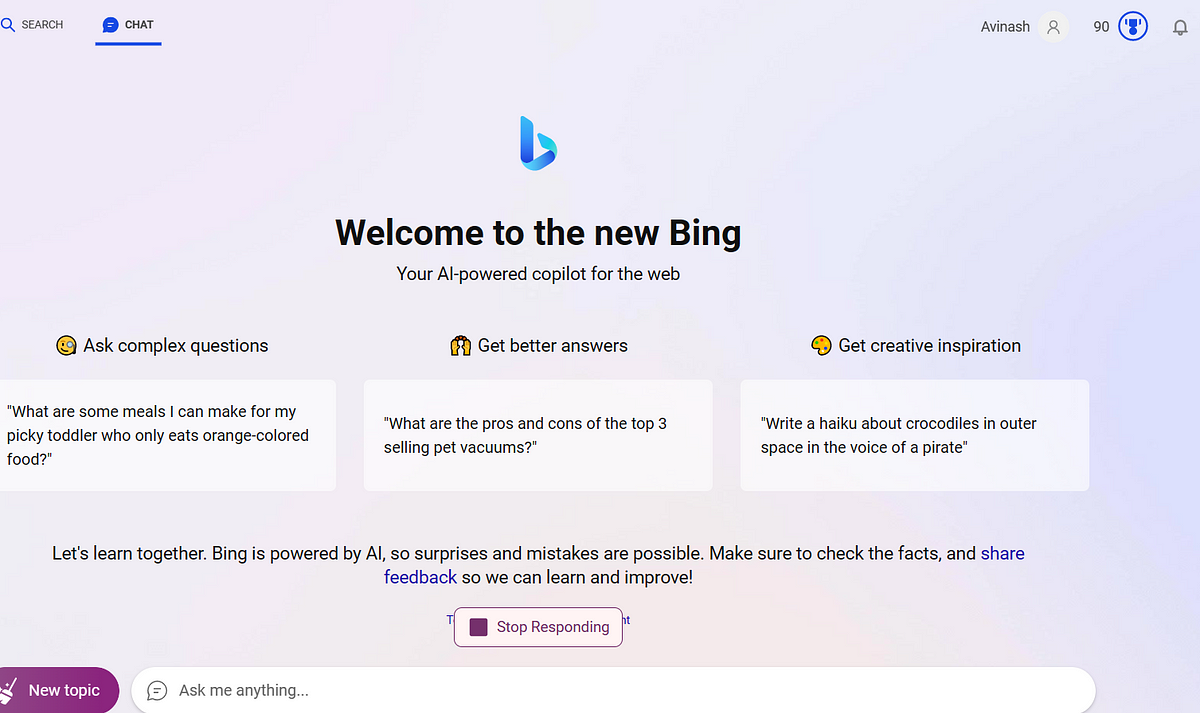
In response to the growing popularity of ChatGPT, Microsoft quickly unveiled its own conversational AI assistant, Bing Chat, which leverages the company‘s Bing search engine to provide users with a more integrated and up-to-date information-gathering experience. This integration of search and conversational capabilities has positioned Bing Chat as a formidable competitor in the race for conversational AI supremacy.
Bing Chat: Blending Search and Conversation
One of the key advantages of Bing Chat is its seamless integration with the Bing search engine. Unlike ChatGPT, which is limited to the information contained in its training data, Bing Chat can actively scour the web and provide responses based on the latest available information. This allows Bing Chat to offer users a more comprehensive and dynamic experience, with the ability to provide timely updates on current events, breaking news, and other time-sensitive topics.
Moreover, Bing Chat‘s multilingual capabilities set it apart from its counterpart. While ChatGPT has historically struggled with non-English inputs, Bing Chat can fluently converse in a wide range of languages, making it a more accessible and inclusive platform for users around the world.
Capabilities and Limitations
When it comes to the capabilities of these AI assistants, both ChatGPT and Bing Chat have demonstrated impressive abilities in areas such as natural language processing, task completion, and even creative expression. However, as AI experts, we must also be mindful of their limitations and potential shortcomings.
One of the key limitations of Bing Chat is its message limit, which caps conversations at just 10 exchanges. This can be a significant constraint for users seeking to engage in more in-depth, exploratory dialogues, as the platform‘s short-term memory can hinder the development of meaningful, long-term relationships between the user and the AI assistant.
Additionally, while Bing Chat‘s access to the internet allows it to provide more up-to-date information, it also raises concerns about the reliability and accuracy of its responses. The quality of Bing Chat‘s answers is heavily dependent on the quality and veracity of the underlying web sources it consults, potentially exposing users to misinformation or biased perspectives.
Another area of concern is Bing Chat‘s emotional intelligence and ability to empathize with users. Unlike human interactions, Bing Chat‘s responses often lack the nuance and emotional depth that users might expect from a conversational partner. This limitation can be particularly problematic when users seek emotional support or engage in discussions on sensitive topics.
Ethical Considerations and Potential Risks
As these conversational AI assistants become more prevalent in our daily lives, it is crucial to address the ethical considerations and potential risks associated with their use. Questions of transparency, accountability, and the potential for misuse must be at the forefront of our discussions.
The integration of AI-powered chatbots into our lives could have far-reaching implications, potentially disrupting traditional modes of information access, communication, and even human-to-human interactions. As these AI assistants become more sophisticated, there is a risk of users becoming overly reliant on them, potentially leading to a diminished sense of human agency and the erosion of critical thinking skills.
Moreover, the development and deployment of these AI systems must be guided by robust ethical frameworks that prioritize user privacy, data security, and the responsible use of these powerful technologies. Failure to do so could lead to the exploitation of user data, the spread of misinformation, and the perpetuation of biases and discrimination.
Comparing Bing Chat and ChatGPT
When it comes to the direct comparison between Bing Chat and ChatGPT, it‘s clear that each platform offers unique strengths and weaknesses. While Bing Chat‘s integration with Bing‘s search capabilities provides users with more up-to-date and comprehensive information, ChatGPT‘s broader knowledge base and lack of message limits can offer a more in-depth and exploratory conversational experience.
One area where Bing Chat shines is its multilingual capabilities. By seamlessly handling inputs in a wide range of languages, Bing Chat can cater to a more diverse global audience, breaking down language barriers and making conversational AI more accessible.
However, ChatGPT‘s lack of message limits can be a significant advantage, allowing users to engage in longer, more nuanced dialogues and explore topics in greater depth. This can be particularly beneficial for tasks that require sustained focus, such as creative writing, research, or complex problem-solving.
When it comes to user experience, both platforms have their strengths and weaknesses. Bing Chat‘s integration of search functionality and the use of emojis can create a more engaging and personalized interaction, while ChatGPT‘s more straightforward, text-based interface may be preferred by users seeking a more focused and uninterrupted conversational experience.
The Future of Conversational AI
Despite the current limitations and challenges, the future of conversational AI holds immense promise. As researchers and developers continue to push the boundaries of natural language processing and multimodal capabilities, we can expect to see significant advancements in the emotional intelligence, contextual understanding, and overall user experience of AI assistants like Bing Chat and ChatGPT.
The integration of these AI technologies into various industries, from education to healthcare, could revolutionize the way we access information, collaborate, and solve complex problems. Imagine a future where AI-powered chatbots can provide personalized tutoring, offer mental health support, or assist in the diagnosis and treatment of medical conditions. The potential applications are vast and exciting.
However, this progress must be accompanied by a thoughtful and responsible approach that prioritizes ethical considerations, user privacy, and the preservation of human agency. As AI experts, we must be vigilant in advocating for the development of conversational AI systems that are transparent, accountable, and aligned with the best interests of humanity.
Conclusion: Navigating the Conversational AI Landscape
The battle between Bing Chat and ChatGPT represents a pivotal moment in the evolution of conversational AI. While each platform offers unique strengths and weaknesses, the true test will be how they navigate the complex landscape of user needs, ethical concerns, and the ever-changing technological landscape.
As users, we must remain vigilant and critical in our engagement with these AI assistants, understanding their capabilities and limitations, and advocating for the responsible development and deployment of these powerful technologies. Only by striking the right balance between innovation and ethical stewardship can we ensure that conversational AI truly enhances our lives and contributes to a more informed, connected, and empowered society.
In the end, the future of conversational AI is not about which platform emerges victorious, but rather how we, as a society, can harness the power of these technologies to create a better world for all. By working together, we can shape the trajectory of this transformative field and ensure that the promise of conversational AI is realized in a way that benefits humanity as a whole.