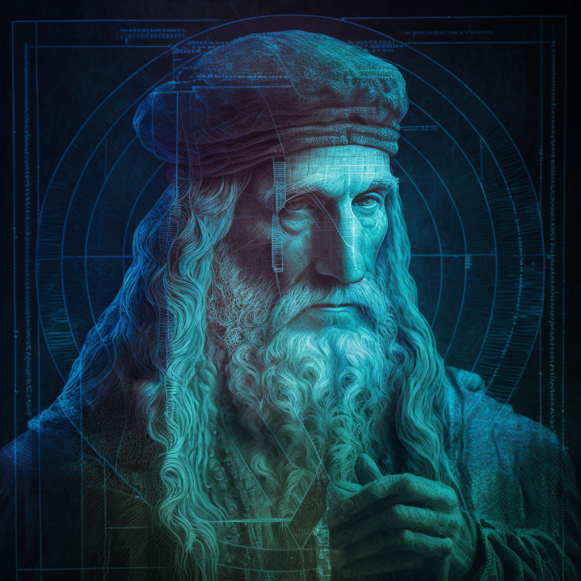
Divine Enigma: Leonardo da Vinci‘s Profound Spiritual Odyssey Between Faith, Science, and Philosophical Inquiry
Introduction: Unraveling a Renaissance Genius‘s Spiritual Landscape
Imagine standing in the bustling workshops of Renaissance Italy, watching Leonardo da Vinci meticulously sketch anatomical diagrams while simultaneously contemplating the profound mysteries of divine existence. His intellectual journey represents far more than a simple narrative of belief or disbelief—it‘s a complex tapestry of spiritual exploration that challenges our contemporary understanding of faith and scientific inquiry.
Leonardo da Vinci wasn‘t just an artist or scientist; he was a philosophical pioneer who navigated the intricate boundaries between empirical observation and spiritual contemplation. His relationship with divinity was neither straightforward nor easily categorized, making him one of the most fascinating intellectual figures in human history.
The Historical Crucible: Renaissance Spiritual Dynamics
Religious Complexity in 15th-16th Century Italy
The Renaissance period represented a transformative era in spiritual and intellectual development. The Catholic Church‘s dominant theological framework was gradually being challenged by emerging humanistic philosophies and scientific discoveries. Leonardo emerged precisely at this critical juncture—a time when traditional religious narratives were being critically examined and reinterpreted.
During this period, intellectual circles experienced unprecedented philosophical ferment. Scholars and thinkers like Leonardo began questioning established religious doctrines, seeking deeper, more nuanced understandings of cosmic design and human existence. The rigid ecclesiastical structures that had dominated medieval thought were slowly giving way to more flexible, inquiry-driven perspectives.
Leonardo‘s Intellectual Ecosystem: Navigating Spiritual Complexity
Philosophical Foundations of a Polymathic Mind
Leonardo‘s spiritual perspective cannot be understood through simplistic religious categorizations. Instead, his worldview represented a sophisticated synthesis of scientific observation, philosophical reflection, and profound spiritual curiosity.
Key characteristics of his intellectual approach included:
- Rigorous empirical investigation
- Philosophical openness
- Rejection of dogmatic constraints
- Holistic understanding of natural phenomena
His notebooks reveal a mind constantly probing the boundaries between observable reality and transcendent understanding. Leonardo didn‘t see science and spirituality as opposing forces but as complementary pathways to comprehending universal mysteries.
Decoding Leonardo‘s Spiritual Manuscripts: Textual Evidence and Interpretation
Theological Insights from Personal Writings
Leonardo‘s extensive collection of notebooks provides remarkable insights into his spiritual contemplations. These manuscripts demonstrate a nuanced, intellectually sophisticated approach to understanding divine principles.
Analyzing his writings reveals several fascinating dimensions:
- Recognition of underlying universal principles
- Mathematical precision in natural observations
- Philosophical reflections on cosmic design
- Rational approach to spiritual understanding
Rather than presenting a binary perspective of belief or disbelief, Leonardo‘s writings suggest a more fluid, dynamic spiritual framework that transcended conventional religious boundaries.
Scientific Spirituality: A Revolutionary Philosophical Paradigm
Empirical Observation as Spiritual Practice
Leonardo pioneered a revolutionary approach to understanding divinity—one that positioned scientific investigation as a profound spiritual practice. He perceived the natural world not as separate from divine intelligence but as its most eloquent manifestation.
His anatomical studies, astronomical observations, and engineering designs were not merely technical exercises but spiritual explorations. Each sketch, each mathematical calculation represented an attempt to comprehend the intricate mechanisms of universal design.
Theological Interpretations: Beyond Institutional Boundaries
Redefining Divine Understanding
Leonardo‘s spiritual perspective challenged contemporary theological narratives. He didn‘t reject the concept of divine intelligence but reinterpreted it through rational, observational lenses.
His approach suggested that:
- Spiritual understanding emerges through careful observation
- Universal principles transcend institutional religious frameworks
- Mathematical precision reveals cosmic intelligence
- Individual intellectual inquiry represents a legitimate spiritual path
Personal Spiritual Evolution: A Lifelong Philosophical Journey
From Religious Tradition to Intellectual Emancipation
Leonardo‘s spiritual development wasn‘t static but a dynamic, evolving process. Raised within the Catholic educational system, he gradually developed a more nuanced, philosophically sophisticated spiritual worldview.
His intellectual journey reflected:
- Early religious educational influences
- Progressive philosophical development
- Continuous spiritual questioning
- Rejection of dogmatic limitations
Comparative Theological Perspectives: Renaissance Intellectual Movements
Contextualizing Leonardo‘s Spiritual Framework
Leonardo‘s spiritual perspective aligned with broader Renaissance intellectual trends. This era witnessed a profound transformation in how scholars understood religious experience, emphasizing:
- Individual spiritual exploration
- Rejection of rigid ecclesiastical structures
- Holistic comprehension of cosmic mechanisms
- Intellectual sovereignty
Psychological and Philosophical Dimensions
The Inner Landscape of a Spiritual Innovator
Leonardo‘s spiritual journey was intrinsically linked to his psychological profile. His insatiable curiosity, profound empathy, and relentless pursuit of knowledge shaped a unique spiritual perspective that defied conventional categorization.
Psychological analyses suggest that his spiritual understanding emerged from:
- Deep introspective capabilities
- Exceptional observational skills
- Philosophical openness
- Rejection of intellectual constraints
Conclusion: A Transcendent Spiritual Vision
Leonardo da Vinci‘s relationship with divinity represents a profound, multidimensional exploration that continues to inspire and challenge contemporary understanding. He embodied a spiritual approach that seamlessly integrated scientific rigor, philosophical depth, and contemplative insight.
Key Philosophical Revelations
- Spirituality is a dynamic, evolving process
- Scientific observation can be a profound spiritual practice
- Divine understanding transcends institutional boundaries
- Intellectual curiosity represents a legitimate form of spiritual engagement
Leonardo‘s legacy reminds us that genuine spiritual wisdom emerges not through dogmatic adherence but through continuous, humble exploration of universal mysteries.
In the grand tapestry of human intellectual achievement, Leonardo da Vinci stands as a beacon—illuminating pathways of understanding that bridge empirical observation and transcendent contemplation.