Unleashing the Power of Large Language Models on the Raspberry Pi: A Transformative Frontier for Edge Computing
In the rapidly evolving landscape of artificial intelligence (AI), the emergence of Large Language Models (LLMs) has ushered in a new era of unprecedented capabilities in natural language processing and generation. These powerful AI systems have demonstrated an uncanny ability to understand, analyze, and produce human-like text, opening up a world of possibilities for how we interact with and leverage technology.
As an AI and LLM expert, I‘m particularly excited about the potential of integrating these advanced language models with the Raspberry Pi – a compact, versatile, and affordable single-board computer that has captivated the imagination of developers, hobbyists, and researchers alike. The fusion of LLMs and the Raspberry Pi presents an exhilarating frontier for edge computing, where intelligent, language-driven applications can thrive in distributed, resource-constrained environments.
Understanding the Rise of Large Language Models
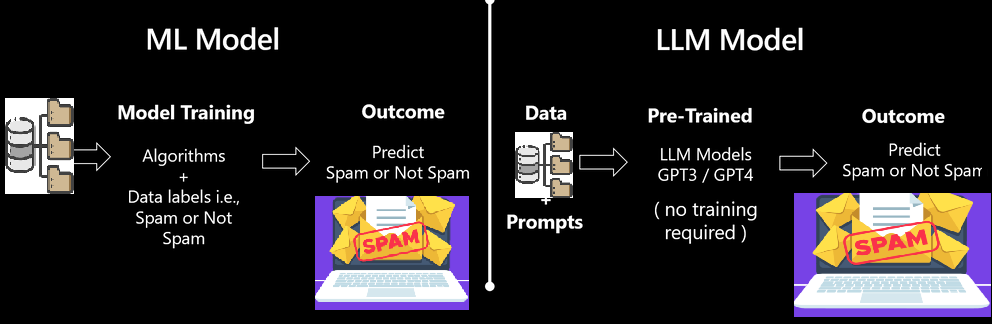
To fully appreciate the significance of running LLMs on the Raspberry Pi, it‘s essential to first understand the remarkable advancements in this field of AI. Unlike traditional machine learning models, which often require extensive training on labeled data, LLMs are trained on vast troves of unlabeled text data, allowing them to learn the underlying patterns and structures of language.
This paradigm shift has unlocked a remarkable versatility in LLMs, enabling them to excel at a wide range of natural language tasks, such as text generation, question answering, language translation, and even code completion, with minimal additional training. By leveraging the inherent knowledge and contextual understanding acquired during their training, LLMs can adapt to new domains and scenarios with remarkable agility, making them invaluable tools for a diverse array of applications.
The rise of LLMs, spearheaded by groundbreaking models like GPT-3, BERT, and T5, has sparked a revolution in the field of AI, transforming the way we interact with and harness the power of language-driven technologies. These models have demonstrated an uncanny ability to generate coherent and contextually relevant text, engage in nuanced dialogue, and even exhibit a semblance of reasoning and common sense – capabilities that were once the exclusive domain of human intelligence.
The Raspberry Pi: A Versatile Platform for LLM Deployment
The Raspberry Pi, a compact and affordable single-board computer, has emerged as a remarkably versatile platform for a wide range of applications, from home automation and robotics to edge computing and educational projects. As the computational power and capabilities of the Raspberry Pi have steadily improved over the years, the potential for integrating LLMs with this diminutive yet mighty device has become increasingly compelling.
One of the primary advantages of using the Raspberry Pi for LLM deployments is its compact form factor and low power consumption. This makes the Raspberry Pi an ideal candidate for edge computing applications, where the ability to process data and make decisions close to the source is crucial. By running LLMs on the Raspberry Pi, developers can create intelligent, responsive, and personalized experiences for users, without the need for constant internet connectivity or reliance on cloud-based services.
Moreover, the Raspberry Pi‘s accessibility and affordability have made it a favorite among hobbyists, makers, and educators, who can now leverage the power of LLMs to create innovative projects and applications. This democratization of advanced AI technology opens up a world of possibilities, empowering a new generation of creators to explore the integration of LLMs with various IoT (Internet of Things) devices, robotics, and home automation systems.
Deploying LLMs on the Raspberry Pi: Challenges and Strategies
While the prospect of running LLMs on the Raspberry Pi is undoubtedly exciting, it also presents a unique set of challenges that must be addressed. The Raspberry Pi‘s hardware limitations, such as its processing power, memory, and storage capacity, can pose significant hurdles when it comes to deploying and running these computationally intensive AI models.
Hardware and Software Considerations
To successfully deploy LLMs on the Raspberry Pi, it‘s essential to carefully consider the hardware specifications of the Raspberry Pi model you‘re working with. Newer models, such as the Raspberry Pi 4 or the Raspberry Pi 400, with their improved CPU, RAM, and storage capabilities, are generally better suited for running more complex LLM models.
In terms of software, the deployment of LLMs on the Raspberry Pi requires the installation of specialized libraries and frameworks, such as TensorFlow, PyTorch, or the Hugging Face Transformers library. These tools provide the necessary infrastructure and APIs for working with LLMs, allowing developers to leverage pre-trained models and integrate them into their Raspberry Pi-based applications.
Model Optimization and Deployment Strategies
To address the hardware constraints of the Raspberry Pi, it‘s crucial to employ various optimization techniques to ensure the efficient execution of LLMs on the platform. This may involve strategies like model quantization, pruning, and the utilization of hardware acceleration, such as the Raspberry Pi‘s onboard GPU or specialized AI accelerators.
Additionally, careful selection and configuration of the LLM models themselves can have a significant impact on their performance on the Raspberry Pi. Developers must weigh factors like model size, complexity, and inference requirements to choose the most suitable LLM for their specific use case and the Raspberry Pi‘s hardware capabilities.
Practical Deployment Workflows
The process of deploying LLMs on the Raspberry Pi typically involves several key steps:
-
Downloading and Configuring LLM Models: Developers must download the desired pre-trained LLM models, extract the necessary files, and configure the appropriate environment variables and command-line arguments to run the models on the Raspberry Pi.
-
Integrating LLM Inference: With the LLM models set up, developers can then write custom scripts or utilize existing open-source tools and frameworks to integrate the LLM inference capabilities into their Raspberry Pi-based applications.
-
Performance Optimization and Monitoring: Ongoing monitoring and optimization of the LLM deployment on the Raspberry Pi are essential to ensure efficient resource utilization and maintain the desired level of performance.
By addressing these challenges and implementing effective deployment strategies, developers can harness the power of LLMs on the Raspberry Pi, unlocking a wealth of opportunities for innovative applications and projects.
Practical Use Cases and Applications
The integration of LLMs with the Raspberry Pi opens up a diverse array of practical use cases and applications, each with the potential to transform the way we interact with technology and solve real-world problems. As an AI and LLM expert, I‘m particularly excited about the following areas:
Home Automation and Voice Control
One of the most compelling use cases for LLMs on the Raspberry Pi is in the realm of home automation and voice control. By combining the Raspberry Pi‘s compact form factor and the natural language processing capabilities of LLMs, developers can create intelligent home automation systems that respond to voice commands and natural language interactions.
Imagine a Raspberry Pi-powered smart home hub that can understand and execute voice commands to control various devices, such as lights, thermostats, and appliances. These voice-controlled systems can provide a seamless and intuitive user experience, allowing homeowners to manage their environments with the simple utterance of a few words.
Moreover, the edge computing capabilities of the Raspberry Pi can enable these voice-driven home automation systems to operate independently, without the need for constant cloud connectivity. This can be particularly beneficial in scenarios where privacy, low latency, and reliable performance are of utmost importance.
Robotics and Autonomous Systems
The integration of LLMs with the Raspberry Pi can also have a transformative impact on the field of robotics and autonomous systems. By leveraging the natural language understanding and generation capabilities of LLMs, developers can create robotic systems that can engage in more natural and intuitive interactions with humans.
Imagine a Raspberry Pi-powered robot that can understand and respond to voice commands, or one that can autonomously navigate and interact with its environment while communicating in a human-like manner. These LLM-enhanced robotic systems can be deployed in a wide range of applications, from personal assistants and educational tools to industrial automation and search-and-rescue operations.
The ability of LLMs to adapt to new contexts and scenarios can also enable these robotic systems to learn and evolve over time, becoming more responsive and attuned to the needs and preferences of their human counterparts.
Personalized Assistants and Edge Computing
The Raspberry Pi‘s potential as a platform for running LLMs also extends to the realm of personalized assistants and edge computing. By deploying LLM-powered applications on the Raspberry Pi, developers can create intelligent, context-aware assistants that can operate independently, without the need for constant cloud connectivity.
These edge-based assistants can understand user preferences, provide relevant information, and even offer tailored recommendations based on the user‘s specific needs and behaviors. This can be particularly beneficial in scenarios where privacy, low latency, and autonomy are crucial, such as in personal devices, healthcare applications, or industrial settings.
Moreover, the Raspberry Pi‘s compact size and energy efficiency make it an ideal platform for deploying these LLM-driven assistants in distributed, edge computing environments, where data processing and decision-making can happen closer to the source, reducing latency and improving overall system responsiveness.
Natural Language Processing for IoT Devices
The integration of LLMs with the Raspberry Pi also holds immense potential for enhancing the natural language processing capabilities of a wide range of IoT (Internet of Things) devices. By leveraging the Raspberry Pi as a platform for running LLM-powered applications, developers can add sophisticated language understanding and generation capabilities to a diverse array of smart home sensors, wearables, and industrial equipment.
Imagine a Raspberry Pi-powered smart thermostat that can understand and respond to natural language commands, or a wearable device that can engage in conversational interactions with its user. These LLM-enabled IoT devices can seamlessly integrate into the broader ecosystem, enhancing the overall user experience and enabling more intuitive, human-centric interactions.
Moreover, the edge computing capabilities of the Raspberry Pi can ensure that these language-driven IoT applications operate reliably and efficiently, even in scenarios where internet connectivity may be limited or intermittent.
Educational and Maker Projects
The Raspberry Pi‘s accessibility, combined with the growing availability of open-source LLM models, has also opened up exciting opportunities for educational and maker projects. Hobbyists, students, and educators can now explore the integration of LLMs with the Raspberry Pi, creating innovative applications that showcase the power of language-driven technologies.
From interactive learning tools and custom chatbots to language-based interfaces and educational demonstrations, the Raspberry Pi provides an excellent platform for exploring the potential of LLMs in a hands-on, accessible manner. This democratization of advanced AI technology can inspire a new generation of makers and developers to push the boundaries of what‘s possible with the Raspberry Pi and LLMs.
The Future of LLMs and the Raspberry Pi: Trends and Opportunities
As the field of LLMs continues to evolve and the capabilities of the Raspberry Pi platform continue to expand, the integration of these two technologies holds immense promise for the future. As an AI and LLM expert, I‘m particularly excited about the following emerging trends and opportunities:
Advancements in Edge Computing and IoT
The combination of LLMs and the Raspberry Pi is poised to play a pivotal role in the advancement of edge computing and the Internet of Things (IoT). As LLMs become more efficient and optimized for deployment on resource-constrained devices, the Raspberry Pi can serve as a versatile platform for bringing intelligent, language-driven capabilities to a wide range of IoT applications, from smart homes and wearables to industrial automation and environmental monitoring.
Personalized and Contextual Experiences
The ability of LLMs to understand and respond to natural language, combined with the Raspberry Pi‘s potential for distributed and embedded computing, can enable the creation of highly personalized and context-aware experiences. This could lead to the development of intelligent personal assistants, smart home systems, and customized user interfaces that adapt to individual preferences and needs, providing a more seamless and intuitive interaction with technology.
Democratization of AI and Maker Culture
The accessibility and affordability of the Raspberry Pi, coupled with the growing availability of open-source LLM models, can further democratize the field of AI and empower a new generation of makers, hobbyists, and developers to explore the integration of advanced language-based technologies into their projects and creations. This can foster a vibrant ecosystem of innovative applications and inspire a new wave of AI-driven maker culture.
Advancements in Robotics and Autonomous Systems
As LLMs continue to evolve and become more efficient, their integration with the Raspberry Pi can significantly enhance the capabilities of robotic and autonomous systems. This could lead to the development of more intuitive, adaptable, and human-centric robots that can understand and respond to natural language, making them better suited for real-world interactions and tasks, from personal assistance to industrial applications and beyond.
Conclusion: Embracing the LLM-Raspberry Pi Frontier
The convergence of Large Language Models and the Raspberry Pi platform presents an exhilarating frontier for developers, hobbyists, and researchers alike. By harnessing the power of LLMs on the Raspberry Pi, you can unlock a world of possibilities, from intelligent home automation and personalized assistants to innovative robotics and edge computing applications.
As an AI and LLM expert, I‘m truly excited about the potential of this intersection of advanced language technologies and the Raspberry Pi‘s versatile platform. The ability to deploy LLMs on resource-constrained devices like the Raspberry Pi opens up a new realm of opportunities, where intelligent, language-driven applications can thrive in distributed, edge-based environments.
Whether you‘re a developer looking to create cutting-edge IoT solutions, a hobbyist seeking to explore the integration of LLMs with your Raspberry Pi projects, or an educator aiming to inspire the next generation of AI-driven makers, the LLM-Raspberry Pi frontier offers endless possibilities for innovation and discovery.
I encourage you to dive into this exciting realm, to experiment, to push the boundaries of what‘s possible, and to contribute to the advancement of this transformative technology. By embracing the power of LLMs on the Raspberry Pi, you can shape the future of how we interact with and leverage technology in our daily lives, and unlock new frontiers of human-machine collaboration.