1945 Mercury Dime Value Chart: Worth No More Than $100
As a professional numismatist who has handled thousands of Mercury Dimes throughout my career, I want to share my expertise about the 1945 Mercury Dime – a coin that marks both the end of an iconic series and a pivotal moment in American history.
The Historical Significance of the 1945 Mercury Dime
The year 1945 stands as a watershed moment in world history, marking the end of World War II. During this same year, the United States Mint struck its final Mercury Dimes, concluding a thirty-year series that many collectors consider among the most beautiful American coins ever produced.
The Mercury Dime‘s design, created by Adolph Weinman in 1916, showcases the artistic excellence of early 20th-century American coinage. Despite its popular name, the coin actually features Liberty wearing a winged Phrygian cap, not the Roman god Mercury. This misconception arose from the wing design‘s resemblance to Mercury‘s traditional headgear.
Physical Characteristics and Composition
The 1945 Mercury Dime contains 90% silver and 10% copper, weighing exactly 2.5 grams with a diameter of 17.9mm. The silver content gives these coins an intrinsic value beyond their numismatic worth. When examining a genuine 1945 Mercury Dime, you‘ll notice these distinctive features:
Obverse Design:
- Liberty‘s profile with winged cap
- "LIBERTY" inscription along the rim
- "IN GOD WE TRUST" motto
- 1945 date
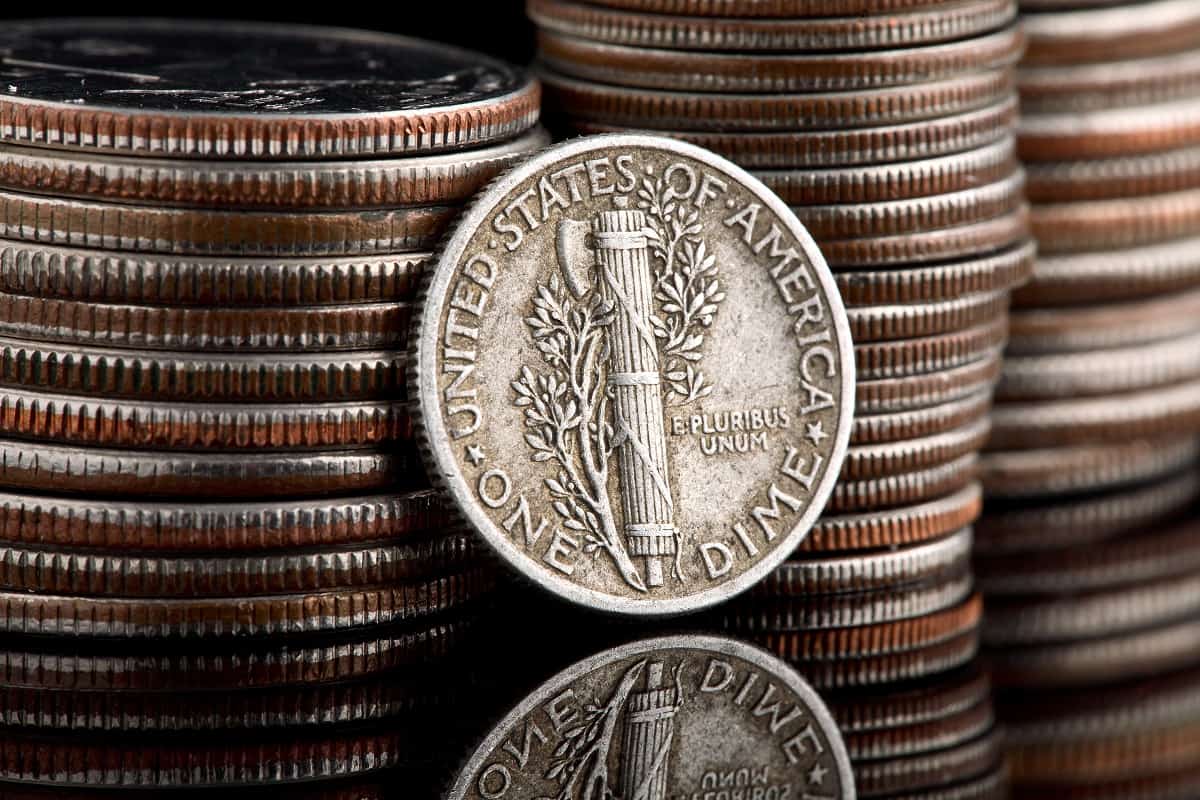
Reverse Design:
- Fasces symbol representing unity and strength
- Olive branches symbolizing peace
- "UNITED STATES OF AMERICA" inscription
- "ONE DIME" denomination
- Mint mark location (if present)
Production Statistics and Mint Marks
The 1945 Mercury Dime saw substantial production across three mints:
Philadelphia Mint produced 159,130,000 pieces (no mint mark)
Denver Mint struck 40,245,000 coins (D mint mark)
San Francisco Mint created 41,290,000 pieces (S mint mark)
These production numbers reflect the high demand for circulation coinage during the final year of World War II. The mint marks appear on the reverse side, near the base of the fasces. Philadelphia-minted coins carry no mint mark, while Denver and San Francisco pieces display D and S marks respectively.
Comprehensive Value Analysis
The value of a 1945 Mercury Dime varies significantly based on condition, mint mark, and specific varieties. Here‘s a detailed breakdown:
Circulated Conditions:
Good (G-4): $1.49-$1.75
Very Good (VG-8): $1.55-$1.85
Fine (F-12): $1.59-$2.00
Very Fine (VF-20): $1.65-$2.25
Extremely Fine (EF-40): $1.79-$3.00
Uncirculated Conditions:
MS-60: $4.21-$8.00
MS-63: $12-$20
MS-65: $25-$35
MS-67: $75-$100
Full Split Bands (FSB) specimens command premium prices:
MS-65 FSB: $80-$100
MS-67 FSB: $150-$200
The Grading System Explained
Understanding the grading system helps determine a coin‘s true value. Here‘s what to look for at each grade level:
Good (G-4):
Major design elements remain visible, though heavily worn. Liberty‘s facial features show significant wear, and wing details are mostly flat. The reverse fasces shows outline detail only.
Fine (F-12):
More detail present in Liberty‘s hair and wings. Reverse shows better definition in the fasces and olive branches. Lettering remains clear and distinct.
Extremely Fine (EF-40):
Sharp detail remains in Liberty‘s hair strands and wing feathers. The reverse displays clear definition in the fasces bands and olive branch leaves.
Mint State (MS-60 through MS-70):
No wear from circulation, though surface quality varies significantly. MS-60 may show numerous contact marks, while MS-67 displays nearly perfect surfaces with exceptional luster.
Notable Varieties and Errors
The 1945 Micro S represents the most significant variety:
- Smaller than normal S mint mark
- Values range from $3.50 in Fine to $100 in MS-65
- Most noticeable under magnification
Other documented errors include:
- Struck-through errors showing fabric impressions
- Die cracks and breaks
- Off-center strikes
- Double die varieties
Authentication and Counterfeit Detection
When authenticating a 1945 Mercury Dime, consider these key points:
Weight and Measurements:
- Correct weight: 2.5 grams (±0.1 gram)
- Diameter: 17.9mm
- Thickness: 1.35mm
Surface Characteristics:
- Proper silver luster
- Correct font styles and sizes
- Appropriate strike characteristics
- Natural toning patterns
Common Counterfeit Indicators:
- Incorrect weight
- Poor detail resolution
- Improper silver color
- Wrong surface texture
- Incorrect mint mark style
Conservation and Storage
Proper preservation ensures long-term value retention:
Storage Methods:
- Non-PVC holders or albums
- Temperature-controlled environment
- Low humidity conditions
- Minimal handling
Conservation Guidelines:
- Never clean or polish
- Handle by edges only
- Avoid exposure to chemicals
- Keep away from paper products
Market Analysis and Investment Potential
Current market trends indicate stable demand for 1945 Mercury Dimes:
Investment Considerations:
- Rising silver prices support base value
- Historical significance maintains collector interest
- High-grade specimens show strongest appreciation
- Full Split Bands examples command consistent premiums
Regional Market Variations:
- Stronger prices in northeastern United States
- Active markets in major metropolitan areas
- Variable demand in rural regions
- International collector interest growing
Building a Collection
For collectors focusing on 1945 Mercury Dimes:
Starting Points:
- Begin with circulated examples
- Study grade differences
- Learn variety identification
- Network with experienced collectors
Advanced Collection Development:
- Focus on high-grade specimens
- Seek Full Split Bands examples
- Purchase certified coins
- Document provenance
Future Outlook
The 1945 Mercury Dime market shows promising long-term potential:
Value Drivers:
- Increasing collector interest
- Limited high-grade supply
- Growing silver prices
- Historical significance
Market Predictions:
- Stable growth in high-grade examples
- Continued premium for FSB specimens
- Strong demand for error varieties
- Sustained collector interest
Conclusion
The 1945 Mercury Dime represents more than just a coin – it marks the end of an era in American numismatic history. While most examples remain affordable, exceptional specimens continue to command strong prices, making this coin an excellent entry point for new collectors while offering opportunities for advanced numismatists.
Remember that condition remains paramount in determining value, and proper authentication proves essential when acquiring significant specimens. Whether you‘re a beginning collector or seasoned numismatist, the 1945 Mercury Dime offers both historical significance and collecting satisfaction.