1971 Half Dollar Value Chart: From Common Finds to $13,000 Rarities
The 1971 Kennedy Half Dollar represents a fascinating intersection of American history and numismatic evolution. While many examples trade hands for modest sums, certain rare specimens have commanded prices up to $13,000, making this series worthy of careful study. As a professional numismatist with over two decades of experience examining these coins, I‘ll share the insights you need to identify valuable specimens in today‘s market.
Historical Significance of the 1971 Kennedy Half Dollar
The year 1971 marked a pivotal moment in U.S. coinage history. This was the first year the Kennedy Half Dollar appeared without any silver content, transitioning to a copper-nickel clad composition. This change reflected broader economic pressures of the early 1970s, as rising silver prices had made the previous 40% silver composition unsustainable for circulation coinage.
The Philadelphia Mint produced 155,164,000 pieces without a mint mark, while the Denver facility struck 302,097,424 coins bearing the "D" mint mark. The San Francisco Mint created 3,220,733 proof specimens with the "S" designation, specifically for collectors. These production figures tell only part of the story, as survival rates and condition rarity dramatically impact current market values.
Physical Characteristics and Design Elements
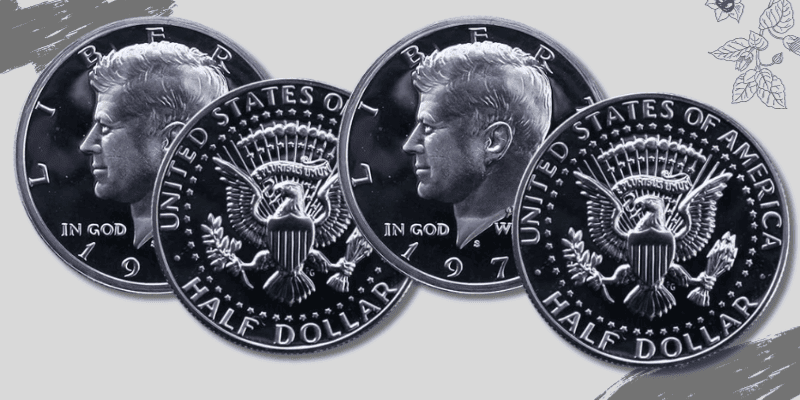
The 1971 Kennedy Half Dollar maintains the iconic design introduced in 1964. The obverse features John F. Kennedy‘s left-facing portrait, created by Chief Engraver Gilroy Roberts. The design captures Kennedy‘s likeness with remarkable detail, from his characteristic hair styling to his expression of quiet determination.
Technical specifications include:
- Weight: 11.34 grams
- Diameter: 30.6 millimeters
- Composition: 75% copper, 25% nickel bonded to a pure copper core
- Edge: Reeded with 150 reeds
- Thickness: 2.15 millimeters
Market Values Across Grades
The value of 1971 Kennedy Half Dollars varies dramatically based on condition and variety. Here‘s a detailed breakdown:
Circulation Strikes (No Mint Mark):
- Good to Very Fine: Face value to [$0.75]
- Extremely Fine to About Uncirculated: [$1] to [$2]
- MS-60 to MS-64: [$3] to [$10]
- MS-65: [$12] to [$45]
- MS-66: [$110] to [$175]
- MS-67: [$500] to [$1,000]
Denver Mint (D):
- Circulated grades: Face value to [$0.75]
- MS-60 to MS-64: [$3] to [$8]
- MS-65: [$7] to [$25]
- MS-66: [$30] to [$75]
- MS-67: [$400] to [$800]
San Francisco Proof (S):
- PR-65: [$5] to [$15]
- PR-66: [$10] to [$25]
- PR-67: [$20] to [$50]
- PR-68: [$35] to [$75]
- PR-69: [$100] to [$1,821]
- PR-70: [$2,000] to [$12,000]
Notable High-Value Examples
The most remarkable 1971 Kennedy Half Dollar ever sold achieved [$13,000] at auction. This specimen exhibited a significant strike error, with dramatic die displacement creating a unique visual effect. The coin graded MS-61, demonstrating that technical grade isn‘t always the primary value driver for error coins.
Another noteworthy sale involved a proof specimen that reached [$12,000]. This coin displayed exceptional cameo contrast and earned a perfect PR-70 DCAM (Deep Cameo) designation from PCGS. Such perfect proof coins represent the pinnacle of mint production quality.
Authentication Guidelines
When examining 1971 Kennedy Half Dollars, several key points require attention:
Surface Texture: Authentic specimens display consistent luster patterns appropriate to their mint state or proof status. Circulation strikes should show cartwheel luster, while proofs exhibit mirror-like fields.
Strike Quality: The hair details above Kennedy‘s ear serve as important diagnostics. Well-struck coins show clear separation of individual strands, while weakly struck examples appear flat or mushy in this area.
Edge Reeding: Examine the reeded edge under magnification. Genuine coins display sharp, evenly spaced reeds without irregular patterns or tooling marks.
Weight and Dimensions: Use precise measurements to verify the specifications noted earlier. Counterfeits often fail to match these exactly.
Investment Potential
The 1971 Kennedy Half Dollar market offers several investment approaches:
High-Grade Business Strikes: MS-66 and better examples have shown steady appreciation, particularly those with CAC approval.
Premium Quality Proofs: PR-69 and PR-70 specimens, especially with Deep Cameo contrast, maintain strong demand from quality-conscious collectors.
Major Error Coins: Significant strike errors, especially those authenticated by leading grading services, can command strong premiums.
Conservation and Preservation
Proper storage proves essential for maintaining value. Store individual coins in inert holders free from PVC plasticizers. For collections, maintain stable environmental conditions with humidity below 50% and temperature between 65-72 degrees Fahrenheit.
Never clean these coins – original surfaces command the strongest prices. Handle coins by their edges using cotton gloves or clean, dry hands.
Regional Market Variations
Market strength for 1971 Kennedy Half Dollars shows interesting geographic patterns. Northeast U.S. markets typically demonstrate stronger demand for high-grade business strikes, while West Coast collectors often focus on premium proof examples.
Southern markets show particular interest in error coins, while Midwest collectors tend toward complete date and mint mark sets in matched grades.
Building a Specialized Collection
For collectors focusing on 1971 Kennedy Half Dollars, several approaches merit consideration:
Condition Set: Acquire examples in grades from AU-50 through the highest available mint state grade.
Variety Study: Focus on collecting documented varieties, including doubled dies and repunched mint marks.
Error Collection: Pursue striking errors, planchet problems, and other mint mistakes.
Market Outlook
Current trends suggest continued strength for exceptional specimens while common examples remain near face value. Population reports indicate fewer than 100 coins graded MS-67 or better, suggesting potential for appreciation in top grades.
Proof coins in PR-69 and PR-70 grades maintain solid demand, particularly those with Deep Cameo contrast. Error coins continue attracting specialist collectors, with major errors achieving strong results at auction.
Practical Collecting Advice
When building a 1971 Kennedy Half Dollar collection:
Start with Understanding: Study authentic examples in hand before making significant purchases.
Focus on Quality: Within your budget, acquire the best grade available rather than multiple lesser specimens.
Document Everything: Maintain detailed records of purchases, including photographs and certification numbers.
Build Relationships: Develop connections with reputable dealers specializing in Kennedy Half Dollars.
Authentication Resources
Several resources assist in authenticating 1971 Kennedy Half Dollars:
Professional Grading Services: PCGS and NGC provide third-party authentication and grading.
Reference Materials: Standard catalogs and specialized Kennedy Half Dollar guides offer valuable insights.
Online Communities: Numismatic forums provide opportunities to share knowledge and seek expert opinions.
Conclusion
The 1971 Kennedy Half Dollar series offers opportunities for collectors at all levels. While most examples trade near face value, exceptional specimens command significant premiums. Understanding the factors that influence value – condition, strike quality, surface preservation, and variety – enables informed collecting decisions. Whether pursuing investment-grade specimens or building a specialized collection, these coins provide a fascinating window into American numismatic history.