1971 Un Peso: A Comprehensive Guide to Identification, Value, and Trading
When I first encountered a 1971 Mexican Un Peso in pristine condition at a small coin shop in Mexico City, I realized how this seemingly modest coin tells a remarkable story of Mexican numismatic history. As an antique coin specialist with over two decades of experience, I‘ve seen countless collectors overlook these pieces. Yet, understanding their significance opens a fascinating window into Latin American monetary evolution.
The Historical Journey of the 1971 Un Peso
The story of the 1971 Un Peso begins at La Casa de la Moneda, the oldest mint in the Americas. Established in 1535 under Spanish colonial rule, this institution played a pivotal role in shaping currency systems across both North and South America. The 1971 issue marked a significant moment in Mexican coinage, representing the highest mintage year of the 1970-1983 peso series with 426,222,000 pieces produced.
This massive production run occurred during a period of economic transformation in Mexico. The country was modernizing its monetary system while preserving important cultural and historical elements in its currency design. The peso itself traces its lineage to the Spanish colonial real, demonstrating remarkable continuity in Mexican monetary history.
Design Elements and Artistic Merit
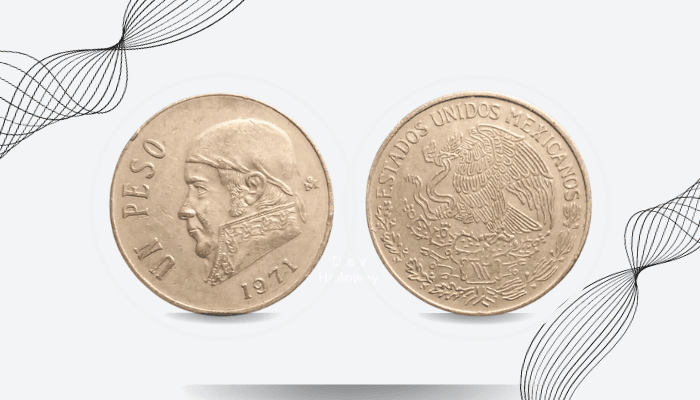
The obverse of the 1971 Un Peso showcases Mexico‘s national emblem with exceptional detail. The eagle, perched majestically on a prickly pear cactus while grasping a snake, represents more than just a national symbol. This image draws from the Aztec legend of Tenochtitlan‘s founding, where priests witnessed an eagle devouring a snake atop a nopal cactus, marking the site for their great city.
The reverse features José Maria Teclo Morelos y Pavón, whose portrait captures the dignity of this revolutionary leader. The engraving technique employed creates subtle depth variations that bring the design to life. The typography, particularly in the "UN PESO" denomination, exemplifies the refined craftsmanship of Mexican mint engravers.
Technical Specifications and Manufacturing
The coin‘s physical properties reflect careful engineering:
- The 9.-gram weight results from precise metallurgical calculations
- Its 28.98-millimeter diameter and 1.77-millimeter thickness create optimal handling characteristics
- The 75% copper and 25% nickel alloy provides durability while maintaining reasonable production costs
- The reeded edge, featuring exactly 118 reeds, serves both aesthetic and anti-counterfeiting purposes
Authentication Guide
Identifying genuine 1971 Un Peso coins requires attention to specific details. The strike quality should show consistent pressure across all design elements. Under magnification, authentic pieces display a distinctive "orange peel" texture in the fields, particularly visible on uncirculated specimens.
The mint mark deserves special attention. The "MO" (Mexico City) mark should show precise spacing between the letters, with the "O" slightly smaller than the "M." Counterfeiters often struggle to replicate this detail accurately.
Surface characteristics provide crucial authentication clues. Genuine coins exhibit flow lines in the metal, visible under proper lighting. These lines result from the minting process and create a subtle cartwheel effect when the coin is rotated under light.
Current Market Valuation
Recent market data reveals interesting patterns in 1971 Un Peso valuations. While common circulated examples trade for minimal premiums over face value, exceptional specimens command significant prices:
Circulated Grades (2024 Market Prices):
- Well-worn examples (G-4 to VG-8): $0.15-0.30
- Fine to Very Fine: $0.25-0.45
- Extremely Fine: $0.50-0.75
Uncirculated Examples:
- MS-60 to MS-63: $0.75-1.50
- MS-64 to MS-65: $2.00-3.00
- MS-66 and above: $5.00-15.00
Premium prices apply to specimens with exceptional eye appeal, full mint luster, and minimal contact marks. Recent auction results show increasing interest in highest-grade examples, particularly those certified by major grading services.
Regional Market Variations
Market behavior varies significantly by region. In the southwestern United States, Mexican coinage enjoys strong collector interest, often commanding premium prices. European collectors typically focus on exceptional specimens, while Latin American markets show broader interest across all grades.
Mexico City remains the epicenter of trading activity, with specialized dealers offering deeper inventory and expertise. Border regions between the U.S. and Mexico present unique opportunities for collectors, as coins frequently cross between markets, creating arbitrage possibilities.
Conservation and Preservation
Proper conservation begins with understanding environmental threats to these coins. The copper-nickel alloy responds particularly poorly to humidity, making climate control essential. Maintain storage environments between 45-55% relative humidity and 68-72°F (20-22°C).
Never clean these coins. The original surfaces, including natural toning, contribute significantly to both authenticity and value. Use only approved storage materials – avoid PVC-containing holders, which can damage coins over time.
For long-term preservation:
- Store in non-reactive containers
- Maintain stable environmental conditions
- Handle only by edges using cotton gloves
- Document condition changes photographically
- Consider professional conservation for valuable specimens
Building a Specialized Collection
Creating a meaningful 1971 Un Peso collection requires strategic planning. Consider focusing on:
Strike Quality Variations:
Different die states produced subtle variations in detail sharpness. Collecting examples showing progressive die wear provides insight into minting processes.
Toning Patterns:
Natural toning ranges from light silver to deep rainbow patterns. Some collectors specialize in attractively toned specimens.
Error Coins:
While rare, mechanical errors like off-center strikes or doubled dies exist. These command significant premiums.
Investment Considerations
While individual 1971 Un Peso coins rarely qualify as significant investments, opportunities exist in specialized collecting:
Condition Rarity:
Supreme-grade examples (MS-67 and above) represent condition rarities with growing demand.
Set Building:
Complete date runs of Mexican Pesos (1970-1983) in high grades attract serious collectors.
Error Collections:
Documented mint errors maintain strong appeal among specialists.
Trading Strategies
Success in buying and selling 1971 Un Peso coins requires market knowledge and patience. When purchasing:
- Research recent comparable sales
- Examine coins under various lighting conditions
- Consider certification for valuable specimens
- Build relationships with reputable dealers
- Document all transactions thoroughly
When selling:
- Provide detailed condition descriptions
- Use high-quality photography
- Target appropriate market segments
- Consider timing of specialized auctions
- Maintain transparent communication with buyers
Future Market Outlook
The market for 1971 Un Peso coins continues evolving. Growing interest in Mexican numismatics, particularly among younger collectors, suggests stable long-term demand. While common examples remain affordable, premium-quality specimens show potential for appreciation.
Factors influencing future values include:
- Growing recognition of Mexican numismatic history
- Increasing scarcity of high-grade examples
- Rising collector sophistication
- International market integration
- Digital trading platforms expanding access
Conclusion
The 1971 Un Peso represents more than just a coin – it embodies Mexican monetary history, artistic achievement, and collecting opportunity. Whether you‘re a beginning collector or seasoned numismatist, these pieces offer fascinating research and collecting possibilities. By understanding their history, characteristics, and market dynamics, you can make informed decisions about adding them to your collection.
Remember, successful collecting combines knowledge, patience, and appreciation for numismatic heritage. The 1971 Un Peso provides an excellent starting point for exploring Mexican coinage while offering opportunities for specialized collecting and potential long-term value appreciation.