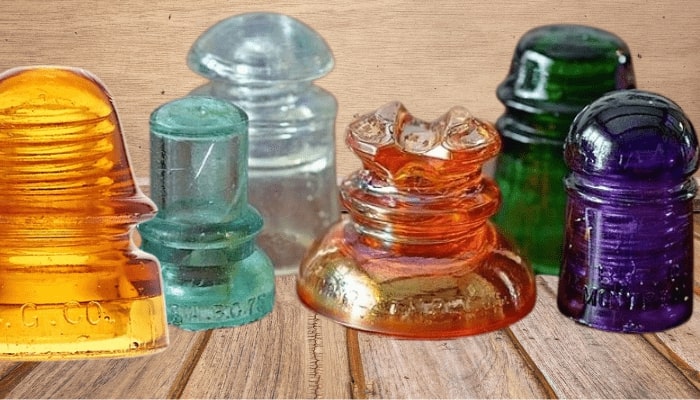
An Explicit Study of the 10 Most Valuable Glass Insulators – VIP Art Fair
When I first held a pristine cobalt blue California Electric Works insulator from the 1870s, its deep azure glass catching the sunlight, I understood why these functional pieces of industrial history had become such treasured collectibles. As an antique collector specializing in glass insulators for over two decades, I‘ve witnessed these once-humble devices transform from obsolete technology into highly sought-after pieces that can command thousands of dollars at auction.
The Evolution of Glass Insulators: From Utility to Artistry
Glass insulators emerged in the 1840s as crucial components of America‘s growing telegraph system. Their primary function was simple yet essential: preventing electrical current loss by insulating telegraph wires from wooden poles. The earliest examples were crude, hand-blown pieces, but as communication networks expanded across the continent, manufacturing techniques refined and standardized.
The period from 1875 to 1930 marked the golden age of glass insulator production. Major glasshouses, particularly in the Eastern United States and Midwest, produced hundreds of millions of these "bells." While most were standard clear or aqua glass, some manufacturers experimented with different colors and designs, unknowingly creating what would become the most prized pieces among today‘s collectors.
The 10 Most Valuable Glass Insulators
1. CD 130.1 California Electric Works Insulator
The crown jewel of glass insulator collecting, this remarkable piece commands prices between $6,000 and $8,000. Manufactured in the 1870s, these cobalt blue insulators were used in California‘s first long-distance telephone line between French Lake and French Corral. Their deep, rich color results from a precise mixture of cobalt oxide in the glass batch, creating a hue that remains vibrant even after 150 years.
What makes these insulators particularly valuable is their historical significance combined with their exceptional rarity. Of the estimated thousand pieces originally produced, fewer than twenty are known to exist today. Each surviving example tells the story of California‘s early telecommunications infrastructure.
2. CD-141 Twiggs Insulator
The Twiggs insulator, valued between $3,000 and $4,000, represents a fascinating departure from traditional insulator design. Created in 1905, its distinctive top-heavy profile and innovative dual-ball wire retention system showcase the experimentation happening in early 20th-century electrical engineering.
With only 13 known examples, the Twiggs insulator exemplifies how rarity drives value in this market. Its white glass composition, unusual for the period, adds to its uniqueness. Each surviving piece provides insights into the evolution of electrical infrastructure design.
3. EC&M Cobalt Blue Insulator
These stunning cobalt blue insulators, worth approximately $2,500, played a crucial role in the development of Western mining operations. Manufactured in 1870, they were specifically designed to withstand the harsh conditions of high-altitude environments in Nevada, California, and Arizona.
The value of EC&M insulators depends heavily on condition, particularly around the skirt and dome regions. Perfect examples show minimal wear and maintain their original surface gloss, though finding such specimens becomes increasingly challenging each year.
4. Cochrane Bell Suspension Insulator
Patented in 1916, these royal purple insulators represent a significant advancement in high-voltage power transmission. Their distinctive bell shape wasn‘t merely decorative – it provided superior insulation for higher voltage lines, particularly in Montana‘s growing electrical grid.
Today, these insulators fetch around $1,700, with prices varying based on color intensity. The purple hues range from barely perceptible to deep royal purple, with the richest colors commanding premium prices.