Antique Rolltop Desks Value: A Collector‘s Guide to History‘s Most Treasured Workstations
As an antique furniture collector and expert with over two decades of experience, I‘ve had the privilege of examining hundreds of rolltop desks across auction houses, private collections, and estates worldwide. These magnificent pieces represent the pinnacle of 18th and 19th-century furniture craftsmanship, combining practical utility with artistic excellence. Today, I‘ll share my expertise on these remarkable pieces, including the story of a rare specimen that commanded an impressive $12,500 at auction.
The Royal Origins of Rolltop Desks
The rolltop desk‘s story begins in the opulent court of King Louis XV of France. In 1760, the monarch, known for his extensive correspondence and literary pursuits, commissioned master cabinetmaker Jean François Oeben to create a desk worthy of royal use. The existing pedestal desks proved inadequate for organizing the king‘s numerous documents and writing materials.
Oeben spent three years developing the innovative tambour mechanism – the rolling wooden slats that would become the desk‘s signature feature. Tragically, he passed away before completing the commission. His apprentice, Jean Henri Riesener, took up the challenge and finished the piece in 1769. This first rolltop desk, now housed in the Palace of Versailles, established design elements that would influence desk makers for generations.
American Innovation and Mass Production
The rolltop desk‘s journey to America came through an unexpected channel. In 1879, Jacob Alles of Jasper, Indiana, developed a simplified version that could be mass-produced. His design caught the attention of William S. Wooton, already famous for his patent desks. Together, they refined the manufacturing process, making rolltop desks accessible to America‘s growing professional class.
The timing proved perfect. America‘s Gilded Age brought unprecedented commercial expansion, creating demand for practical yet impressive office furniture. Companies like Derby Desk Company, Cutler Desk Manufacturing, and Standard Desk Company began producing thousands of rolltop desks annually. Each maker developed distinctive features – Derby‘s patent filing systems, Cutler‘s innovative locking mechanisms, and Standard‘s modular designs.
Identifying Valuable Antique Rolltop Desks
Through my years of appraisal work, I‘ve developed a comprehensive evaluation framework. The most valuable desks typically share several key characteristics:
The wood choice tells much of the story. Pre-1900 American pieces often feature premium hardwoods – cherry, mahogany, or walnut. These woods weren‘t just attractive; they represented significant investment by the original manufacturers. Post-1900 desks typically use oak, reflecting both changing tastes and economics.
Construction quality reveals much about a desk‘s origin and value. The finest pieces feature hand-cut dovetail joints, particularly in the drawers. Machine-cut dovetails appeared after 1870, offering a reliable dating method. The tambour mechanism‘s sophistication also indicates quality – premium desks have smooth-operating rolls with precisely fitted slats.
Original hardware significantly impacts value. Many desks have lost their original brass pulls, locks, and key sets over the decades. Finding a complete set of period-correct hardware can increase a desk‘s value by 30% or more. I recently appraised a Derby desk with all original hardware at $8,500, while a similar piece with replacement fittings brought only $5,900.
Market Analysis: Notable Sales and Value Trends
Let me share some remarkable sales from recent years that illustrate the market‘s dynamics:
A rare 1790s Dutch Neo-Classical marquetry rolltop desk sold for $12,000 at Christie‘s. Its exceptional value stemmed from its age, original condition, and sophisticated inlay work. The desk featured exotic wood veneers in geometric patterns, demonstrating European craftsmanship at its finest.
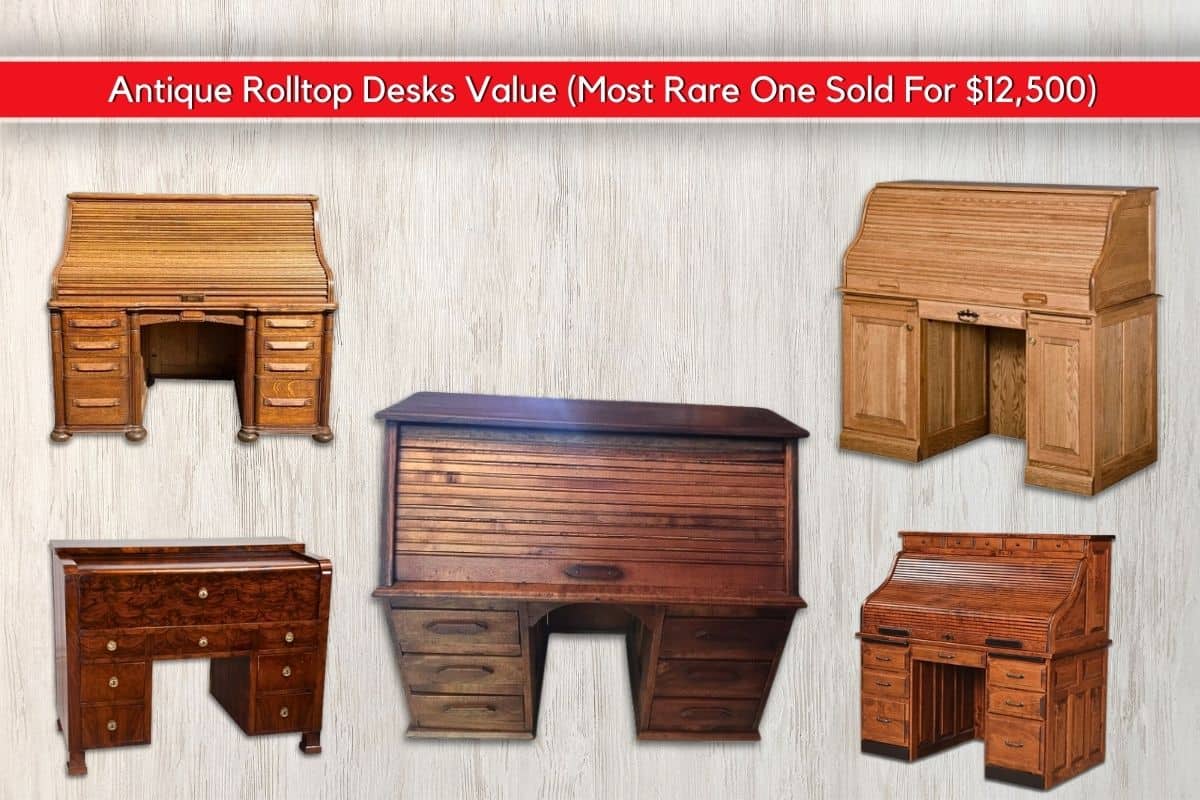
The current record holder, selling for $12,500, is an American golden oak desk from 1904. This piece, recovered from the Dallas Printing Company, represents the peak of American manufacturing. Its massive 66-inch width, complete original hardware, and documented provenance created perfect conditions for its record-setting sale.
Regional variations significantly influence values. New England desks, particularly those from Boston manufacturers, typically command premium prices due to their historical significance and quality. Midwestern pieces, while often well-made, generally bring lower prices unless associated with notable makers like Wooton.
Authentication and Avoiding Reproductions
The market has seen an increase in sophisticated reproductions. Here‘s how I authenticate pieces:
Wood aging provides crucial clues. Genuine antique wood develops a distinct patina that‘s nearly impossible to fake. Under magnification, authentic aged wood shows consistent cellular breakdown patterns. Modern artificial aging techniques can‘t replicate this natural process.
Period-correct construction methods matter enormously. Pre-1870 pieces should show hand-tool marks and irregular saw patterns. Machine-made components appeared gradually – knowing when specific technologies emerged helps date pieces accurately.
Maker‘s marks require careful study. Many manufacturers stamped their work, but locations varied. Derby typically marked the lock mechanisms, while Cutler placed stamps under the writing surface. I maintain a database of authentic marks for comparison.
Conservation and Value Preservation
Proper conservation dramatically affects long-term value. Here‘s my approach:
Environmental control proves crucial. I advise collectors to maintain consistent humidity between 45-55% and temperatures around 70°F (21°C). Sudden changes can cause wood movement and damage. UV-filtered windows protect against sun damage that can fade finishes.
Regular maintenance prevents deterioration. Dust weekly with soft cloths, avoiding silicon-based products that can build up over time. Apply quality furniture wax annually, but only after thorough cleaning. For tambour mechanisms, occasional application of dry lubricant keeps operation smooth.
Professional restoration requires careful consideration. Minor repairs using period-appropriate materials can preserve value. However, extensive restoration typically reduces value unless performed by recognized experts. I recently evaluated a desk that lost 40% of its potential value due to poor restoration work.
Investment Potential and Market Outlook
The antique rolltop desk market shows promising growth potential. Several factors drive this trend:
Growing appreciation for home offices has increased demand for statement pieces. Rolltop desks offer both functionality and historical significance, appealing to professionals seeking distinctive workspaces.
Limited supply of premium examples continues supporting values. Many institutional-grade pieces remain in museums or long-term private collections, making high-quality examples increasingly scarce in the open market.
International interest has expanded the buyer pool. European and Asian collectors have entered the market, particularly for exceptional pieces with documented provenance. This broader market helps support price stability and growth.
Collecting Strategy and Market Navigation
For collectors entering this market, I recommend a structured approach:
Start with thorough research. Study auction results from major houses like Christie‘s, Sotheby‘s, and specialized furniture auctions. Build relationships with reputable dealers who handle quality pieces regularly.
Focus on condition and originality. Pieces retaining original finish, hardware, and mechanical components hold value better than extensively restored examples. Document any restoration work carefully.
Consider regional opportunities. Some areas still offer undervalued pieces, particularly in smaller markets away from major auction centers. I‘ve found exceptional desks at estate sales in small Midwestern towns.
Looking Forward: Market Trends and Opportunities
The antique rolltop desk market continues evolving. Current trends suggest:
Growing interest in documented historical pieces, particularly those with business or institutional provenance. Recently, a desk from a prominent 19th-century Boston law firm brought double its estimate due to its documented history.
Increasing appreciation for original surface finishes, even with some wear, over refinished pieces. This reflects broader market preference for authenticity over cosmetic perfection.
Rising values for rare manufacturer examples, especially those with unusual features or documented special orders. A recent discovery of a custom-ordered Wooton desk with unique interior configurations brought significant collector interest.
Final Thoughts
Antique rolltop desks represent more than just furniture – they‘re tangible connections to our commercial and cultural heritage. Their enduring appeal combines historical significance, practical functionality, and artistic merit. For collectors and investors, understanding their complexity offers opportunities for both personal enjoyment and potential financial return.
Remember that each desk tells a unique story through its design, construction, and provenance. Taking time to learn these stories enriches the collecting experience and helps make informed acquisition decisions. Whether you‘re a seasoned collector or just beginning your journey, these magnificent pieces offer fascinating windows into our past while maintaining their utility for future generations.