Most Valuable Depression Glass Patterns: A Collector‘s Guide to Rare $1000+ Treasures
As a Depression glass collector and appraiser for over two decades, I‘ve witnessed firsthand how these colorful pieces of American history have transformed from humble tableware into prized collectibles. Today, I‘ll guide you through the most valuable Depression glass patterns, some commanding prices well over $1,000, and share expert insights to help you build an outstanding collection.
The Fascinating Story Behind Depression Glass
Depression glass emerged during one of America‘s most challenging periods – the Great Depression of the 1930s. Manufacturers developed innovative methods to produce this glassware inexpensively, often giving it away as promotional items or selling it for pennies. Movie theaters would offer pieces with ticket purchases, while food companies included them in boxes of kitchen staples.
What makes this history particularly poignant is how these colorful glass pieces brought joy during dark times. Despite being mass-produced with visible flaws, these pieces represented hope and beauty for families who had little else to brighten their homes.
Understanding Depression Glass Characteristics
Before diving into specific patterns, you need to understand what makes Depression glass unique. The glass typically contains minor imperfections – tiny bubbles, slight waves, and occasional streaks. These aren‘t flaws but rather authentication marks that distinguish genuine pieces from modern reproductions.
The manufacturing process involved molding glass from a mixture of sand, soda ash, and limestone, often incorporating recycled glass. This resulted in distinctive characteristics:
- Thin, lightweight construction
- Visible mold marks
- Minor surface irregularities
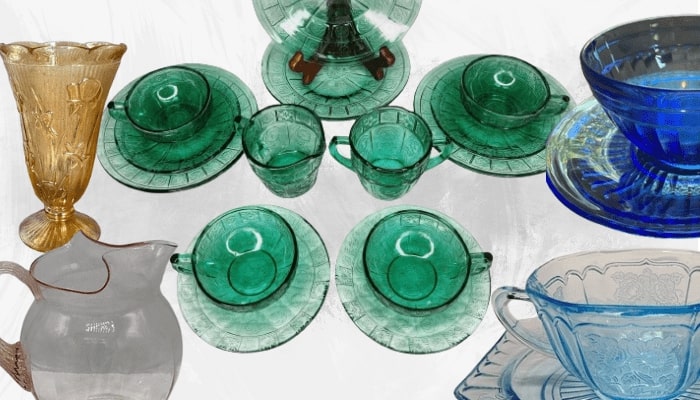
- Rich, transparent colors
- Pressed patterns
Most Valuable Depression Glass Patterns
1. American Sweetheart Monax (1930-1936)
MacBeth-Evans created this pattern in a unique translucent white color called Monax. A complete dinner service recently sold at auction for $4,800. The pattern features delicate paisleys and curlicues, with the cream pitcher being particularly valuable at $900-1,200.
The rarity of American Sweetheart Monax stems from its limited production period and the challenging nature of maintaining consistent quality in white glass. Collectors particularly prize the covered butter dishes and cake plates in pristine condition.
2. Royal Lace Cobalt Blue (1934-1941)
Hazel-Atlas produced this stunning pattern for just five years. The deep cobalt blue color combined with the intricate lace pattern creates pieces that regularly command premium prices. A complete water set with pitcher and six tumblers recently sold for $3,200.
The pattern‘s complexity made production difficult, resulting in many pieces being discarded due to imperfections. This quality control actually benefits today‘s collectors, as surviving pieces tend to be exceptional examples.
3. Cherry Blossom Pink (1930-1939)
Jeannette Glass Company‘s Cherry Blossom pattern in pink represents the height of Depression glass artistry. The pattern features detailed cherry blossoms and branches in relief. Complete dinner sets in excellent condition can fetch $2,500-3,500.
Pink Cherry Blossom pieces are particularly susceptible to wear, making pristine examples increasingly rare. Watch for the covered candy jar, which can command $1,200 or more in perfect condition.
4. Madrid Blue (1932-1939)
Federal Glass Company‘s Madrid pattern in blue showcases Art Deco influence with its geometric designs. The pattern‘s sophisticated appearance and limited color run make it highly desirable. A complete table service recently achieved $2,800 at auction.
The blue coloration required precise control during manufacturing, resulting in fewer pieces being produced compared to other colors in the Madrid line.
5. Cameo Green (1930-1934)
Hocking Glass Company‘s Cameo pattern features a dancing ballerina motif that captures the grace of the Art Deco period. Green examples are particularly prized, with rare pieces like the cookie jar reaching $1,500-2,000.
6. Parrot Green American Sweetheart (1930-1936)
This rare color variant of the American Sweetheart pattern commands exceptional prices. A complete dinner service sold recently for $3,800. The pattern‘s intricate details show particularly well in this unusual green shade.
7. Princess Pink (1931-1935)
Anchor Hocking‘s Princess pattern in pink features elegant scalloped edges and detailed geometric designs. Complete sets can reach $2,000-3,000, with rare serving pieces commanding premium prices.
8. Mayfair Blue (1931-1937)
Hocking Glass produced this pattern in several colors, but the blue variant remains most valuable. The open rose design shows beautifully in this color, with complete sets reaching $1,800-2,500.
9. Royal Ruby (1938-1941)
This deep red pattern by Anchor Hocking represents one of the most challenging colors to produce during the Depression era. Individual pieces regularly command $200-400, with rare items exceeding $1,000.
10. Miss America Pink (1935-1937)
Hocking‘s Miss America pattern in pink features an intricate design that showcases the capabilities of Depression-era glass manufacturing. Complete sets can reach $2,000-2,500.
Authentication Methods
Identifying genuine Depression glass requires attention to several key factors:
The Weight Test: Authentic Depression glass feels notably lighter than modern reproductions. Hold known authentic pieces to develop a feel for proper weight.
Pattern Examination: Study pattern guides carefully. Original patterns show slight variations in depth and detail that modern manufacturing can‘t replicate.
UV Light Testing: Many authentic pieces contain manganese or selenium, causing them to fluoresce under UV light. However, not all genuine pieces will show this reaction.
Surface Analysis: Look for appropriate wear patterns and manufacturing characteristics. Modern pieces typically lack the subtle flaws found in period glass.
Market Analysis and Investment Strategy
The Depression glass market continues to strengthen, particularly for rare patterns and unusual colors. Several factors drive value:
Pattern Rarity: Limited production runs or patterns discontinued quickly command premium prices.
Color Scarcity: Unusual colors like cobalt blue, red, and certain shades of pink typically bring higher prices.
Condition: Mint condition pieces without chips, cracks, or significant wear command significant premiums.
Completeness: Full sets or matching pieces generally bring better prices than individual items.
Conservation and Care
Proper care preserves both beauty and value:
Storage: Keep pieces in a stable environment away from temperature fluctuations and direct sunlight.
Cleaning: Hand wash only using mild soap and warm water. Never use dishwashers or harsh chemicals.
Handling: Always lift pieces from their base rather than by handles or rims.
Display: Use proper supports and avoid stacking pieces whenever possible.
Regional Market Variations
Depression glass values vary significantly by region:
Northeast: Highest overall prices, particularly in urban areas with strong collector communities.
Midwest: More moderate pricing but excellent hunting grounds for rare pieces.
South: Growing market with increasing collector interest.
West Coast: Premium prices for rare patterns but fewer pieces available.
Building Your Collection
Start with these strategies:
Research extensively before purchasing significant pieces.
Build relationships with reputable dealers and fellow collectors.
Focus on specific patterns or colors rather than collecting randomly.
Document your purchases with photographs and provenance information.
Join collector groups and attend specialized glass shows.
Resources for Collectors
Essential references include:
National Depression Glass Association publications
Gene Florence‘s collector guides
Depression Glass price guides
Online collector forums
Specialized auction houses
Depression glass collecting offers both historical significance and investment potential. Focus on building knowledge, developing authentication skills, and maintaining proper documentation. With careful study and patience, you can build a collection that brings both pleasure and value.
Remember that condition remains paramount – a perfect piece in a common pattern often brings more than a damaged piece in a rare pattern. Take time to examine pieces carefully before purchasing, and don‘t hesitate to ask questions about condition and history.
The market for valuable Depression glass patterns continues to evolve, with new collectors discovering the beauty and history these pieces represent. Whether you‘re just starting or expanding an existing collection, focus on quality, authenticity, and documentation to build a collection that will bring joy and value for years to come.