The 1963 Half Dollar Value Chart: A Collector‘s Ultimate Guide
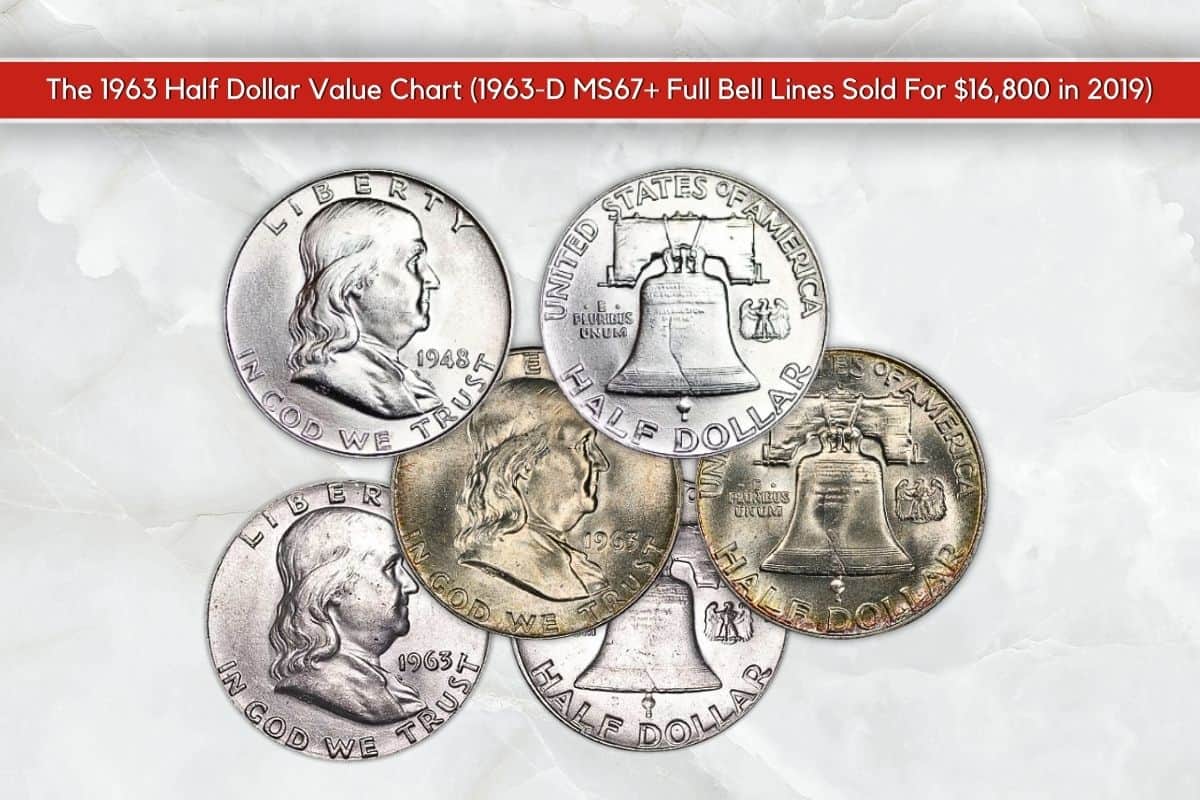
The 1963 Franklin Half Dollar stands as a remarkable testament to American numismatic history, with certain specimens achieving extraordinary values in the modern market. When a 1963-D MS67+ Full Bell Lines example commanded $16,800 at auction in 2019, it reinforced the enduring appeal and investment potential of this historic series.
Historical Context and Significance
The year 1963 marked the final chapter of the Franklin Half Dollar series, coinciding with pivotal moments in American history. As the nation stood at the crossroads of social and political change, the Philadelphia Mint produced 22,164,000 pieces while the Denver facility struck 67,069,292 coins. These numbers tell only part of the story, as the mint also created 3,075,645 proof specimens specifically for collectors.
The Franklin Half Dollar series, initiated in 1948, represented more than just currency – it embodied the ideals of American independence and innovation through its portrayal of Benjamin Franklin. The decision to feature Franklin, rather than a political figure or allegorical representation, marked a significant departure from traditional coinage designs.
Design Elements and Artistic Merit
John R. Sinnock‘s portrait of Franklin on the obverse captures the founding father‘s determined expression and intellectual character. The design draws from Jean-Antoine Houdon‘s 1778 bust of Franklin, considered the most authentic representation of his likeness. The reverse, featuring the Liberty Bell, includes intricate details that would later become crucial value indicators.
The small eagle, required by law and initially resisted by mint officials, appears discreetly on the reverse. This design element creates an interesting historical footnote – Franklin, known for preferring the turkey as America‘s national bird, would have likely found humor in the eagle‘s mandatory inclusion on his commemorative coin.
Understanding Value Determinants
The market value of 1963 Half Dollars involves multiple factors that collectors must understand. Strike quality remains paramount, particularly regarding the Full Bell Lines (FBL) designation. These horizontal lines on the Liberty Bell‘s bottom edge must appear complete and distinct to qualify for this premium designation.
Surface preservation plays an equally crucial role. Original mint luster, free from significant contact marks or impairments, significantly impacts value. Toning, when present, should appear natural and attractive, with rainbow colors typically commanding higher premiums than monotone patterns.
Current Market Analysis
Recent market data reveals fascinating patterns in 1963 Half Dollar valuations. In circulated grades, these coins maintain modest but stable values, typically ranging from $11 to $25 depending on condition. However, the real excitement begins in mint state grades:
Mint State 60-63 specimens regularly trade between $20 and $100, reflecting their availability but still-desirable uncirculated status. MS-64 examples command $25 to $150, while MS-65 pieces see significant jumps to $100-500 range.
The premium territory starts at MS-66, where prices typically range from $300 to $1,500. MS-67 examples, particularly those with the coveted FBL designation, can reach several thousand dollars. The record-setting MS67+ FBL specimen that achieved $16,800 represents the pinnacle of condition rarity and strike quality.
Authentication Techniques
Professional authentication requires careful examination of several key elements. The weight should precisely measure 12.5 grams, while the diameter must be exactly 30.6 millimeters. The edge reeding count of 150 serves as another crucial identifier.
Under magnification, authentic specimens display specific die characteristics and flow lines consistent with genuine mint production. The silver-copper alloy (90% silver, 10% copper) should show appropriate luster and surface texture. Modern counterfeiters struggle to replicate these precise specifications, making authentication possible for knowledgeable collectors.
Conservation and Preservation
Proper conservation remains essential for maintaining value. Store coins in appropriate holders that prevent environmental damage while allowing easy viewing. Temperature and humidity control play crucial roles – maintain stable conditions around 70°F with relative humidity between 30-50%.
Never clean or attempt to improve a coin‘s appearance. Professional conservation, when necessary, should only be undertaken by certified experts using museum-standard techniques. Document any conservation history, as this information affects future value.
Investment Strategies
Successful investment in 1963 Half Dollars requires a strategic approach. Focus on acquiring the highest grades within your budget, prioritizing examples with strong eye appeal and original surfaces. The FBL designation becomes increasingly important in grades MS-65 and above.
Consider regional market variations – certain areas show stronger demand for particular grades or characteristics. Build relationships with reputable dealers who understand these market nuances and can provide access to choice specimens when they become available.
Notable Collections and Auctions
Several significant collections have included remarkable 1963 Half Dollars. The Louis E. Eliasberg Sr. Collection featured an exceptional MS-67 FBL example that helped establish market parameters for supreme-quality specimens. The Harry W. Bass Jr. Collection included multiple high-grade examples that continue to influence market values.
Recent auctions have shown strong results for premium examples. Besides the record-setting MS67+ FBL coin, several MS-66 and MS-67 specimens have achieved impressive prices, particularly when featuring original toning or exceptional strike characteristics.
Error Varieties and Special Issues
While not known for dramatic errors, the 1963 Half Dollar series includes several collectible varieties. Doubled die examples, particularly affecting Franklin‘s portrait, command significant premiums. Repunched mint marks, while scarce, offer opportunities for variety collectors.
Strike characteristics vary between Philadelphia and Denver issues, with Denver generally producing sharper strikes. This variation particularly affects the achievement of the FBL designation, making Denver mint FBL examples somewhat more available in high grades.
Market Outlook and Future Prospects
The market for premium 1963 Half Dollars shows promising growth potential. Several factors support this outlook:
The increasing appreciation for condition rarity, particularly in supreme grades, continues to drive values for exceptional specimens. The historical significance of 1963 as the series‘ final year adds appeal for collectors focused on transitional issues.
Silver content provides an intrinsic value foundation, while the growing recognition of the Franklin series among serious collectors supports long-term market stability. The relatively low population of gems with FBL designation suggests continued strong demand for premium examples.
Collecting Strategies for Different Budgets
Beginning collectors can start with circulated examples, learning to grade and authenticate while building knowledge. Mid-level collectors might focus on mint state pieces in the MS-63 to MS-65 range, where value opportunities still exist.
Advanced collectors and investors should consider premium qualities – MS-66 and above, particularly with FBL designation. These specimens offer the greatest potential for appreciation while providing the most satisfying collecting experience.
Technical Analysis and Grading
Understanding technical grade requirements helps collectors make informed decisions. The MS-67+ grade requires virtually perfect surfaces with exceptional strike quality. Even minor imperfections can affect grade and value significantly.
The FBL designation requires complete, sharp definition of the Liberty Bell‘s bottom lines. This characteristic results from optimal strike pressure and die alignment during minting, making it relatively scarce even in high grades.
Conclusion
The 1963 Half Dollar represents a fascinating intersection of numismatic history, artistic achievement, and investment potential. Whether pursuing circulated examples for their historical significance or premium specimens for their exceptional rarity, collectors find endless opportunities within this series.
For those considering entering this market, the combination of historical importance, condition rarity, and strong collector demand makes the 1963 Half Dollar an compelling choice. With proper knowledge and careful selection, these coins offer both collecting satisfaction and investment potential for years to come.