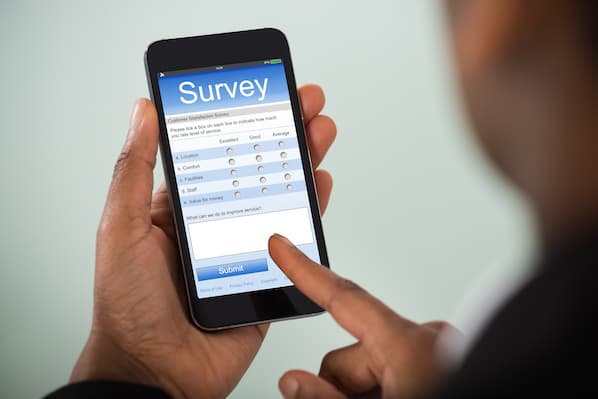
25 Post-Event Survey Questions to Ask for Valuable Attendee Insights
As an event organizer, attendee satisfaction should be your top priority. But how can you know if your event met expectations and provided real value to participants? The answer is simple: ask them!
Post-event surveys are one of the most powerful tools in an event marketer‘s toolbox. By collecting feedback from attendees after an event wraps up, you gain invaluable insights into what worked, what didn‘t, and how you can improve your events in the future.
In fact, 90% of event organizers use post-event surveys to measure success, and 80% consider attendee satisfaction to be a top KPI.
To help you craft an effective post-event survey, we‘ve compiled this list of 25 essential questions to ask. But first, let‘s review some survey best practices.
The Anatomy of an Effective Post-Event Survey
A well-designed post-event survey should include a mix of question types:
- Rating scale questions measure satisfaction on a numerical scale (usually 1-5 or 1-10). For example: "On a scale of 1-10, how satisfied were you with the event?"
- Yes/no questions help you gather quantitative data on specific aspects of the event experience. For example: "Did you find the event app easy to navigate?"
- Open-ended questions allow attendees to provide detailed qualitative feedback. For example: "What was your favorite aspect of the event, and why?"
As a general rule, limit your survey to 10-15 questions at most, and consider offering an incentive (like a gift card drawing) to boost response rates. Keep question phrasing clear and concise.
With that framework in mind, here are 25 questions to consider for your next post-event survey, grouped by category:
Overall Event Satisfaction
- On a scale of 1-10, how would you rate your overall satisfaction with the [Event Name]?
- How did the event compare to your expectations?
- Based on your experience, how likely are you to attend one of our events in the future?
- Would you recommend [Event Name] to a friend or colleague? Why or why not?
Event Content
- How engaging and informative did you find the event content and presentations?
- What was your favorite session, and why?
- Was there a topic you wish the event had covered that it didn‘t?
- On a scale of 1-10, how would you rate the quality of the speakers and presenters?
Networking & Interactivity
- How satisfied were you with the networking opportunities at [Event Name]?
- Did you make any valuable connections at the event?
- On a scale of 1-5, how collaborative and interactive did you find the event?
- Did you feel the event provided enough opportunities to participate and ask questions?
Event Logistics
- How satisfied were you with the event venue?
- How would you rate the quality of event catering and refreshments?
- Did you encounter any technical difficulties or logistical issues during the event?
- On a scale of 1-10, how well-organized was the event?
Virtual & Hybrid Event Experience
- If you attended virtually, how engaging was the online event experience?
- What virtual platform features did you find most useful?
- On a scale of 1-5, how easy was it to navigate the virtual event platform?
- How can we improve the virtual experience for future events?
Attendee Insights
- What motivated you to register for [Event Name]?
- How did you first hear about this event?
- Have you attended any of our previous events?
- Would you be interested in attending more events like this one in the future? If so, how often?
- Is there anything else you‘d like to share about your experience at [Event Name]?
Putting Post-Event Survey Data to Work
Collecting responses is just the first step—the real value lies in translating attendee feedback into action. After the survey closes, take time to carefully review the response data. Identify common themes and trends in the feedback.
Create a summary report with key metrics like average satisfaction rating, Net Promoter Score (NPS), and most/least popular sessions. Share these insights with key stakeholders on your team.
Most importantly, use survey responses to guide your strategy for future events. If attendee satisfaction was high, consider how you can replicate that success next time. If you uncovered areas for improvement, prioritize those changes in your planning.
You should also use post-event feedback to demonstrate event ROI and value to leadership and sponsors. Positive testimonials and high satisfaction ratings are powerful proof points.
Tracking key metrics like average satisfaction and NPS over time will help you benchmark event performance too. Set a goal to increase those metrics by a certain percentage with each event—then adjust your approach based on post-event feedback to hit that goal.
Additional Event Survey Tips
In addition to post-event surveys, you may want to send a shorter pre-event survey when someone registers to learn more about their goals, expectations, and background.
At the event itself, consider providing an on-site survey station with tablets or another way for attendees to share real-time feedback. You can also use a live polling tool during sessions to increase interactivity.
For online events, market research company eMarketer recommends combining surveys with analytics tracking attendee activity for a fuller picture. For example, session registration and attendance rates can supplement feedback on the perceived quality of those sessions.
Conclusion
Post-event surveys are an indispensable tool for understanding the attendee experience, informing future event strategy, and proving event value and ROI. By asking the right mix of questions—and acting on the insights you uncover—you can ensure your events keep getting better year after year.
Equipped with these 25 essential post-event survey questions, you‘re well on your way to gathering the attendee feedback you need to take your events to the next level. Get ready to turn those valuable insights into action!


![How to Start a YouTube Channel [Expert Tips + 30 YouTube Channel Ideas]](https://greenlitcontent.com/wp-content/uploads/2026/04/20260423062347-69e9baf34d00e.jpg)