
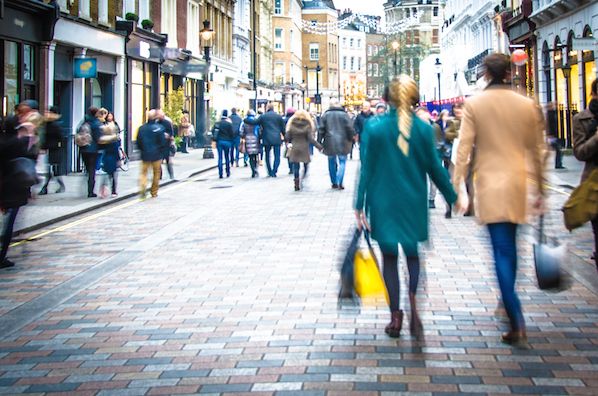
5 Retail Trends That Will Transform the Industry in 2020
The retail apocalypse has claimed many victims in recent years. Iconic brands like Toys R Us and Sears have shuttered stores and filed for bankruptcy. Consumers are increasingly shifting their spending from products to experiences. And digital upstarts are capturing more market share with innovative business models.
In this challenging environment, it‘s more important than ever for retailers to stay ahead of the curve. Brands that fail to adapt risk getting left behind as the industry rapidly evolves. But while the outlook may seem bleak, there are also tremendous opportunities for retailers who are willing to embrace change.
As we look ahead to 2020 and beyond, here are five key trends that will transform the retail landscape – and how your business can capitalize on them:
1. Retail as Experience
Today‘s consumers don‘t just want to buy products – they want immersive experiences that surprise and delight them. In response, forward-thinking retailers are reimagining their physical spaces as destinations for entertainment, education, and community.
Nordstrom has been a pioneer in this space with its "Local" concept – small-format service hubs that offer tailoring, manicures, and personal styling, but carry no inventory. Nike‘s new flagship store in NYC includes a basketball court, treadmills, and a customization studio. Canada Goose‘s "Journey" enables customers to test out its parkas in a sub-zero "Cold Room."
These retailers understand that unique in-store experiences drive traffic, brand affinity, and ultimately higher customer lifetime value. A recent study by Harris Group found that 72% of millennials prefer spending on experiences over products. And according to Forrester Research, experience-led businesses grow revenue 1.7x faster than other companies.
To capitalize on this trend, retailers should audit their store environments and look for opportunities to layer in multisensory elements – sights, sounds, smells, tastes, and tactile experiences. Store associates need to be re-trained from order takers to brand ambassadors and experience guides. And every touchpoint should be evaluated for its potential to surprise and delight.
2. Augmented and Virtual Reality
What if customers could try on clothes without having to step into a fitting room? Or visualize how furniture would look in their home before making a purchase? Thanks to advancements in augmented and virtual reality, these scenarios are becoming a reality for shoppers.
AR and VR technologies are rapidly moving from novelty to mainstream adoption. Global spending on AR/VR is expected to reach $160 billion by 2023, up from $16.8 billion in 2019, according to IDC. And a recent Nielsen survey found that 51% of consumers are willing to use AR to assess products.
In the beauty industry, AR-powered virtual try-on tools have become table stakes. L‘Oréal‘s ModiFace lets users experiment with makeup shades in real-time. Sephora Visual Artist scans your face to provide personalized recommendations. Ulta has rolled out GLAMLab to thousands of stores so shoppers can test products risk-free.
In home goods, Wayfair and Ikea have launched AR apps that let customers preview true-to-scale 3D models of furniture in their space. Warby Parker makes it easy to virtually try on glasses frames through your smartphone. And clothing brands like Gap and Adidas are experimenting with AR-enabled dressing rooms and virtual fitting.
Beyond visualization, VR has the power to transport customers to immersive branded environments. Toms Shoes uses VR to show customers the impact of their purchases on children in need. The North Face has created VR experiences that simulate the feeling of rock climbing and base jumping in their gear.
As these technologies become more sophisticated and affordable, the applications for retail will be limited only by our imagination. Brands that harness AR and VR to enhance product visualization, improve decision confidence, and create memorable experiences will have a significant advantage over those who lag behind.
3. The Internet of Things
We‘re living in an increasingly connected world, with billions of devices and sensors all around us generating massive amounts of data. This Internet of Things (IoT) is ushering in a new era of retail where products can seamlessly reorder themselves, stores can automatically optimize layouts and pricing, and brands can deliver hyper-personalized experiences in real-time.
Take Amazon Dash Replenishment, which enables connected devices to detect when supplies are running low and automatically reorder them. Brands like Brita, Whirlpool, and HP have all integrated Dash into their products. And Amazon‘s new Smart Shelf can automatically track inventory and reorder items for businesses.
In brick-and-mortar stores, IoT technology is being used to create "smart shelves" that can detect stock levels, expiration dates, and potential theft. Kroger has partnered with Microsoft to pilot an EDGE Shelf (Enhanced Display for Grocery Environment) that uses digital displays and real-time analytics to show personalized offers and content to shoppers.
Retailers are also deploying IoT sensors to track in-store shopper behavior and optimize store layouts, product assortments, and staffing. Lululemon has used heat mapping technology to redesign stores for better traffic flow. Walgreens has tested smart coolers that analyze shoppers‘ faces to serve up personalized ads.
As 5G networks expand and the cost of sensors continues to drop, the IoT will become even more ubiquitous. Juniper Research predicts that by 2024 there will be 83 billion IoT connections, a 130% increase from 2019. Retailers who can harness this explosion of real-time data to create intelligent, responsive, and personalized experiences will thrive.
4. Social and Conversational Commerce
Social media has long been a powerful tool for product discovery and brand engagement. But now, innovative retailers are closing the loop by enabling customers to go from inspiration to purchase without ever leaving their favorite apps.
Instagram has been leading the charge with shoppable posts and stories that allow users to learn more about products with a single tap. 130 million accounts tap on Instagram Shopping posts every month. And a recent survey found that 72% of Instagram users have made purchases based on content they saw on the app.
Facebook and Pinterest have also introduced native checkout capabilities for select retailers. And rising platforms like TikTok and Snapchat are experimenting with shoppable filters and AR try-on experiences that blend entertainment with ecommerce.
Meanwhile, retail is getting conversational as shoppers increasingly turn to messaging apps and voice assistants for their needs. Over 100 million people use Facebook Messenger to interact with businesses each month. And Gartner predicts that by 2021, 15% of all customer service interactions will be handled by AI-powered conversational agents.
Innovative brands are using chatbots and voice skills to engage customers in natural language, answer questions, recommend products, and even complete transactions. Domino‘s AnyWare lets you order pizza by tweeting a pizza emoji. Levi‘s Virtual Stylist helps you find your perfect pair of jeans through a few simple questions. And Estée Lauder uses Google Home to give personalized skincare routines and product suggestions.
As consumers spend more time on social and messaging apps, and grow more comfortable interacting with AI assistants, the lines between content and commerce will continue to blur. Retailers need to fish where the fish are by developing native commerce and service experiences on these fast-growing platforms.
5. Cognitive Computing
Artificial intelligence has been hyped for years, but we‘re now starting to see real-world applications that can transform every facet of the retail business. At the core of this shift is cognitive computing – advanced systems that can understand, learn, reason, and interact like humans do.
Perhaps the most visible manifestation of cognitive tech in retail is the rise of robotics. Walmart and Bossa Nova Robotics are rolling out shelf-scanning bots that can check inventory levels and pricing in stores. Best Buy has deployed Chloe, a robot that can retrieve products from the back room for customers. And Mall of America has employed Pepper, a humanoid greeter robot that can give directions and recommendations.
But the true power of cognitive computing lies behind the scenes, in its ability to process huge amounts of structured and unstructured data to surface insights and predictions. By feeding data from IoT sensors, cameras, loyalty programs, social media, and more into cognitive systems, retailers can automate and optimize decision-making across the value chain.
Cognitive demand forecasting can help retailers predict sales down to the SKU level and better manage inventory. Dynamic pricing algorithms can continuously adjust prices based on real-time signals. Cognitive merchandising can power personalized product and content recommendations. And intelligent automation can handle routine tasks and free up employees for higher-value work.
According to IBM, 91% of retail executives familiar with cognitive computing believe it will play a disruptive role in their organization. And those who have implemented it are already seeing results – 40% of "cognitively enabled" retailers report a double-digit improvement in revenue growth. As the technology matures, those who move quickly to pilot and scale cognitive capabilities will have a significant competitive advantage.
Embracing the Future of Retail
The retail industry is at an inflection point. Consumer expectations are rising, technology is accelerating, and new competitors are emerging from every angle. In this rapidly changing landscape, incremental tweaks and business-as-usual won‘t cut it. Retailers need to make bold bets and dramatic transformations to stay relevant and grow.
The five trends outlined above represent some of the biggest opportunities and imperatives for retailers in 2020 and beyond. By embracing experiential retail, AR/VR, the IoT, social commerce, and cognitive computing, brands can create engaging, personalized, and frictionless experiences that win customers‘ hearts, minds, and wallets.
But knowing about these trends is not enough – retailers must take decisive action to capitalize on them. This means getting clarity on where you will play and how you will win. Defining a bold vision for the future, securing executive sponsorship, and aligning the organization around it. Investing in the right talent, tools, and partners to build differentiating capabilities. And cultivating a culture of experimentation, agility, and customer-centricity.
The retailers that will thrive in the coming years are those that confront disruption head-on and transform themselves from the inside out. It won‘t be easy, but it will be worth it. The future of retail belongs to the bold – are you ready to stake your claim?


![Why You Need a Responsive Web Design and How to Do It [10 Inspiring Examples]](https://greenlitcontent.com/wp-content/uploads/2026/04/20260423023729-69e985e912955.jpg)


![RFP: How to Write a Strong Request for Proposal [Example & Template]](https://greenlitcontent.com/wp-content/uploads/2026/04/20260423024426-69e9878aaa352.png)