
How to Use SWOT Analyses to Supercharge Your Content Strategy
As a content marketer, you know that creating quality content is only half the battle. To really succeed, you need a smart strategy behind your efforts. One of the most effective tools for developing that strategy is a SWOT analysis.
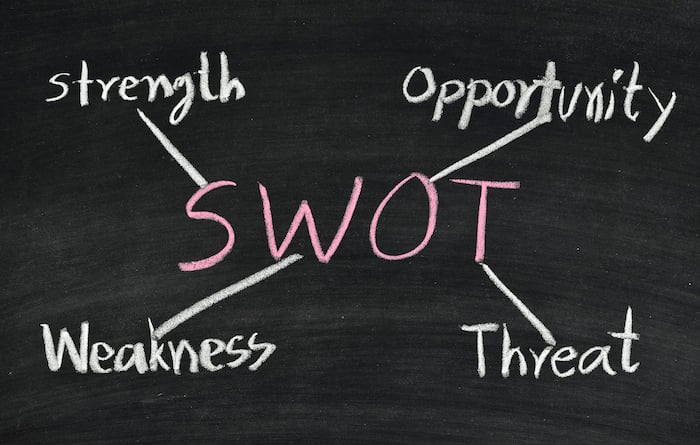
SWOT stands for Strengths, Weaknesses, Opportunities, and Threats. It‘s a framework for analyzing both internal and external factors that can impact your content‘s success. Conducting a SWOT analysis helps you take a step back and evaluate your content marketing from a bird‘s eye view before diving into the tactical details.
When done correctly, a content SWOT analysis can help you:
- Identify your unique value proposition and competitive advantages
- Uncover gaps and areas for improvement in your content strategy
- Spot emerging opportunities you can capture with new content
- Anticipate potential roadblocks and risk factors to mitigate
According to the Content Marketing Institute, 41% of content marketers say strategy issues are their greatest challenge. Yet only 39% have a documented content strategy at all. Taking the time to do a SWOT analysis can help you create that elusive documented strategy to guide your efforts.
Ready to give it a try? Follow these steps to conduct a SWOT analysis that takes your content strategy to the next level.
How to Conduct a Content SWOT Analysis
Step 1: Gather Your Team and Data
A SWOT analysis isn‘t something you should do solo. The best insights come from collaborating with team members who bring different perspectives. Aim to include:
- Content creators like writers, designers, and videographers
- SEO and analytics experts who understand your content‘s performance
- Social media managers who know what resonates with your audience
- Sales and customer service reps who hear customer feedback
Come to the table with data too. Content audits, web analytics, SEO research, social media metrics, and customer surveys can all inform your SWOT analysis.
Step 2: Identify Your Content Strengths
First, look inward and pinpoint what your content marketing is doing well. Strengths are internal factors you can control and build upon. Some questions to discuss:
- What types of content consistently perform well for us?
- What topics and tactics set our content apart from competitors?
- What do we hear from customers about our content‘s value?
- What internal resources and skills give us a content advantage?
For example, say you‘re a fitness brand. Your SWOT strengths might include:
- A blog full of in-depth workout guides and nutrition tips
- An engaged Instagram following that shares your motivational posts
- Relationships with influencers who create sponsored content
- An in-house video team skilled at filming exercise tutorials
List out your top 3-5 content strengths and the supporting evidence. These are your "power moves" to keep leveraging.
Step 3: Face Your Content Weaknesses
Next, take an honest look at where your content falls short. Weaknesses are internal factors that put you at a disadvantage. They might include:
- Gaps in your content coverage or expertise
- Outdated tactics and formats that are losing traction
- Lack of resources or internal skills for content creation
- Inconsistent quality or lack of a defined brand voice
- Poor performance metrics like low traffic and engagement
Facing your weaknesses can be uncomfortable, but it‘s necessary for improvement. For example, your content weaknesses might be:
- Publishing infrequently and inconsistently
- Struggling to rank for important keywords and drive search traffic
- Creating content that‘s too high-level and fails to demonstrate thought leadership
- Writing generic copy that sounds like everyone else in your industry
Acknowledging your weaknesses isn‘t admitting defeat. It‘s identifying opportunities to fix issues and fill gaps before they cause larger problems.
Step 4: Seize Emerging Content Opportunities
This is the fun part—spotting emerging opportunities you can capture with new content. Opportunities are external factors that could give you an advantage if capitalized on. For example:
- Growing interest in a topic relevant to your expertise
- A popular video format you could adapt for your audience
- A customer segment you‘re well-positioned to serve with content
- Partnerships or guest blogging opportunities to expand your reach
The key is finding opportunities that align with your unique strengths. For example:
- A spike in search volume around "work from home exercises" you could address with blog posts and videos.
- An influencer who wants to co-create content reaching a new audience segment.
- A chance to host a virtual wellness summit showcasing your experts alongside industry thought leaders.
Your opportunities list should get you excited about new ideas to pursue and ways to expand your content‘s impact.
Step 5: Anticipate Content Threats
Finally, look outwards at potential threats to your content‘s success. Threats are external factors beyond your control that could derail your plans, such as:
- A competitor publishing more frequently and authoritatively on your topics
- Decreasing audience interest in your content‘s focus area
- New technologies disrupting the way people discover and consume content
- Algorithm changes or regulations impacting your distribution channels
- Talent shortages making it harder to produce quality content
While you can‘t always avoid threats, identifying them early helps you adapt and prepare. For example:
- If competitor content is outranking you, invest in a more aggressive SEO strategy.
- If video is becoming the dominant format, ramp up your YouTube presence.
- If content overload is causing fatigue, experiment with more interactive formats.
Proactively monitoring threats allows you to adjust your approach instead of scrambling to react after the damage is done.
Step 6: Translate SWOT Insights Into Action
Once you‘ve completed your SWOT brainstorm, it‘s time to put those insights to work. Create a grid plotting out your top Strengths, Weaknesses, Opportunities, and Threats. Aim for 3-5 bullet points in each box (see example below).

Now challenge yourself to combine elements across quadrants into actions:
- How can you use Strengths to capitalize on Opportunities?
- How can addressing Weaknesses help mitigate Threats?
- Which Opportunities are most urgent based on Threats?
- Which Weaknesses are most critical to fix based on Threats?
Prioritize your actions based on their potential impact and map them to a timeline. For example:
- In Q1, address our Weakness in SEO by hiring an expert and doing competitive keyword research.
- In Q2, seize the Opportunity of increased interest in home workouts by launching a 30-day challenge content series.
- Throughout the year, build on our Strength in video by adding 2 new YouTube videos per month minimum.
A documented action plan turns your SWOT from a theoretical exercise into a practical roadmap. Build those actions into your content calendar and assign owners to keep your strategy on track.
Tips for Effective SWOT Analyses
Conducting a SWOT analysis is a straightforward process, but there are nuances to doing it well. Here are tips for getting the most strategic value from your SWOT:
1. Involve a diverse group
When doing a SWOT analysis, it‘s tempting to include only the core content team. But you‘ll get richer insights by involving other teams that impact and interact with your content. Don‘t be afraid to invite:
- Designers who can comment on visual and UX elements
- SEO specialists who know why your content is or isn‘t ranking
- Social media managers who see audience engagement firsthand
- Sales and customer service who hear customer feedback
- Executives who shape high-level messaging and branding
The more diverse the perspectives, the more well-rounded your SWOT will be. If you can‘t get everyone in the same room, solicit input through a survey or series of 1:1 interviews to gather their unique insights.
2. Use data to go deeper
Doing a SWOT analysis isn‘t just about brainstorming opinions and assumptions. Ground your insights in actual data. Use sources like:
- Web analytics and traffic reports
- SEO tools and keyword data
- Social media metrics and sentiment analysis
- Content audit and inventory of existing assets
- Competitive analysis and market research
- Customer surveys and feedback
- Sales and revenue data
Data helps you spot trends, benchmark against competitors, and measure the real impact of your content. For example, web analytics might reveal a high bounce rate on mobile traffic, surfacing a Weakness in your mobile content experience to address.
3. Focus on what matters most
It‘s easy to fill up a SWOT diagram with every idea that comes to mind. But not all factors are equal in terms of impact. Avoid a laundry list and zero in on the most crucial elements:
- Strengths that are truly unique and ownable for your brand
- Weaknesses that significantly impede your goals
- Opportunities offering the greatest potential reach or revenue
- Threats with the power to derail your strategy if not addressed
Prioritize ruthlessly and hone in on the 3-5 points for each quadrant that matter most. A focused SWOT is more actionable than one that‘s bloated and meandering.
4. Embrace hard truths
A SWOT analysis only benefits you if you‘re honest about your current situation—warts and all. It‘s tempting to gloss over your content‘s shortcomings and paint an overly rosy picture. But acknowledging hard truths is the only way to fix problems and seize opportunities.
For example, say a SWOT reveals that your blog content is underperforming industry benchmarks for traffic and engagement. That‘s a hard pill to swallow, but facing it prompts you to analyze why and make improvements, such as:
- Revamping old posts for search engine optimization
- Updating your editorial calendar with more relevant topics
- A/B testing headlines and formats to boost engagement
- Featuring more customer stories and original research
Positivity has its place, but a SWOT analysis demands rational objectivity. Honesty isn‘t comfortable, but it‘s necessary for growth.
5. Do them regularly
Your content doesn‘t exist in a vacuum. It‘s impacted by constant changes—in your market, audience preferences, technology, and culture. What‘s a Strength today could become a Weakness tomorrow if you‘re not continually adapting.
That‘s why one SWOT analysis isn‘t enough. Make it a recurring exercise to continuously evaluate and evolve your approach. Some cadences to try:
- Quarterly: Mini SWOT check-ins to surface tactical optimizations
- Annually: In-depth SWOT during strategic planning to set big-picture goals
- Biannually: Mid-year SWOT to gauge progress and course-correct
Mark your calendar now for your next SWOT analysis and treat it as sacred. Bonus points for setting up an automated dashboard to track the data you‘ll need. The more you practice SWOT thinking, the more agile your content marketing will become.
Making SWOT Part of Your Planning Process
A SWOT analysis isn‘t a standalone tactic. It‘s one thread in the larger tapestry of your content strategy. To be effective, your SWOT insights should influence your entire strategic approach, from the markets you target to the tactics you prioritize.
Think of your SWOT as a springboard for your content planning. Once you‘ve identified your core Strengths, Weaknesses, Opportunities, and Threats, use them to inform:
- Your content mission and unique value proposition
- Audience personas and the topics that matter to them most
- Business and marketing goals your content will support
- The competitive landscape and your content differentiation
- High-priority themes and pillars for your editorial calendar
- Success metrics and KPIs to measure content performance
For example, if a SWOT reveals an Opportunity to rank for an emerging keyword, build that topic into your editorial calendar. If it surfaces a Weakness in content distribution, make channel expansion a key initiative.
The more you integrate SWOT findings into your planning, the more focused your strategy will be. For maximum impact, get in the habit of doing a SWOT exercise at the beginning of your annual content planning process:

As you create your documented content strategy, weave in your SWOT takeaways:
- Executive Summary: Highlight the top insights from your SWOT analysis
- Goals & KPIs: Set objectives based on Opportunities and solving for Weaknesses
- Audience Research: Validate personas against SWOT findings
- Competitive Analysis: Pinpoint your unique Strengths and positioning
- Content Themes & Calendar: Prioritize topics aligned with Opportunities
- Promotion & Distribution: Double down on Strengths and plan for Threats
- Metrics & Reporting: Measure key SWOT elements like wins and gaps
Of course, a documented strategy is only as good as its execution. As you create and distribute content throughout the year, continuously crosscheck if your efforts are building on your Strengths, proactively addressing Weaknesses, seizing Opportunities, and protecting against Threats.
Conclusion
Content marketing success demands a marriage of creativity and strategy. You need the imagination to tell compelling stories and the strategic savvy to ensure they reach the right people through the right channels.
A SWOT analysis bridges the gap between creative inspiration and strategic insight. By methodically assessing your Strengths, Weaknesses, Opportunities, and Threats, you gain the 30,000 foot view needed to create content that stands out and drives results.
The next time you‘re staring at a blank editorial calendar or experiencing a lull in traffic, don‘t default to scrambling for ideas and blindly throwing tactics at the wall. Take a step back and do a SWOT analysis. Collaborate with your team, gather data, brainstorm ruthlessly, and distill insights into an action plan.
The SWOT process isn‘t always comfortable. You may have to own up to content weaknesses and missed opportunities. But that temporary discomfort is far outweighed by the strategic edge you‘ll gain in the long run.
After all, the best content doesn‘t just happen by accident. It‘s the product of a fiercely intentional strategy that builds on strengths, confronts weaknesses, claims opportunities, and outmaneuvers threats. And it all starts with four powerful letters: SWOT.

![Why You Need a Responsive Web Design and How to Do It [10 Inspiring Examples]](https://greenlitcontent.com/wp-content/uploads/2026/04/20260423023729-69e985e912955.jpg)