Weird Al Gives Grammar Offenders a Lesson on #WordCrimes
If you‘ve ever found yourself cringing at a misplaced apostrophe or a mixed-up homophone, you‘re not alone. The internet is rife with examples of grammatical gaffes that would make any language lover‘s skin crawl. But never fear – America‘s foremost "grammar cop" is on the case, and he‘s armed with a catchy tune and a wicked sense of humor.
I‘m talking, of course, about the one and only "Weird Al" Yankovic. For those unfamiliar with his work, Weird Al is a musical comedian who has been delighting audiences with his clever parodies of popular songs since the 1980s. From Michael Jackson‘s "Beat It" ("Eat It") to Nirvana‘s "Smells Like Teen Spirit" ("Smells Like Nirvana"), no hit is safe from Weird Al‘s satirical spin.
In 2014, Weird Al set his sights on Robin Thicke‘s "Blurred Lines," a song that had dominated the airwaves but also stirred up controversy for its suggestive lyrics and allegedly misogynistic message. Weird Al‘s version, entitled "Word Crimes," shifts the focus from questionable sexual politics to an equally fraught topic: proper grammar.
Putting the "Fun" in "Fundamentals"
With rapid-fire references and clever wordplay, "Word Crimes" manages to make the intricacies of English grammar not only accessible but downright entertaining. The song covers an impressive array of usage issues, from common misspellings ("I could care less" vs. "I couldn‘t care less") to more advanced concepts like dangling participles and the proper use of "whom."
But Weird Al isn‘t just poking fun at grammar snobs and sticklers for the sake of laughs. As he explained in an interview with Speakeasy, he sees good grammar as essential for clear communication:
"I‘ve always been a bit of a grammar nerd, I guess. But I also understand the importance of being able to communicate effectively and how that can advance your career or hold it back. If somebody has a resume or cover letter that‘s full of grammar errors, it‘s hard to take that person seriously as a professional."
By the Numbers
Just how pervasive are the types of "word crimes" that Weird Al is railing against? Let‘s look at some statistics:
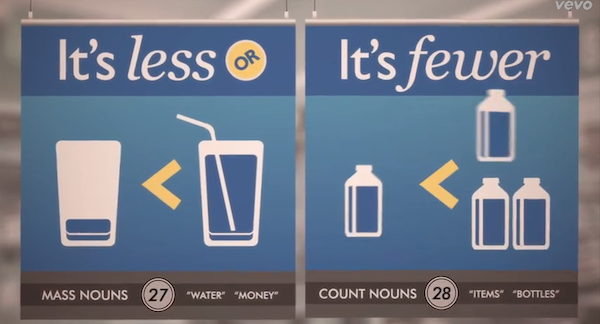
- According to a survey by Dictionary.com, 59% of English speakers admit to using "less" and "fewer" interchangeably, even though they have distinct meanings.
- A 2018 study by Boostlingo found that the average person makes 4-5 grammar mistakes per day, or around 1,460 per year.
- Grammarly‘s 2020 report on the state of writing in the workplace revealed that professionals who frequently make grammar mistakes are perceived as less credible and competent than their more grammatically inclined peers.
| Common Grammar Mistakes | % of People Who Make Them |
|---|---|
| Its/It‘s confusion | 42.5% |
| Misuse of apostrophes | 39.9% |
| Incomplete comparisons | 31.8% |
| Passive voice misuse | 27.6% |
| Dangling modifiers | 24.7% |
Source: Outwrite‘s Analysis of Over 1 Million Writing Samples
Why Good Grammar is Good Business
But poor grammar isn‘t just a personal failing – it can have real consequences for your brand and bottom line. In the fast-paced world of digital marketing, where first impressions are everything, a sloppy or error-ridden piece of copy can be the difference between converting a lead and losing them to a competitor.
Consider these cautionary tales:
- In 2018, the US Department of Education sent out a tweet misspelling the name of African American author and civil rights activist W.E.B. Du Bois. The gaffe sparked instant backlash and accusations of disrespect.
- A single missing comma in a Maine state law led to a court battle over $10 million in overtime pay for delivery drivers. The drivers successfully argued that the ambiguous wording entitled them to more pay.
- Research by Website Planet found that a single spelling mistake on an e-commerce site can cut online sales in half. Conversely, improving spelling and grammar can give a 135% boost to a site‘s credibility.
The takeaway is clear: Investing in quality writing and proofreading isn‘t just a matter of being a grammar snob. It‘s a smart business strategy that can help you avoid costly errors and project a more polished, professional image.
Writing Wrongs: Tips for Upping Your Grammar Game
So how can you avoid falling victim to the types of "word crimes" that Weird Al so gleefully exposes? Here are some expert tips to help you clean up your copy:
-
Read it out loud. Our brains have a funny way of filling in missing words or skipping over small errors when we read silently. Reading your writing aloud forces you to slow down and catch mistakes you might otherwise miss.
-
Get a second opinion. Ask a colleague or friend to review your work with a fresh set of eyes. They may catch things that you‘ve become "word blind" to after staring at the same document for hours.
-
Use digital tools (but don‘t rely on them exclusively). Grammar checkers like Grammarly and Hemingway App can be useful for catching common errors and identifying areas for improvement. However, they‘re not foolproof, so make sure to proofread manually as well.
-
Keep a cheat sheet handy. Create a personalized list of grammar rules or words that trip you up frequently, and refer to it when writing or editing. You can find numerous online resources, like this guide from YourDictionary, to help you get started.
-
When in doubt, look it up. If you‘re unsure about a particular rule or usage, take a few minutes to consult a reputable reference like The Chicago Manual of Style or Merriam-Webster‘s Dictionary. A little extra research can save you a lot of embarrassment down the line.
Of course, even the most meticulous writer is bound to make a mistake now and then. The key is to strive for clarity and consistency in your writing, not perfection. As the old saying goes, "to err is human." But with a little humor and a lot of practice, we can all work to avoid the types of "word crimes" that would make Weird Al (and our high school English teachers) cringe.
The Bottom Line
At the end of the day, good grammar is about more than just following a set of arbitrary rules. It‘s about communicating effectively and presenting your ideas in the best possible light. Whether you‘re crafting an email to a client, writing web copy for your company‘s site, or just posting on social media, the words you choose and the way you put them together matter.
So let‘s all take a page from Weird Al‘s songbook and vow to be a little more vigilant about avoiding those dreaded "word crimes." Your readers (and your reputation) will thank you.
And if all else fails, just remember:
"Say you got an ‘I,‘ ‘T‘
Followed by apostrophe, ‘S‘
Now what does that mean?
You would not use "it‘s" in this case
As a possessive
It‘s a contraction
What‘s a contraction?
Well, it‘s the shortening of a word, or a group of words
By the omission of a sound or letter"
Thanks for the grammar lesson, Weird Al. We couldn‘t have said it better ourselves.