- For ages 13
- 256GB
- Super-fast processor and high-resolution display
- Experience total immersion with 3D positional audio, hand tracking, and haptic feedback, working together to make virtual worlds feel real
- Explore an expanding universe of over 250 titles across gaming, fitness, social/multiplayer, and entertainment, including exclusive blockbuster releases and totally unique VR experiences
- Travel universes in blockbuster fantasies, scare yourself witless in horror adventures, or collaborate with colleagues in innovative workspaces
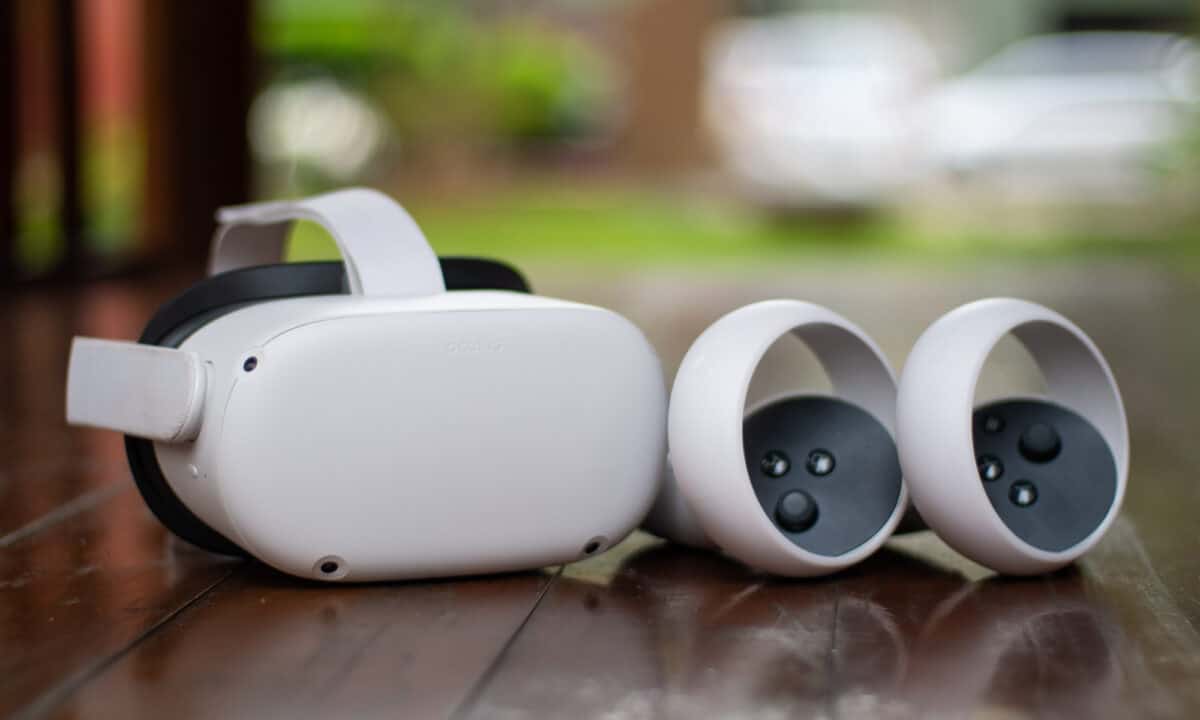
The Oculus Quest 2 was a hot topic back on September 16, 2020, when it was first released. Reviews were mixed at the time, and we can’t say that the negative opinions were wrong. The Oculus Quest 2 is a great entry-level VR device today. Back when it was first released, though, it was lacking in a lot of categories.
Some of these issues have been fixed in updates. For example, the Oculus Quest 2 no longer requires a Facebook login to use (something that put off many potential buyers) as of this month. The Quest 2 got a couple of other upgrades, like access to a 90Hz refresh rate and a storage increase from 64GB to 128GB.
Today, Quest 2 is a strong contender in the VR space. But it’s also in a wildly different position compared to the Quest Pro, which we’ll dive into next.
Oculus Quest 2 Specs and Features
The Quest 2 has some really solid specs for a modern VR headset that only costs $299. It uses a Snapdragon XR2 Platform processor, which is fine for most things you’ll want to do with the device. Similarly, the Quest 2 has a good-enough resolution of 1,832 x 1,920 pixels.
Pretty much all of Quest 2’s specs fall into the same bucket. They work well for someone who doesn’t use demanding programs and isn’t super invested in VR as a whole. All that being said, the Quest 2’s regular upgrades mean that it can face down every other budget headset.
The refresh rate options with the Quest 2 make this very obvious. You can use as low as 72HZ, but you can also go up to 90Hz and even 120Hz with the updates. Additionally, the Quest 2 is available in two models. One has 128GB of storage and the other has 256GB– the same as what the Quest Pro offers.
Ultimately, the Quest 2 can more or less keep up with the Quest Pro in all of these categories. Those minimal upgrades certainly aren’t worth the price increase for the Quest Pro. But where the Quest 2 cuts corners left and right in order to save on costs, the Quest Pro can fill in those gaps.
Comfort is a huge factor in VR, and so is battery life. The Quest Pro does better in both of those categories. Meta gave the Quest 2 a flimsy, generally unhelpful head strap that most buyers end up needing to replace. They also supplied the Quest 2 with only 2-3 hours of battery life at most.
These factors are fine if you use Quest 2 for casual gaming, and less so if you want to use VR for anything else.
Oculus Quest Pro vs. Quest 2: 6 Must-Know Facts
- The Quest 2 matches the Quest Pro in visuals, including resolution and refresh rate.
- The Quest 2 is a quarter of the Quest Pro’s price, at $299 compared to $1,500.
- For battery life, the Quest Pro is the clear winner.
- While the Quest 2 is aimed at gamers or people who want to try VR for the first time, the Quest Pro is aimed toward professional VR use.
- The Quest 2 can be purchased with just as much storage as the Quest Pro, at 256GB.
- Meta might update the Quest Pro regularly, as the Quest 2 has received regular upgrades over the years.
Oculus Quest Pro vs. Quest 2: Which is Better?
The Quest Pro is the better VR headset. Its specs and features trump that of the Quest 2 in every way, from resolution to battery life to comfort. But even though the Quest Pro has superior technology, it isn’t worth it for everyone.
A price over $1,000 is a hard sell for most people, and more so for anyone trying to upgrade from the cheap Quest 2. These two headsets are fundamentally made for different kinds of VR usage. Where the Quest 2 is for entry-level VR users, the Quest Pro is for people ready to invest in virtual reality as their future.
There’s far less value in buying the Quest Pro if you plan on using it exclusively for gaming. In that case, you should either purchase the Quest 2 or buy a different headset that’s made for gaming. The Valve Index and HTC Vive Pro are both premium headsets that are far better than the Quest Pro when it comes to gaming.
So, it really depends on where your focus is. If you want a VR headset to use like a “laptop for your face”, in the words of Meta, then the Quest Pro is one of the best options on the market today. Otherwise, you might want to stick with the Quest 2 or buy a different headset entirely.
Frequently Asked Questions
How much does the Meta Quest Pro cost?
The Meta Quest Pro costs $1,500 to buy new, at the time of its release. It’s more expensive than the Quest 2 by a landslide, but it does have a variety of improvements. These include better graphics technology, processing power, memory, and storage.
How long does Oculus Pro battery last?
The Oculus Pro’s battery lasts between 1-2 hours of usage. It will vary somewhat depending on the intensity of the task. For example, a highly demanding game will drain the battery significantly faster than watching a movie. Make sure you keep in mind what you’re using the Pro for when determining how much time you’ll have with it.
Does the Quest Pro have better visuals than the Quest 2?
The Quest Pro has nearly identical visuals to the Quest 2 on paper, but they are actually better because of technology advancements. The Pro has better clarity and matches the Quest 2 for resolution, FoV, and refresh rate.
Is 128GB enough for Oculus Quest 2?
In all likelihood, 128GB will be more than enough for the Oculus Quest 2. This is especially the case if you’re only using the Quest 2 to play games, and most of the games you like are relatively small. It can be useful to make a list of all the things you know you’ll want to install and tally up the storage they’ll need. Then, you can make a better informed decision about which storage package will work best for you.