25 Must-Know Concepts for Beginners in Deep Learning & Neural Networks: A Journey Through Artificial Intelligence
Prologue: The Technological Odyssey
Imagine standing at the crossroads of human innovation, where mathematics, computer science, and biological understanding converge. This is the fascinating world of deep learning and neural networks – a realm where machines begin to mimic the intricate processes of human cognition.
As someone who has spent decades exploring the labyrinthine pathways of artificial intelligence, I‘ve witnessed remarkable transformations. From rudimentary computational models to sophisticated neural architectures that can recognize emotions, translate languages, and even create art, our technological landscape has undergone a profound metamorphosis.
This guide is more than a technical manual; it‘s an invitation to understand how machines learn, adapt, and increasingly interact with our world in ways we once thought impossible.
The Philosophical Foundation: Understanding Neural Networks
Neural Networks: Nature‘s Computational Inspiration
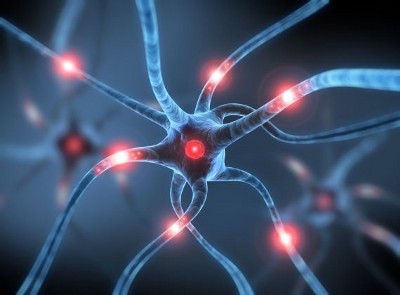
Neural networks aren‘t just algorithms; they‘re philosophical constructs that challenge our understanding of intelligence. Inspired by the human brain‘s intricate neural connections, these computational models represent a profound attempt to replicate cognitive processes.
When I first encountered neural networks in the late 1990s, they seemed like abstract mathematical curiosities. Today, they‘re fundamental to solving complex problems across diverse domains – from medical diagnostics to autonomous vehicle navigation.
Consider a neural network like an apprentice learning a craft. Just as a young artisan observes a master, learns techniques, and gradually develops expertise, neural networks absorb data, recognize patterns, and refine their understanding through iterative learning.
The Mathematical Symphony of Neurons
Each neuron in a neural network performs a delicate mathematical dance. Imagine a neuron as a sophisticated decision-maker, receiving multiple inputs, weighing their significance, and generating a nuanced output.
Mathematically, this process can be represented as:
[Output = Activation(∑(Inputs * Weights) + Bias)]This seemingly simple equation encapsulates the profound complexity of machine learning. By adjusting weights and biases, neural networks can approximate incredibly complex functions, transforming raw data into meaningful insights.
Architectural Elegance: Deep Learning Structures
Convolutional Neural Networks: Visual Perception Reimagined
Convolutional Neural Networks (CNNs) represent a quantum leap in machine vision. Unlike traditional image processing techniques, CNNs don‘t just analyze pixels; they understand visual context, hierarchical features, and spatial relationships.
Imagine a CNN as an art restorer, meticulously examining a damaged painting. It doesn‘t just see individual brush strokes but comprehends the underlying composition, style, and artistic intent.
Modern CNNs can detect microscopic medical anomalies, recognize facial expressions with remarkable precision, and even generate photorealistic images from textual descriptions.
Recurrent Neural Networks: The Memory Keepers
Recurrent Neural Networks (RNNs) introduce a revolutionary concept: memory. Unlike traditional neural networks that process each input independently, RNNs maintain an internal state, allowing them to understand sequential data.
Think of an RNN as a storyteller who remembers previous narrative threads while constructing a coherent tale. This capability makes RNNs invaluable in natural language processing, speech recognition, and time-series prediction.
Training Dynamics: The Learning Mechanism
Backpropagation: The Learning Algorithm
Backpropagation is the neural network‘s learning mechanism – a sophisticated error correction process. Imagine a skilled musician continuously adjusting their performance based on audience feedback.
When a neural network makes a prediction, it simultaneously calculates the error between its output and the expected result. This error is then propagated backward through the network, allowing each neuron to understand its contribution to the mistake and adjust accordingly.
Gradient Descent: Navigating the Error Landscape
Gradient descent is like a mountaineer finding the most efficient path down a complex terrain. By incrementally adjusting network parameters in the direction of minimal error, this optimization technique allows neural networks to converge toward optimal solutions.
Emerging Frontiers: Advanced Concepts
Transfer Learning: Knowledge Inheritance
Transfer learning represents a paradigm shift in machine learning. Instead of training models from scratch, we can now leverage pre-trained knowledge across different domains.
Imagine a polymath who seamlessly applies expertise from one field to another. Transfer learning enables neural networks to do precisely that – transferring learned representations and accelerating learning in new contexts.
Generative AI: The Creative Frontier
Generative models like Generative Adversarial Networks (GANs) blur the boundaries between human and machine creativity. These models don‘t just recognize patterns; they can create novel, coherent content across various domains.
From generating realistic artwork to composing music, generative AI challenges our fundamental understanding of creativity and computational potential.
Ethical Considerations and Future Perspectives
Responsible AI: Navigating Technological Ethics
As neural networks become increasingly sophisticated, we must address critical ethical considerations. How do we ensure fairness, transparency, and accountability in AI systems?
The future of deep learning isn‘t just about technological capability but about developing AI that aligns with human values and societal well-being.
Conclusion: An Ongoing Journey of Discovery
Deep learning represents more than a technological domain – it‘s a continuously evolving philosophical exploration of intelligence, learning, and computational potential.
As you embark on your neural network journey, remember that every complex concept was once unfamiliar. Embrace curiosity, maintain a learner‘s mindset, and never stop exploring the boundless possibilities of artificial intelligence.
The most profound discoveries await those willing to challenge existing paradigms and imagine new computational horizons.
Recommended Learning Pathway
- Master fundamental mathematical concepts
- Practice implementing neural networks
- Engage with open-source projects
- Stay updated with latest research
- Cultivate interdisciplinary thinking
Your neural network adventure begins now. Welcome to the future.