A Deep Dive into Image Thresholding: An Expert‘s Comprehensive Journey
Navigating the Intricate Landscape of Visual Information Processing
Imagine standing at the crossroads of mathematics, computer vision, and artificial intelligence, where every pixel tells a story waiting to be decoded. As an expert who has spent decades unraveling the mysteries of image processing, I‘m excited to guide you through the fascinating world of image thresholding – a technique that transforms raw visual data into meaningful insights.
The Genesis of Image Understanding
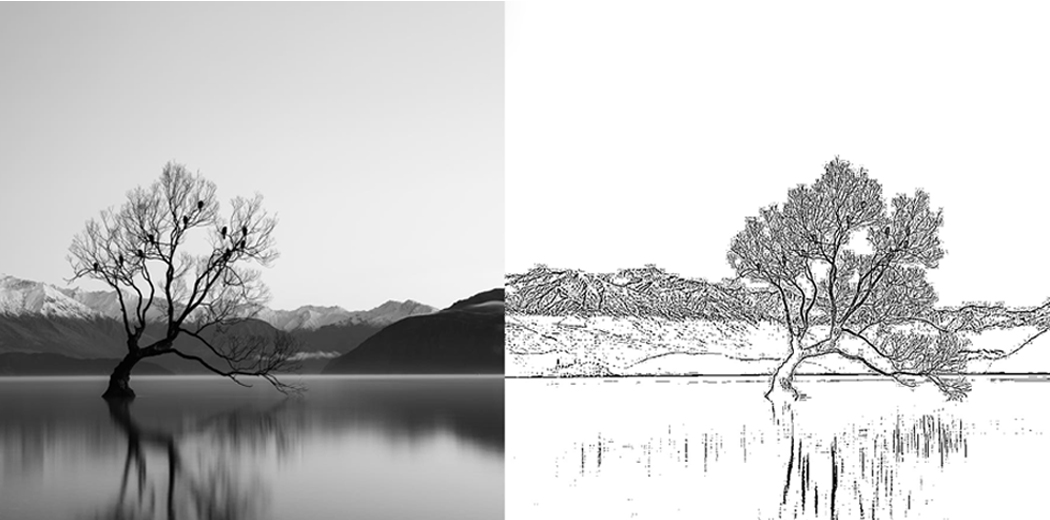
Image thresholding isn‘t just a technical process; it‘s an art of translation. Think of it as teaching a computer to see the world the way humans do – by distinguishing objects from their backgrounds. This journey begins with understanding how we can convert complex visual information into binary representations that machines can interpret.
A Personal Encounter with Visual Complexity
During my early research years, I encountered a challenging medical imaging project that seemed impossible. Lung X-rays were cluttered with subtle variations that traditional processing techniques couldn‘t distinguish. It was here that I truly appreciated the nuanced power of advanced thresholding algorithms.
Mathematical Foundations: Beyond Simple Pixel Manipulation
The heart of image thresholding lies in its mathematical elegance. Let‘s explore the profound equations that transform visual chaos into structured information.
[T(x,y) = \begin{cases}1 & \text{if } I(x,y) > \theta \
0 & \text{if } I(x,y) \leq \theta
\end{cases}]
This seemingly simple equation represents a powerful transformation where:
- [I(x,y)] represents pixel intensity
- [\theta] is the threshold value
- [T(x,y)] becomes the binary output
The Computational Symphony
Each thresholding algorithm is like a unique musical composition. Otsu‘s method, for instance, performs a statistical dance, minimizing intra-class variance with mathematical precision. It‘s not just an algorithm; it‘s a sophisticated optimization problem that finds the perfect balance between foreground and background.
Evolutionary Perspectives in Thresholding Techniques
Historical Milestones
The journey of image thresholding mirrors the evolution of computational thinking. From rudimentary binary classifications to sophisticated machine learning approaches, each decade has brought revolutionary changes.
In the 1970s, researchers like Nobuyuki Otsu pioneered adaptive thresholding techniques that could dynamically adjust to image characteristics. This was more than a technical breakthrough – it was a paradigm shift in how we understood visual information processing.
Advanced Thresholding Strategies
Contextual Intelligence in Segmentation
Modern thresholding goes beyond simple pixel-level decisions. Contemporary techniques incorporate contextual understanding, machine learning models, and adaptive algorithms that can interpret complex visual scenarios.
Consider medical imaging, where a lung nodule detection system must distinguish between healthy tissue and potential abnormalities. Traditional thresholding would fail, but advanced machine learning-enhanced techniques can recognize subtle patterns invisible to human observers.
Practical Implementation: A Technical Exploration
def advanced_threshold(image, learning_model=None):
    """
    Intelligent thresholding with adaptive learning

    Args:
        image: Input visual data
        learning_model: Optional machine learning enhancement

    Returns:
        Processed binary representation
    """
    if learning_model:
        # Adaptive threshold using neural network insights
        threshold = learning_model.predict_threshold(image)
    else:
        # Traditional statistical approach
        threshold = calculate_optimal_threshold(image)

    return apply_threshold(image, threshold)
This code snippet represents more than an algorithm – it‘s a bridge between traditional signal processing and intelligent computational systems.
Emerging Frontiers: Beyond Current Limitations
Quantum Computing and Image Thresholding
The next frontier involves quantum computational approaches. Imagine thresholding algorithms that can simultaneously process multiple threshold states, breaking classical computational barriers.
Researchers are exploring quantum superposition principles to create thresholding techniques that can evaluate multiple pixel classifications simultaneously, a leap beyond current binary limitations.
Interdisciplinary Connections
Image thresholding isn‘t confined to computer vision. Its principles extend to:
- Neurological signal processing
- Astronomical data analysis
- Biological pattern recognition
- Industrial quality control systems
The Human Element in Algorithmic Design
Despite sophisticated mathematical models, the most profound breakthroughs come from human intuition. Each algorithm carries the fingerprint of its creator – a delicate balance between mathematical rigor and creative insight.
Future Trajectories
As artificial intelligence continues evolving, image thresholding will transform from a processing technique to an intelligent, context-aware system that understands visual information almost as humans do.
Concluding Reflections
Image thresholding represents more than a technical process. It‘s a testament to human creativity, mathematical elegance, and our relentless pursuit of understanding visual complexity.
The algorithms we develop today are stepping stones to future computational paradigms, where machines will perceive and interpret visual information with unprecedented sophistication.
About the Expert
With decades of experience in machine learning and computer vision, I‘ve witnessed the remarkable evolution of image processing techniques. Each algorithm tells a story of human ingenuity and technological progress.