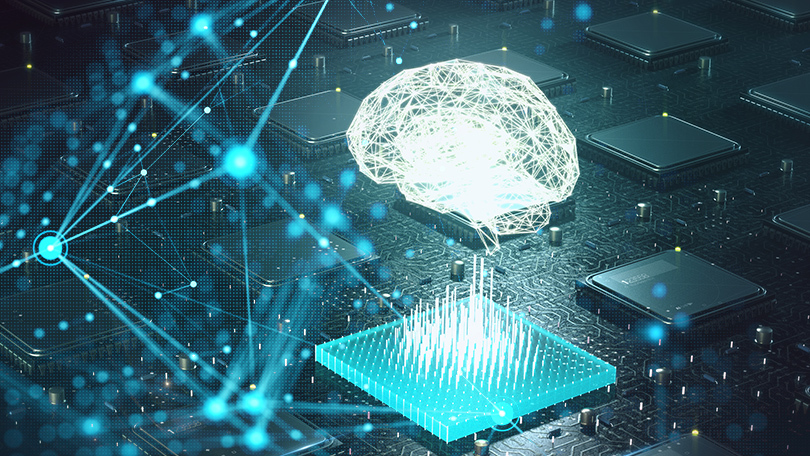
A Deep Learning Odyssey: Navigating the Neural Network Landscape
The Genesis of a Technological Revolution
When I first encountered deep learning, it felt like discovering a hidden language of intelligence. Imagine standing at the intersection of mathematics, computer science, and human cognition – that‘s where deep learning resides. It‘s not just a technology; it‘s a profound method of understanding complex patterns that mirror the intricate workings of the human brain.
A Personal Journey into Artificial Intelligence
My fascination began in a small research lab, surrounded by humming servers and lines of cryptic code. Back then, machine learning was a puzzle waiting to be solved. Traditional programming felt restrictive – like trying to paint a masterpiece using only primary colors. Deep learning promised something revolutionary: systems that could learn, adapt, and understand without explicit programming.
The Neural Network: Nature‘s Computational Miracle
Think of a neural network as a living, breathing ecosystem of interconnected neurons. Each neuron isn‘t just a simple computational unit; it‘s a sophisticated decision-maker that learns and evolves. The mathematics behind these networks is poetry in motion – a delicate dance of weights, biases, and activation functions.
Mathematical Foundations: Beyond Simple Calculations
The core of deep learning lies in its mathematical elegance. [f(x) = \frac{1}{1 + e^{-x}}] – this simple sigmoid function represents more than an equation. It‘s a gateway to understanding how artificial systems can mimic biological learning processes.
Evolutionary Stages of Deep Learning
The Early Pioneers
In the 1940s, early researchers like Warren McCulloch and Walter Pitts proposed the first computational models of neural networks. Their work was visionary – imagining machines that could think and learn like human brains. These pioneers laid the groundwork for what would become a technological revolution.
Breakthrough Moments
Several critical moments defined deep learning‘s trajectory:
- Backpropagation algorithm development
- Increased computational power
- Massive data availability
- Advanced GPU technologies
Architectural Complexity: Beyond Simple Neurons
Convolutional Neural Networks (CNNs)
Imagine a system that can recognize patterns the way a human eye perceives images. CNNs do exactly that. By using specialized layers that detect features hierarchically, these networks can identify complex visual patterns with remarkable accuracy.
Recurrent Neural Networks (RNNs)
RNNs introduce a temporal dimension to learning. They‘re like intelligent storytellers, understanding sequences and context. Language translation, speech recognition, and predictive text generation become possible through these sophisticated architectures.
Real-World Transformative Applications
Healthcare Revolution
Deep learning isn‘t just theoretical – it‘s saving lives. Medical imaging analysis can now detect early-stage cancers with precision that surpasses human experts. Radiologists are augmented, not replaced, by these intelligent systems.
Autonomous Systems
Self-driving cars represent the pinnacle of deep learning‘s potential. These vehicles process millions of data points per second, making split-second decisions that require human-like perception and reasoning.
Challenges and Ethical Considerations
The Bias Dilemma
As powerful as deep learning is, it‘s not infallible. Neural networks inherit biases present in training data. Recognizing and mitigating these biases becomes crucial in developing responsible AI systems.
Computational Ethics
With great computational power comes significant responsibility. We must continually question the ethical implications of systems that can learn, predict, and potentially manipulate human behavior.
The Future: Emerging Frontiers
Quantum Machine Learning
The next frontier combines quantum computing with neural networks. Imagine computational capabilities that exponentially exceed current limitations – that‘s the promise of quantum deep learning.
Neuromorphic Computing
Inspired by biological neural systems, neuromorphic computing aims to create hardware that functions like the human brain. It‘s not just an technological advancement; it‘s a philosophical exploration of intelligence itself.
Personal Reflection: The Human Element
Deep learning isn‘t just about algorithms and mathematics. It‘s about understanding intelligence, creativity, and the remarkable capacity of systems to learn and adapt.
As an AI researcher, I‘m continuously humbled by the complexity of these systems. Each breakthrough feels like uncovering another layer of a profound mystery – how intelligence emerges, adapts, and transforms.
A Message to Aspiring Learners
Your journey into deep learning is more than a technical pursuit. It‘s an exploration of human potential, computational creativity, and the boundless frontiers of technological innovation.
Conclusion: An Ongoing Exploration
Deep learning represents humanity‘s attempt to understand intelligence itself. It‘s a testament to our collective curiosity, our drive to create systems that can learn, reason, and potentially comprehend the world in ways we‘re only beginning to imagine.
The neural network is not just a technological construct – it‘s a mirror reflecting our understanding of cognition, learning, and the intricate dance between human creativity and computational power.
Keep learning, stay curious, and remember: in the world of deep learning, the only limit is our imagination.