Anomaly Detection using AutoEncoders: A Comprehensive Journey Through Machine Intelligence
Unraveling the Mysteries of Anomalous Data: A Personal Exploration
When I first encountered the complex world of anomaly detection, I was struck by its profound similarity to detective work. Just as a seasoned investigator seeks unusual patterns in seemingly mundane evidence, machine learning experts hunt for data points that whisper secrets of deviation and potential significance.
The Genesis of Anomaly Understanding
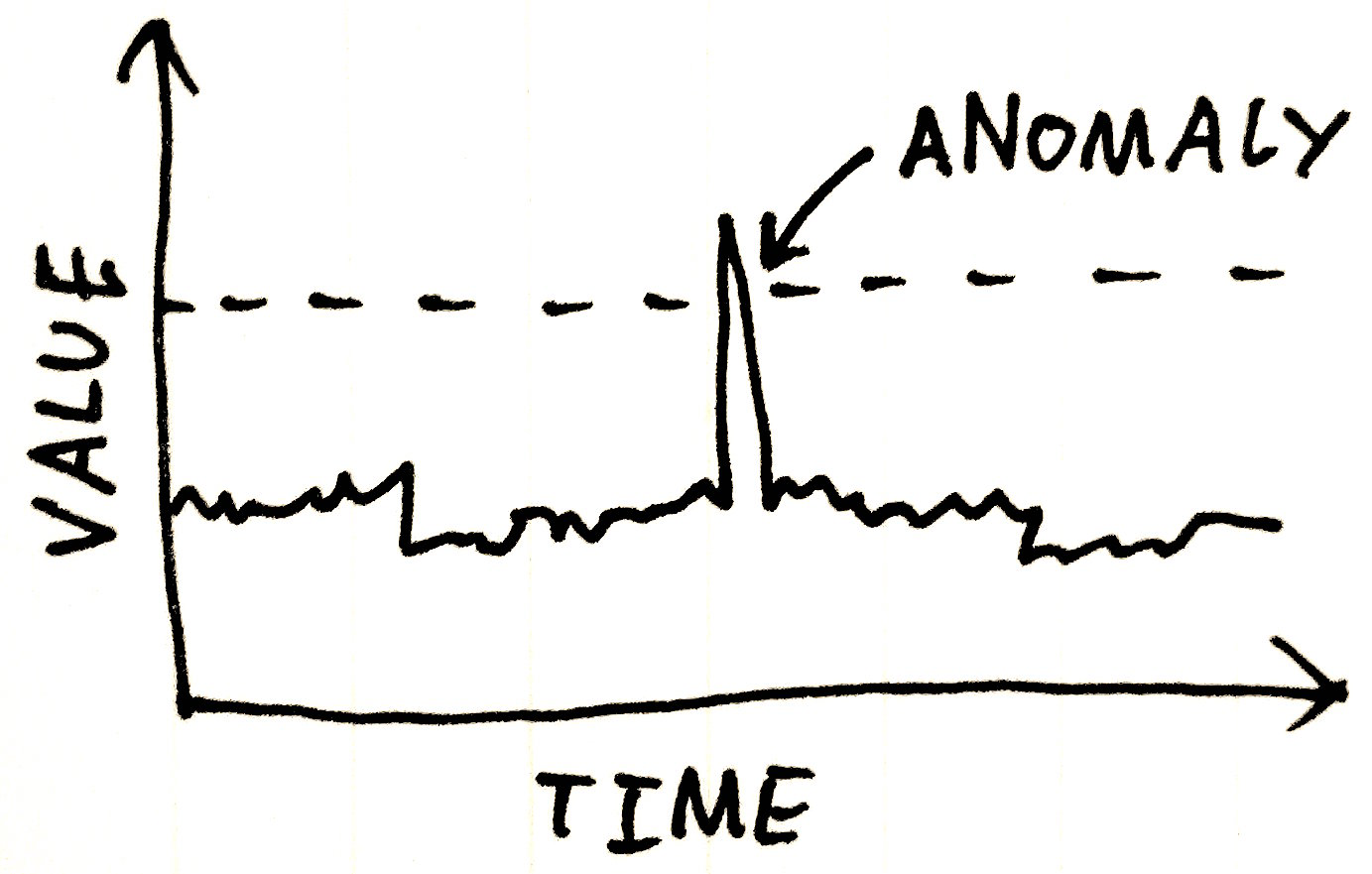
Imagine data as a vast, intricate landscape. Most points cluster together, forming predictable terrain. But occasionally, a point emerges that stands dramatically apart – an anomaly. These outliers aren‘t mere statistical accidents; they‘re windows into underlying system behaviors, potential risks, and hidden insights.
Theoretical Foundations: Beyond Simple Deviation
Anomaly detection transcends traditional statistical methods. It‘s a sophisticated dance between mathematical precision and computational intelligence. The core challenge lies in distinguishing meaningful deviations from random noise.
Mathematical Underpinnings
The mathematical representation of anomaly detection can be elegantly expressed through [P(x) \leq \epsilon], where [P(x)] represents the probability of an observation [x] and [\epsilon] serves as our anomaly threshold.
AutoEncoders: Neural Architecture of Insight
AutoEncoders represent a revolutionary approach to understanding data‘s intrinsic structure. These neural networks function like sophisticated compression algorithms, learning to represent complex information in compressed dimensional spaces.
Architectural Elegance
Consider an autoencoder as a neural translator. It takes high-dimensional input, compresses it into a compact representation, and then attempts to reconstruct the original data. The magic happens in this reconstruction process – where anomalies reveal themselves through reconstruction errors.
Encoder Mechanism
class AdvancedEncoder(tf.keras.Model):
    def __init__(self, latent_dim):
        super(AdvancedEncoder, self).__init__()
        self.dense_layer1 = Dense(128, activation=‘relu‘)
        self.dense_layer2 = Dense(64, activation=‘relu‘)
        self.latent_representation = Dense(latent_dim, activation=‘linear‘)

    def call(self, inputs):
        x = self.dense_layer1(inputs)
        x = self.dense_layer2(x)
        return self.latent_representation(x)
Practical Implementation Strategies
Data Preprocessing Techniques
Preparing data for anomaly detection isn‘t merely a technical step – it‘s an art form. Normalization, scaling, and feature engineering transform raw information into meaningful representations.
def preprocess_data(dataset):
    scaler = StandardScaler()
    normalized_data = scaler.fit_transform(dataset)
    return normalized_data, scaler
Performance Evaluation: Beyond Traditional Metrics
Measuring anomaly detection performance requires nuanced approaches. Traditional accuracy metrics fall short when dealing with imbalanced datasets where anomalies represent rare events.
Advanced Evaluation Frameworks
We leverage metrics like:
- Precision-Recall Curves
- F1 Scores
- Receiver Operating Characteristic (ROC) Analysis
Real-World Application Landscapes
Cybersecurity Frontiers
In network security, autoencoders act as digital sentinels. They learn normal network traffic patterns and instantaneously flag potential intrusion attempts by detecting statistically significant deviations.
Financial Fraud Detection
Banks and financial institutions leverage these techniques to identify potentially fraudulent transactions. By understanding typical transaction behaviors, systems can rapidly highlight suspicious activities.
Emerging Research Directions
The future of anomaly detection lies in hybrid approaches. Combining traditional statistical methods with advanced neural architectures promises unprecedented insights.
Interdisciplinary Convergence
Researchers are exploring fascinating intersections between:
- Quantum computing
- Probabilistic graphical models
- Reinforcement learning techniques
Practical Challenges and Limitations
No technology is without constraints. AutoEncoders face challenges like:
- Computational complexity
- Sensitivity to hyperparameter tuning
- Potential overfitting risks
Ethical Considerations
As we develop increasingly sophisticated anomaly detection systems, ethical considerations become paramount. Balancing technological capability with privacy and fairness remains a critical challenge.
Conclusion: A Continuous Learning Journey
Anomaly detection using autoencoders represents more than a technical methodology – it‘s a philosophical approach to understanding complex systems. We‘re not just identifying outliers; we‘re developing computational intuition.
Recommended Learning Path
- Master foundational machine learning concepts
- Develop strong mathematical statistics background
- Practice implementation across diverse domains
- Stay curious and embrace continuous learning
Final Thoughts
As an artificial intelligence expert, I‘ve witnessed the transformative power of anomaly detection. It‘s not about finding errors – it‘s about understanding complexity, revealing hidden patterns, and expanding our computational understanding.
The journey continues, one anomaly at a time.