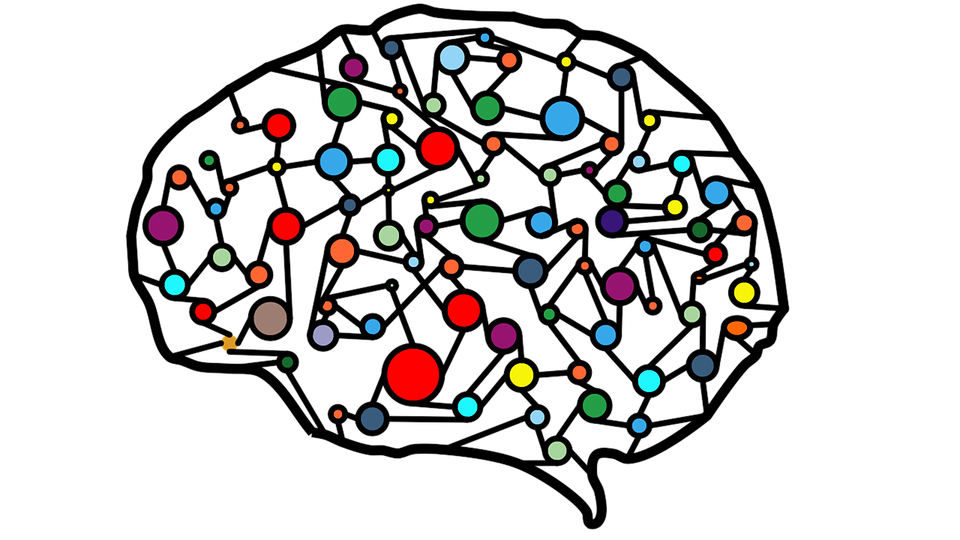
Artificial Neural Networks: Unraveling the Computational Brain‘s Mysteries
The Fascinating Journey of Computational Intelligence
Imagine a technology so profound it can mimic the intricate workings of human cognition. Artificial Neural Networks (ANNs) represent this extraordinary frontier of computational intelligence, bridging biological inspiration with mathematical precision.
The Genesis of Neural Computing
The story of artificial neural networks begins not in modern computer labs, but in the curious minds of researchers seeking to understand human intelligence. In the 1940s, Warren McCulloch and Walter Pitts first proposed a computational model of neural networks, laying groundwork for a technological revolution that would transform how we perceive machine learning.
Biological Foundations: Nature‘s Computational Masterpiece
Our human brain, a marvel of biological engineering, contains approximately 86 billion neurons interconnected through trillions of synapses. Each neuron acts as a complex information processor, receiving, analyzing, and transmitting signals with remarkable efficiency. Artificial neural networks draw direct inspiration from this extraordinary natural system, attempting to replicate its fundamental computational principles.
Mathematical Architecture of Neural Networks
At the heart of artificial neural networks lies a sophisticated mathematical framework. Consider a single artificial neuron as a computational unit that receives multiple input signals, processes them through weighted connections, and generates an output based on specific activation rules.
The fundamental equation representing neural computation can be expressed as:
[Output = f(\sum_{i=1}^{n} (Weight_i * Input_i) + Bias)]This elegant formula encapsulates how artificial neurons transform raw input data into meaningful computational results.
Decoding Neural Network Learning Mechanisms
Learning in artificial neural networks occurs through complex optimization processes. Unlike traditional programming approaches, neural networks adapt and improve their performance by iteratively adjusting connection weights based on observed outcomes.
Backpropagation: The Learning Algorithm
Backpropagation represents the primary mechanism through which neural networks refine their computational capabilities. This algorithm calculates the gradient of error across network layers, systematically adjusting weights to minimize prediction discrepancies.
The backpropagation process involves:
- Forward propagation of input data
- Error calculation at output layer
- Gradient computation
- Weight adjustments using optimization techniques
Gradient Descent: Navigating the Error Landscape
Gradient descent serves as the fundamental optimization strategy in neural network learning. By incrementally reducing the error landscape, this technique enables networks to converge toward optimal computational solutions.
Activation Functions: Neural Network‘s Decision Makers
Activation functions transform input signals, introducing non-linear computational capabilities. Each function possesses unique mathematical properties that determine neural network behavior:
- Sigmoid Function: Maps inputs to probability-like outputs between 0 and 1
- ReLU: Enables faster learning by addressing vanishing gradient challenges
- Hyperbolic Tangent: Provides zero-centered output range
Advanced Neural Network Architectures
Modern neural network designs have evolved far beyond simple linear models. Contemporary architectures like Convolutional Neural Networks (CNNs) and Transformer models represent sophisticated computational paradigms capable of handling complex, multi-dimensional data processing tasks.
Convolutional Neural Networks: Visual Intelligence
CNNs revolutionized image recognition by introducing specialized layer architectures that extract hierarchical visual features. By mimicking human visual processing mechanisms, these networks achieve remarkable pattern recognition capabilities.
Transformer Networks: Language Understanding Redefined
Transformer architectures have transformed natural language processing through self-attention mechanisms. By dynamically weighing input relationships, these networks generate contextually rich representations of linguistic information.
Real-World Neural Network Applications
Neural networks have transcended theoretical research, becoming integral across diverse domains:
- Medical diagnostics and predictive healthcare
- Autonomous vehicle navigation systems
- Financial market prediction models
- Advanced robotics and control systems
- Climate modeling and scientific research
Emerging Technological Frontiers
The future of neural networks extends beyond current computational boundaries. Researchers are exploring fascinating domains like:
- Quantum neural computing
- Neuromorphic hardware architectures
- Energy-efficient neural designs
- Explainable artificial intelligence models
Ethical Considerations in Neural Network Development
As neural networks become increasingly sophisticated, critical ethical questions emerge. Responsible development requires careful consideration of potential societal impacts, algorithmic bias, and transparency in computational decision-making processes.
The Human-Machine Intelligence Convergence
Artificial neural networks represent more than technological innovation; they embody humanity‘s profound quest to understand intelligence itself. By mimicking biological computational principles, we inch closer to comprehending the mysterious workings of cognition.
Our journey with neural networks has only just begun. Each breakthrough reveals new layers of complexity, challenging our understanding of intelligence, learning, and computational potential.
As we continue exploring this fascinating domain, one thing becomes clear: the boundary between human and machine intelligence grows increasingly blurred, promising extraordinary technological transformations in the years ahead.