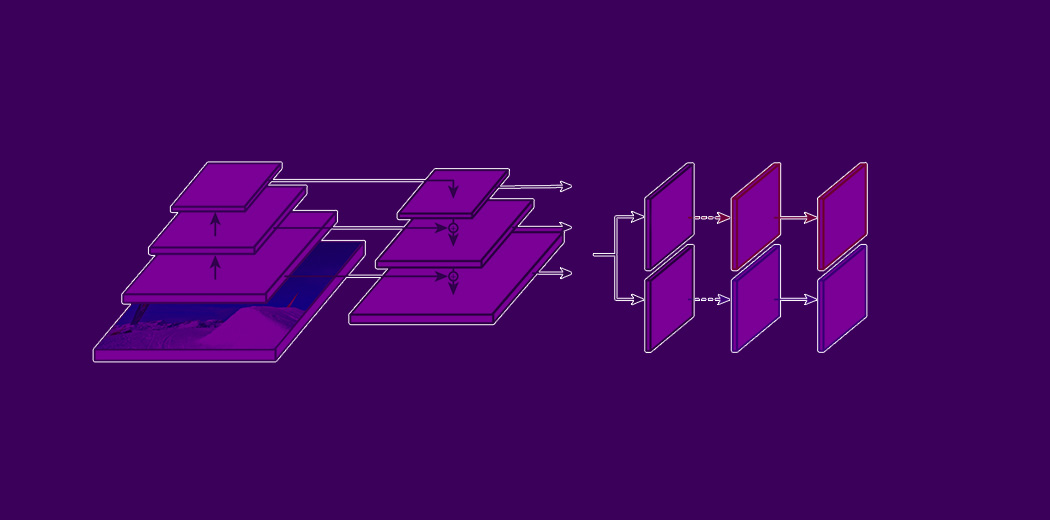
Bag of Features: A Deep Dive into Image Recognition‘s Hidden Landscape
The Journey of Understanding Visual Complexity
Imagine standing in an art gallery, surrounded by hundreds of paintings. Your brain effortlessly processes each image, recognizing colors, shapes, and patterns. But how do machines accomplish something similar? This is where the fascinating world of Bag of Features (BoF) begins—a computational technique that mimics our brain‘s remarkable ability to understand visual information.
The Origin Story: From Human Perception to Machine Intelligence
When I first encountered computer vision as a young researcher, the complexity of image recognition seemed insurmountable. How could a machine understand visual data the way humans do? The answer lies in a brilliant computational approach called Bag of Features, a technique that transforms raw image data into meaningful, structured representations.
Decoding Visual Language
Think of BoF as a linguistic translator for images. Just as languages have words and grammar, images have "visual words" and structural patterns. The Bag of Features method breaks down images into fundamental components, creating a vocabulary that machines can understand and interpret.
Mathematical Foundations: Beyond Simple Pixel Counting
The magic of BoF resides in its sophisticated mathematical framework. Unlike traditional pixel-based approaches, BoF extracts distinctive features—think of them as unique fingerprints within an image. These features capture essential characteristics like edges, corners, and texture patterns.
Feature Extraction: The Core Mechanism
Consider a photograph of a landscape. Traditional methods might see a collection of pixels, but BoF sees a complex network of interconnected visual elements. By identifying key points and describing their neighborhoods, the algorithm creates a rich, multidimensional representation of the image.
Clustering: Organizing Visual Complexity
Clustering in BoF is akin to categorizing books in a library. Each visual feature gets assigned to a specific "shelf" or cluster, creating a structured representation that allows efficient retrieval and comparison.
Advanced Clustering Techniques
Modern clustering algorithms like spectral clustering and density-based methods have revolutionized how we organize visual information. These techniques go beyond simple distance-based grouping, capturing intricate relationships between visual features.
Performance and Computational Considerations
While powerful, BoF isn‘t without challenges. Computational complexity increases exponentially with image complexity, requiring sophisticated optimization strategies.
Computational Efficiency Strategies
- Parallel processing techniques
- Approximate nearest neighbor algorithms
- Dimensionality reduction methods
- Adaptive feature selection
Real-World Applications: Where BoF Shines
The versatility of Bag of Features extends across numerous domains:
Medical Imaging
Radiologists now leverage BoF to detect subtle anomalies in medical scans, transforming diagnostic capabilities. By creating comprehensive feature maps, machines can identify potential health risks with unprecedented accuracy.
Autonomous Systems
Self-driving cars rely on advanced feature extraction techniques to understand complex environmental scenarios. BoF helps these systems recognize objects, predict movements, and make split-second decisions.
Satellite and Environmental Monitoring
Researchers use BoF to track environmental changes, mapping land use, detecting deforestation, and monitoring climate impact with remarkable precision.
Implementation: A Practical Perspective
class AdvancedFeatureExtractor:
    def __init__(self, complexity_level=3):
        self.complexity = complexity_level
        self.feature_vocabulary = None

    def generate_visual_dictionary(self, training_images):
        # Advanced feature extraction and clustering logic
        pass

    def transform_image(self, image):
        # Convert image into feature representation
        return self.feature_vocabulary.transform(image)
Emerging Technological Frontiers
The future of BoF lies in its integration with cutting-edge technologies:
- Quantum computing approaches
- Neuromorphic feature extraction
- Federated learning implementations
- Edge AI optimization
Philosophical Reflections: Machine Perception
Beyond technical implementations, BoF represents a profound attempt to understand perception itself. It bridges computational methods with cognitive science, offering insights into how intelligence—artificial and human—processes visual information.
Conclusion: A Continuous Journey of Discovery
Bag of Features isn‘t just a technique; it‘s a testament to human creativity in understanding complex systems. As technology evolves, so will our methods of interpreting visual data.
The story of BoF is far from complete. Each breakthrough brings us closer to machines that can perceive the world with increasing sophistication and nuance.
Final Thoughts
Remember, behind every complex algorithm is a simple desire to understand. Bag of Features represents our collective quest to teach machines how to see, interpret, and learn—just like we do.
Keep exploring, keep questioning, and never stop wondering about the incredible world of visual intelligence.