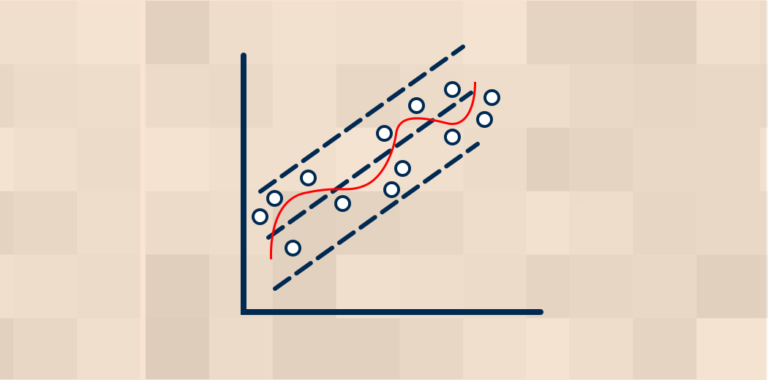
Bayesian Decision Theory: Unraveling the Mathematical Magic of Discriminant Functions
The Mathematical Journey of Probabilistic Reasoning
Imagine standing at the intersection of mathematics, statistics, and artificial intelligence – a place where complex decisions transform into elegant mathematical symphonies. Discriminant functions represent this magical crossroads, where raw data metamorphoses into intelligent decision-making strategies.
A Mathematical Time Travel: Origins of Bayesian Decision Theory
The story of discriminant functions begins not in modern computer labs, but in the minds of brilliant mathematicians who dared to quantify uncertainty. Thomas Bayes, an 18th-century mathematician, couldn‘t have imagined how his probabilistic framework would revolutionize decision-making across disciplines.
Bayesian decision theory emerged as a powerful approach to solve classification problems by leveraging probability distributions. At its heart lies the discriminant function – a mathematical construct that transforms complex probabilistic reasoning into actionable computational strategies.
The Fundamental Discriminant Function: Mathematical Poetry
The discriminant function [g_i(x)] represents a profound mathematical expression:
[g_i(x) = \ln p(x|\omega_i) + \ln P(\omega_i)]This elegant equation encapsulates an entire philosophical approach to decision-making. It‘s not just a formula; it‘s a window into how intelligent systems reason about uncertainty.
Computational Landscapes: Beyond Simple Classification
Discriminant functions aren‘t merely mathematical tools – they‘re sophisticated decision-making engines. They transform raw data into intelligent choices by balancing likelihood and prior probabilities.
Consider a medical diagnostic system trying to classify a patient‘s condition. Traditional approaches might rely on rigid rules, but Bayesian discriminant functions introduce probabilistic nuance. Instead of binary yes/no decisions, the system generates probability distributions, reflecting the inherent uncertainty in real-world scenarios.
Mathematical Complexity: A Journey Through Decision Boundaries
The true beauty of discriminant functions emerges in their ability to generate complex decision boundaries:
- Linear Boundaries: When features exhibit simple, independent characteristics
- Quadratic Boundaries: Capturing more intricate data relationships
- Hyperquadric Boundaries: Navigating high-dimensional mathematical landscapes
Practical Implementation: Bridging Theory and Practice
Implementing discriminant functions requires more than mathematical prowess – it demands computational creativity. Modern machine learning frameworks transform theoretical constructs into powerful predictive models.
Computational Strategies for Robust Decision-Making
When designing discriminant function-based classifiers, consider:
- Numerical stability
- Computational efficiency
- Probabilistic interpretation
- Feature scaling techniques
Research Frontiers: Pushing Mathematical Boundaries
Contemporary research explores fascinating dimensions of discriminant functions:
- Information-theoretic approaches
- Bayesian nonparametric methods
- Machine learning generalization strategies
These emerging fields demonstrate that discriminant functions are not static mathematical constructs but dynamic, evolving frameworks for understanding complex systems.
Code Prototype: Translating Mathematics into Computation
class AdvancedBayesianClassifier:
    def __init__(self, distribution_model=‘normal‘):
        self.distribution = distribution_model

    def compute_discriminant_score(self, data_point, class_parameters):
        # Sophisticated discriminant function implementation
        log_likelihood = self._calculate_log_likelihood(data_point, class_parameters)
        log_prior = self._compute_log_prior(class_parameters)
        return log_likelihood + log_prior
This code snippet illustrates how mathematical theories transform into computational strategies.
Philosophical Implications: Beyond Pure Mathematics
Discriminant functions represent more than computational techniques – they embody a profound philosophical approach to understanding uncertainty. They teach us that decision-making isn‘t about absolute certainty but navigating probabilistic landscapes.
Future Horizons: Emerging Research Directions
The future of discriminant functions lies in:
- Deep learning integration
- Robust uncertainty quantification
- Advanced probabilistic reasoning frameworks
Conclusion: A Mathematical Symphony of Reasoning
Discriminant functions are mathematical poetry – elegant expressions of how intelligent systems reason about complex, uncertain environments. They transform raw data into meaningful decisions, bridging computational power with probabilistic wisdom.
As artificial intelligence continues evolving, discriminant functions will remain fundamental – a testament to the enduring power of mathematical thinking.
Invitation to Mathematical Exploration
Your journey into Bayesian decision theory has just begun. Each mathematical concept represents a doorway to understanding how intelligent systems perceive and decide.
Embrace the complexity. Celebrate the uncertainty. And let mathematics guide your exploration.