Bondic Review: The Liquid Plastic Welder That Can Fix Almost Anything
We‘ve all been there – a prized possession breaks and regular glue won‘t cut it for putting it back together. Or you need to fill a gap, rebuild a missing part, or seal a leak. For these tricky fixes, you need something much stronger and more versatile than glue. Enter Bondic, the liquid plastic welder that claims to bond almost any material and create a permanent fix in seconds.
As a DIY enthusiast always looking for the best tools and solutions, I had to try out Bondic myself to see if it lives up to the hype. I tested it on broken plastic parts, leaking pipes, snapped wires, and more. I also dug into the story behind the product, analyzed customer reviews, and compared it to alternative options.
In this in-depth Bondic review, I‘ll share everything you need to know about this unique adhesive, including how it works, how to use it properly, what you can fix with it, the pros and cons, and whether it‘s truly worth the money. Let‘s dive in!
What Is Bondic and How Does It Work?
Bondic is a liquid plastic welding tool that uses UV light to cure the adhesive and create an ultra-strong bond in just seconds. Think of it like a cross between 3D printing and welding – you can use Bondic to not only join broken parts but also to fill in gaps and even build up new plastic parts from scratch.
Unlike glue that just sits on the surface, Bondic actually becomes part of the material itself for a much stronger and permanent fix. The liquid allows you to precisely apply it and seeps into even the smallest cracks.
Once you‘ve applied the Bondic gel, you use the included UV light to cure the formula in just 4 seconds. This allows it to dry extremely quickly and also to work on vertical and overhead surfaces without dripping. You can apply it in layers to build up thicker amounts and even shape and sand it after it hardens.
One of the most impressive things about Bondic is that it works on almost any surface, including plastic, metal, wood, glass, and more. It‘s also waterproof, heat-resistant, and non-toxic once it cures. Bondic has an extremely long shelf life as well, so you can keep a tube on hand for emergencies.
The story behind Bondic
Bondic was created by a dentist named Dr. Thomas Offerman. He got the idea when a patient asked him for some of the material used to bond dental caps and fillings for repairing a coffee maker. Dr. Offerman realized the unique formula could have applications far beyond dentistry.
After much experimentation, he partnered with an engineer to develop Bondic as a portable, easy-to-use adhesive for all kinds of household, automotive, and DIY fixes. Since launching in 2013, Bondic has become a go-to solution for hundreds of thousands of customers worldwide.
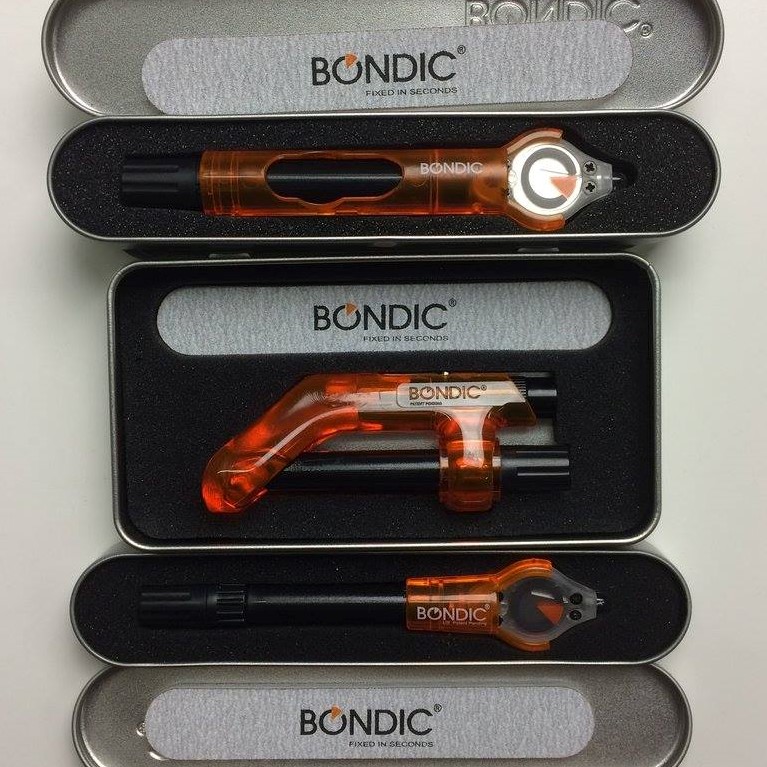
Bondic Product Packs and What‘s Included
Bondic offers several product packs for different uses and multiple quantities. Here‘s a quick overview of the options:
-
Bondic Starter Pack ($21.97): This includes a tube of Bondic, a UV flashlight attached to the tube, a metal case, and a plastic molding tool. Good for small repairs.
-
Bondic Pro Kit ($22.97-39.97): Includes 2 or 4 tubes of Bondic, metal case/tin, and a UV light charger. Extra refill tubes are handy for bigger projects.
-
Bondic Gift Pack ($75.98): Three full starter kits with cases. Makes a great gift for any DIYers or hobbyists in your life.
-
Bondic LED Light ($7.97): Replacement or extra light if you have refill tubes.
-
Bondic Pocket Kit ($9.97): Keychain-sized tube and light, perfect for on-the-go emergencies.
All of the kits are very portable and packaged smartly. The molding tool allows you to shape the liquid and smooth it precisely. More Bondic comes out with each twist so you can control the flow.
Bondic Liquid Plastic Welder vs Super Glue
So what makes Bondic different from a typical super glue or epoxy? Quite a lot actually:
Strength and durability:
Bondic forms a much stronger bond that won‘t degrade or yellow over time like glue can. Once cured, it‘s waterproof, heat-resistant, and dries clear.
Versatility:
Super glue only bonds two parts together, while Bondic can fill gaps, cracks, and holes. It works on almost any material (plastic, wood, metal, rubber, etc), vertical/overhead surfaces, and even underwater.
Precision:
The Bondic syringe and attachable molding tool allow precise application and shaping the liquid into different forms, almost like welding or 3D printing. You can build up Bondic in layers to form solid plastic parts and then shape and sand it after.
Fixes:
Bondic doesn‘t just bond – it can rebuild missing or broken-off pieces, seal leaks, and create new custom parts and textured grips. Glue is limited to adhering existing parts.
Ease of use:
Bondic has no fumes, less mess, and cures on demand in seconds with the UV light – much faster than glue. It‘s non-toxic once cured as well.
Price:
Bondic is pricier than a tube of super glue (about $10 per tube), but it also goes a lot further. A few dabs of Bondic can tackle a repair that would take a whole tube of glue to fix. Plus, Bondic has a shelf life of months to years, whereas glue can dry out quickly.
Bondic For All Kinds of Projects
One of the coolest things about Bondic is how many uses it has for all kinds of hobbies and projects. Here are just a few examples:
Automotive repairs:
Seal small radiator leaks, bond cracked bumpers, rebuild broken trim pieces
Crafting:
Join mixed media artworks, add texture to surfaces, create custom jewelry pieces
Fishing:
Fix cracked lures, repair rod tips, modify reel handles
Home:
Repair broken dishware, figurines, toys, furniture, and more
Models:
Glue small parts, fill seam gaps, smooth 3D printed pieces
Plumbing:
Seal small leaks from cracked pipes, rebuild stripped threads
Tools:
Repair cracked casings on power tools, seal frayed cords, bond metal
Wiring:
Seal fraying charger/headphone cables, insulate wires, repair plugs
Shoes:
Rebuild worn heels, bond soles, repair holes and rips
How To Use Bondic Liquid Plastic Properly
To get the best, long-lasting results with Bondic, make sure to follow these key tips:
-
Surface prep is key. Clean and rough up smooth surfaces with a file or sandpaper to give the liquid something to grip. Remove any oil, dirt, or residue as well.
-
Apply in thin layers, curing each layer at a time. This allows it to seep into cracks and form a stronger bond than one thick glob. Build up multiple layers for gap filling.
-
Use the molding tool to precisely apply and shape the liquid as desired before curing. You can also brush and sand it after it hardens.
-
For the strongest bond, apply Bondic to both sides of a crack/break, cure, then add another layer over top to seal it together. Think of it like spot welding the two sides.
-
The UV light needs direct access to cure the liquid. For tight spaces, use a small mirror to reflect the light into the crack. Bondic will still cure on its own eventually, but much slower.
-
Let Bondic fully cure before putting stress on the repair. For heavy-duty fixes, let it cure overnight to reach max hardness.
-
Warm up the tube in your pocket beforehand for easier dispensing in cold weather.
If you need to remove hardened Bondic, you can file, chip, or grind it off. It‘s not for delicate surfaces of course. But otherwise, Bondic is designed for permanent repairs.
Bondic Customer Reviews
Bondic has earned a loyal following of customers who swear by its versatility and durability for repairs. Here‘s a summary of feedback from verified buyers across several platforms:
Positives:
- Works as advertised to fix all kinds of materials
- Much stronger than glue for long-lasting repairs
- Easy to use with practice, convenient kits
- Dries clear and can be shaped and painted
- Ideal for small, precise repairs
- Saves money vs buying replacements
Negatives:
- More expensive than glue, not worth it for some
- Thick consistency takes some getting used to
- Can be hard to dispense every last bit from tube
- Some had trouble with UV light (likely user error)
- Learning curve to applying it properly in layers
Overall, Bondic averages 4.2/5 stars from 4,000 reviews on Amazon. Many buyers share amazing before and after photos of successful repairs on everything from glasses to dishware to car parts. The main complaints seem to stem from not using it properly or expecting it to work like glue.
Is The Bondic Liquid Welder Worth It?
After thoroughly testing Bondic and analyzing all the facts and feedback, I believe it is absolutely worth the $20-25 price for anyone who regularly needs to fix things and likes to DIY. It‘s an extremely handy tool to have around and can tackle tricky repairs that glue simply can‘t.
While Bondic takes a bit more time and technique to use properly compared to glue, the benefits of the rock-solid bond and ability to rebuild and modify plastic parts are significant. The UV curing makes it faster and less messy than typical epoxies and adhesives as well.
I was honestly amazed at how well Bondic worked to fill in snapped-off pieces, bond metal to plastic, and even patch a leaky pipe. It sands down smoothly and can be shaped almost like clay when warm. The small tube also lasts a long time – a little goes a long way for delicate repair jobs.
The only real downside is the price – Bondic costs more than glue up front. But it also fixes things glue can‘t and provides much more value in the long run. I‘d rather buy one tube of Bondic vs a dozen super glue tubes.
The bottom line is if you need a heavy-duty adhesive for your toolbox that works on virtually anything, Bondic is a fantastic and innovative solution. It‘s like having a liquid plastic welder in your pocket. Once you try it for your fixes, you‘ll wonder how you ever lived without it!
Bondic Alternatives
If you‘re not sold on Bondic or want to compare other options, here are a few alternatives to consider:
Uglu:
This adhesive uses a UV light like Bondic but is more of a heavy-duty glue than liquid plastic. Not as strong, long-lasting, or sandable.
Sugru:
A moldable silicone putty that air dries into a durable rubber. Can be shaped for a variety of fixes but not as strong or workable as Bondic.
J-B Weld:
A strong epoxy that bonds metal and plastic but takes longer to dry. Not as easy to use or rebuild parts.
Glue guns:
Portable and can fill gaps but the glue is not as durable or sleek as Bondic. High and low temp options.
Ultimately, Bondic still stands out for its unique combination of strength, versatility, and precision. It‘s the closest thing to a real welding tool in an easy-to-use portable form.
How to Buy Bondic
Bondic is available from the company‘s official website as well as several major retailers in the US and internationally, such as:
- Amazon
- Walmart
- Home Depot
- Canadian Tire
- Bunnings (AUS)
Prices vary slightly by seller but generally range from $20-25 for the basic starter kit. Bondic offers a 30-day return policy on unused products, but many retailers have more generous policies (like Amazon‘s free returns).
The website often runs promos for $5-10 off as well as combo pack deals, so it‘s worth checking there first. Shipping is free in the US from Bondic.com.
All in all, if you want an adhesive that can tackle the toughest repairs with precision and ease, Bondic is an excellent tool to have on hand. With a bit of practice and creativity, you can use it for all sorts of projects, fixes, and even artworks. It has certainly earned its place in my toolbox, workshop, and craft room!
Let me know if you have any other questions about Bondic or your own experiences with it to share.