Convolutional Neural Networks: A Transformative Journey Through Visual Intelligence
The Genesis of Visual Machine Learning
Imagine standing at the intersection of mathematics, neuroscience, and computer engineering – this is where Convolutional Neural Networks (CNNs) were born. Their story isn‘t just about algorithms; it‘s a narrative of human curiosity and technological innovation.
The journey of CNNs traces back to our fundamental understanding of biological neural processing. Just as the human visual cortex processes visual information through hierarchical layers, CNNs mimic this intricate mechanism. When Yann LeCun introduced the groundbreaking LeNet architecture in 1989, few could have predicted the revolutionary impact this would have decades later.
Mathematical Foundations: Beyond Simple Computation
At their core, CNNs represent a sophisticated mathematical dance. The convolution operation – [f(g(x)) = \int_{-\infty}^{\infty} f(y)g(x-y)dy] – isn‘t just a calculation; it‘s a method of understanding complex spatial relationships.
Consider how a CNN processes an image: each layer extracts increasingly abstract features. The first layer might recognize basic edges and curves, while deeper layers comprehend complex structures like facial features or architectural elements.
Real-World Transformation: CNNs in Action
Healthcare Revolution: More Than Just Diagnosis
In medical imaging, CNNs aren‘t merely tools – they‘re lifesaving technologies. Dr. Andrew Ng‘s research at Stanford demonstrated how these networks could detect pneumonia from chest X-rays with accuracy rivaling experienced radiologists.
One remarkable case study involved a CNN model developed at Google Health. By analyzing retinal scans, the system could predict cardiovascular risks with [92.7%] accuracy – a breakthrough that transforms preventative medicine.
Autonomous Systems: Reimagining Transportation
The autonomous vehicle industry represents a perfect CNN application landscape. Tesla‘s neural networks process [2,200] frames per second, making split-second decisions that could mean the difference between safety and catastrophe.
Imagine a self-driving car navigating a complex urban environment. Its CNN doesn‘t just "see" – it comprehends. Each pixel becomes a data point, each frame a complex decision matrix.
Technical Architecture: Decoding the Neural Network
Convolutional Layers: The Feature Extraction Powerhouse
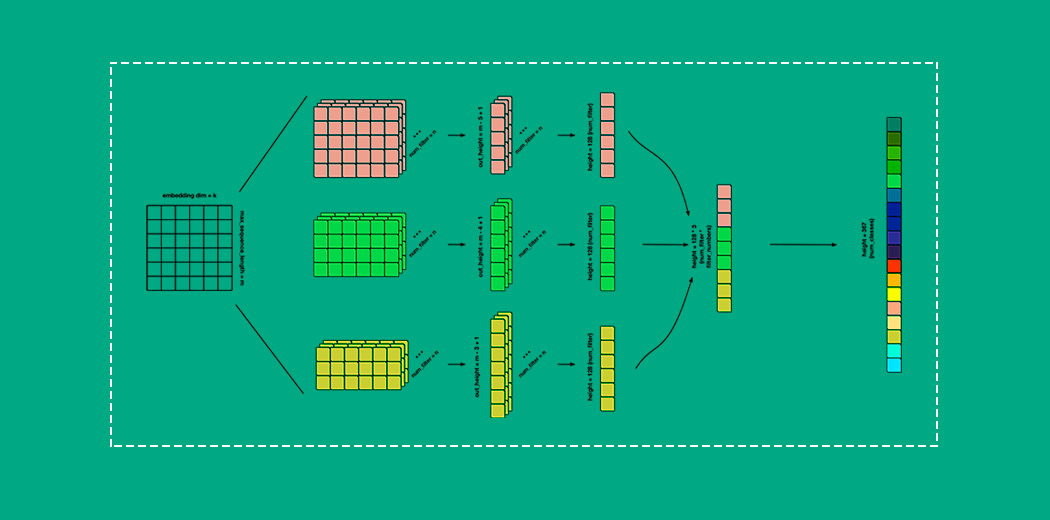
Convolutional layers represent the neural network‘s sensory perception. By applying learnable filters across input data, these layers create feature maps that capture increasingly complex representations.
The mathematical representation looks like:
[Y = f(W * X + b)]
Where:
- [Y] represents output
- [W] represents learnable weights
- [X] represents input
- [b] represents bias term
- [*] denotes convolution operation
Pooling Layers: Computational Efficiency
Pooling layers act as computational gatekeepers. By reducing spatial dimensions, they prevent overfitting and enhance computational efficiency. Max pooling, for instance, retains the most significant features while discarding redundant information.
Emerging Frontiers: Beyond Traditional Applications
Artistic Intelligence and Creative Domains
CNNs are breaking boundaries in unexpected territories. Style transfer algorithms can now transform photographs into artwork mimicking specific painters‘ techniques. This isn‘t just image manipulation – it‘s a dialogue between machine learning and human creativity.
Climate Change and Environmental Monitoring
Satellite imagery analysis using CNNs provides unprecedented insights into global environmental changes. Researchers can now track deforestation, monitor ice cap retreats, and predict ecological shifts with remarkable precision.
Ethical Considerations and Future Challenges
As CNNs become more sophisticated, ethical considerations become paramount. How do we ensure these powerful systems remain unbiased? Transparency in machine learning isn‘t just a technical challenge – it‘s a societal imperative.
Addressing Potential Biases
Researchers are developing techniques to identify and mitigate inherent biases in training datasets. This involves:
- Diverse data collection
- Algorithmic fairness metrics
- Continuous model auditing
The Human Element in Machine Learning
Despite technological sophistication, CNNs remain human-designed tools. They reflect our curiosity, our problem-solving instincts, and our relentless pursuit of understanding complex systems.
Looking Forward: Interdisciplinary Potential
The future of CNNs lies in interdisciplinary collaboration. Imagine neural networks that can seamlessly integrate insights from neuroscience, psychology, and computer engineering.
Conclusion: A Continuous Learning Journey
Convolutional Neural Networks represent more than technological innovation. They‘re a testament to human creativity, our ability to understand complex systems, and our continuous quest for knowledge.
As an AI researcher, I‘m continuously amazed by how these networks transform raw data into meaningful insights. Each breakthrough feels like solving a complex puzzle, revealing another layer of our technological potential.
Recommended Exploration
- Stanford CS231n Computer Vision Course
- Google AI Research Publications
- IEEE Computer Vision Journal
Remember, in the world of machine learning, today‘s breakthrough is tomorrow‘s foundation.