Crafting Digital Identities: Your Journey into 3D Facial Emoji Generation with Deep Learning
The Fascinating World of Digital Facial Reconstruction
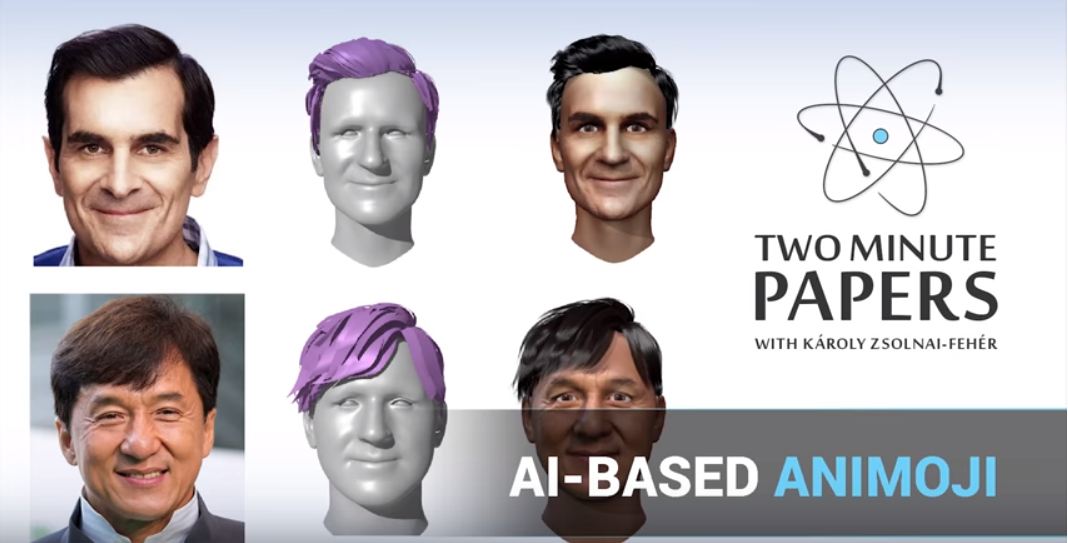
Imagine holding a single photograph and transforming it into a living, breathing digital representation of yourself. This isn‘t a scene from a science fiction movie—it‘s the remarkable reality of modern artificial intelligence and deep learning technologies.
As someone who has spent years exploring the intricate landscapes of machine learning, I‘ve witnessed extraordinary transformations in how we understand and recreate human visual experiences. The journey of creating 3D digital face emojis represents more than technological innovation; it‘s a profound exploration of how machines can interpret and reconstruct human identity.
A Personal Encounter with Digital Transformation
My fascination with facial reconstruction began during a research project exploring machine perception. I remember the moment when our early neural network first successfully mapped a two-dimensional image into a three-dimensional representation. The result wasn‘t just a technical achievement—it was a glimpse into a future where digital and human experiences converge.
Understanding the Computational Magic
Modern 3D digital face emoji generation isn‘t just about algorithms—it‘s about creating a computational mirror that captures the essence of human complexity. Let me walk you through the intricate dance of mathematics, neural networks, and visual intelligence that makes this possible.
Neural Network Architectures: The Brain Behind the Magic
At the heart of digital facial reconstruction lie sophisticated neural network architectures. These aren‘t simple linear models but complex, multi-layered systems that can learn and adapt with remarkable precision.
Imagine a neural network as a highly sophisticated translator—instead of converting between languages, it translates two-dimensional visual information into three-dimensional representations. Each layer of the network acts like a specialized interpreter, extracting increasingly complex features from the input image.
Mathematical Foundations
The core mathematical representation can be expressed through complex tensor transformations:
[F(x) = \sigma(W_1 \cdot x + b_1)]Where:
- [F(x)] represents the feature transformation
- [\sigma] is a non-linear activation function
- [W_1] represents the weight matrix
- [b_1] represents the bias term
This seemingly simple equation encapsulates an extraordinary process of computational interpretation.
Training: The Crucible of Machine Learning
Creating a robust 3D facial emoji generation system requires extensive training. Our models consume thousands of facial images, learning subtle variations in:
- Facial structure
- Skin texture
- Emotional expressions
- Lighting conditions
Each training iteration refines the model‘s understanding, gradually building a comprehensive "knowledge base" of human facial characteristics.
Technological Breakthroughs and Challenges
The path to realistic digital avatars hasn‘t been straightforward. Early attempts produced rigid, almost robotic representations. Today‘s models leverage advanced techniques like generative adversarial networks (GANs) and transfer learning to create remarkably nuanced representations.
Computational Complexity
Generating a high-fidelity 3D emoji requires immense computational power. Modern GPUs with thousands of parallel processing cores can perform the complex tensor calculations needed for real-time facial reconstruction.
A single high-resolution facial emoji generation might involve:
- Billions of mathematical operations
- Terabytes of training data
- Complex multi-stage processing pipelines
Beyond Technology: Philosophical Implications
What does the ability to digitally reconstruct human faces tell us about perception, identity, and technological evolution? We‘re not just creating digital representations—we‘re exploring the boundaries between human experience and computational interpretation.
Ethical Considerations
As we develop more sophisticated facial reconstruction technologies, critical ethical questions emerge:
- How do we protect individual privacy?
- What are the boundaries of digital representation?
- How might these technologies be misused?
These aren‘t just technical challenges but profound philosophical inquiries into the nature of identity and representation.
Practical Implementation: Your Path to Creating Digital Emojis
While the underlying technology is complex, creating your own 3D digital face emoji is becoming increasingly accessible. Here‘s a roadmap for aspiring digital creators:
-
Prepare Your Source Material
Select a high-quality, well-lit photograph that clearly captures facial features. Front-facing images with neutral expressions work best. -
Choose Your Development Environment
Platforms like TensorFlow and PyTorch offer robust frameworks for facial reconstruction. Familiarity with Python will be advantageous. -
Select Appropriate Pre-trained Models
Leverage existing research models as starting points. Transfer learning can significantly reduce development time.
Future Horizons: Where Are We Heading?
The future of digital facial reconstruction is breathtakingly exciting. Emerging research suggests we‘re moving towards:
- Real-time emotional mapping
- Cross-platform avatar generation
- Increasingly personalized digital representations
A Personal Reflection
As an AI researcher, I‘m continually amazed by how technology bridges human creativity and computational power. Each breakthrough in facial reconstruction isn‘t just a technical achievement—it‘s a testament to human ingenuity.
The 3D digital face emoji represents more than a technological novelty. It‘s a window into how we might reimagine personal expression in an increasingly digital world.
Your Journey Begins Now
Whether you‘re a curious technologist, a creative professional, or simply fascinated by the intersection of art and technology, the world of 3D digital face emojis offers an extraordinary playground of possibilities.
Embrace the journey, experiment fearlessly, and remember: in the realm of artificial intelligence, today‘s impossibility is tomorrow‘s standard feature.