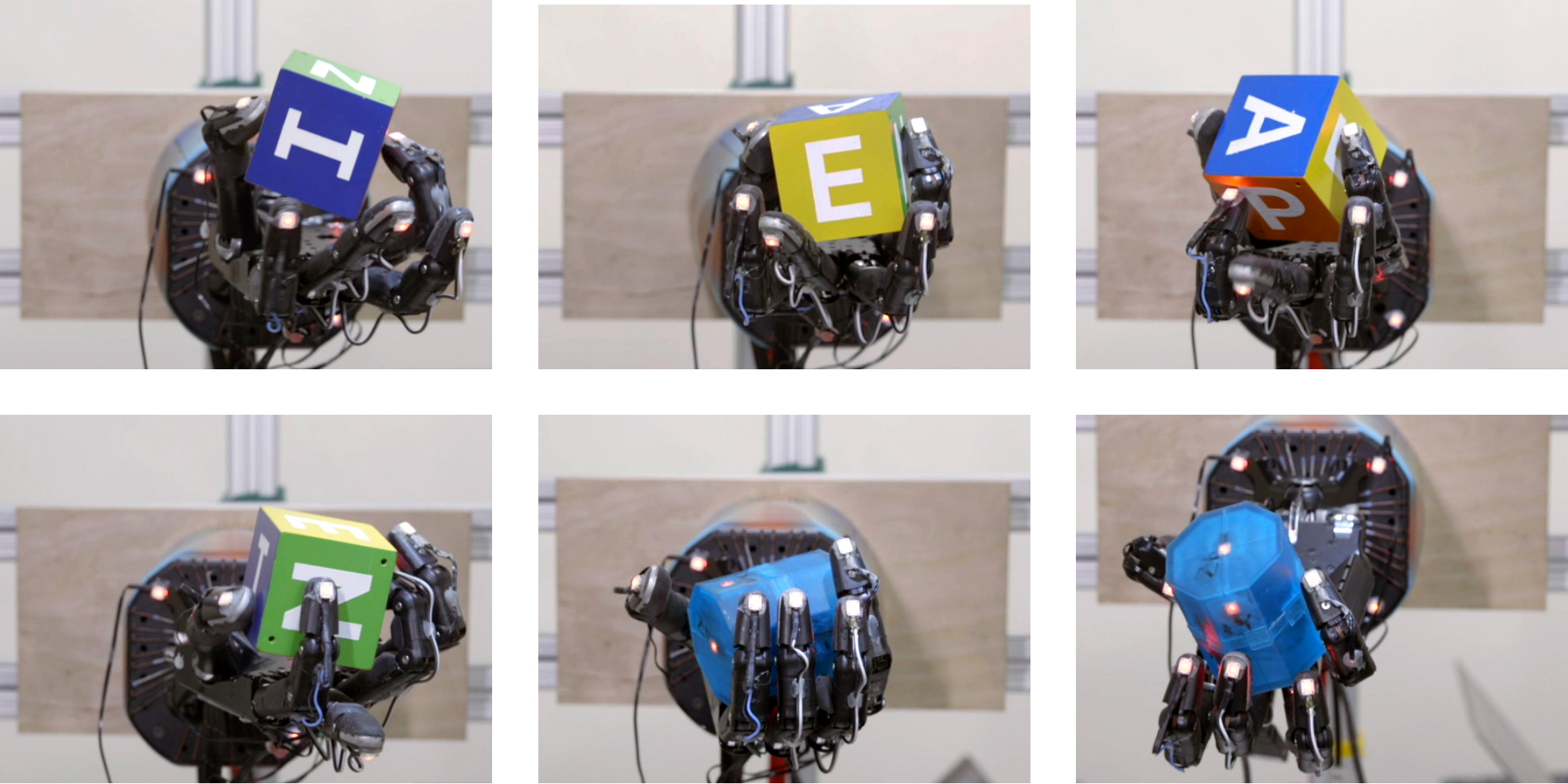
Dactyl: The Robotic Hand That Learned to Think and Move Like Humans
A Journey into Autonomous Machine Learning
Picture a world where machines learn not through rigid programming, but through intelligent, adaptive exploration. This isn‘t science fiction—it‘s the remarkable reality of OpenAI‘s Dactyl, a robotic hand that has fundamentally transformed our understanding of artificial intelligence.
The Unexpected Path of Machine Intelligence
When you first hear about a robot hand teaching itself complex manipulation skills, it might sound like something from a futuristic movie. But Dactyl represents a profound leap in technological evolution, bridging the gap between programmed machinery and intelligent, self-learning systems.
Unraveling the Mystery of Autonomous Learning
Imagine a child learning to grasp objects, experimenting, failing, and gradually developing precision. Dactyl mirrors this incredibly human learning process, but within the realm of computational systems. It‘s not just a machine—it‘s an intelligent entity capable of understanding, adapting, and improving.
The Computational Brain Behind the Hand
At its core, Dactyl leverages sophisticated reinforcement learning algorithms. These aren‘t simple if-then instructions, but complex neural networks that simulate cognitive processes. By running thousands of virtual simulations, the system develops strategies that remarkably resemble human problem-solving techniques.
A Technical Symphony of Innovation
Simulated Worlds, Real-World Skills
The magic of Dactyl lies in its ability to learn through virtual environments. Unlike traditional robotic systems that require explicit programming for each task, this system creates its own learning pathways. It‘s like watching a digital brain construct its understanding through pure experience.
The Mathematical Dance of Machine Learning
Behind Dactyl‘s seemingly simple movements lies an intricate mathematical framework. Reinforcement learning algorithms like [Q-Learning] and [Policy Gradient Methods] enable the system to calculate optimal actions based on potential rewards and environmental feedback.
The computational complexity is staggering. Each movement represents countless probabilistic calculations, happening in milliseconds, evaluating potential outcomes and selecting the most promising strategy.
Beyond Simple Mechanics: A Cognitive Approach
What separates Dactyl from traditional robotic systems is its cognitive flexibility. It doesn‘t just execute predefined movements—it interprets, adapts, and strategizes. This approach mirrors human learning more closely than any previous robotic technology.
The Philosophical Implications of Machine Learning
Redefining Intelligence
Dactyl challenges our fundamental understanding of intelligence. Is learning purely a biological phenomenon, or can machines genuinely develop cognitive capabilities? By demonstrating autonomous skill acquisition, this project blurs the lines between artificial and natural intelligence.
Ethical Considerations in Autonomous Systems
As machines become more sophisticated, we must contemplate the ethical dimensions of their development. Dactyl represents more than a technological achievement—it‘s a milestone in understanding machine consciousness and potential.
Real-World Applications and Future Potential
Transforming Multiple Industries
The implications of Dactyl‘s technology extend far beyond laboratory experiments. Potential applications include:
- Precision surgical robotics
- Advanced prosthetic design
- Complex manufacturing processes
- Space exploration equipment
- Rehabilitation and assistive technologies
The Human Touch in Machine Learning
Learning from Biological Systems
Interestingly, Dactyl‘s development draws significant inspiration from human neurological processes. Researchers studied how humans learn motor skills, translating those insights into computational models.
This biomimetic approach represents a paradigm shift in robotics—moving from mechanical replication to intelligent interpretation.
Technical Architecture: A Deep Dive
Neural Network Complexity
Dactyl‘s neural network isn‘t a monolithic system but a sophisticated ensemble of interconnected computational layers. Each layer processes information differently:
- Sensory input interpretation
- Movement strategy generation
- Predictive error correction
- Continuous learning mechanisms
The network uses advanced techniques like [Deep Reinforcement Learning] and [Proximal Policy Optimization] to continuously refine its capabilities.
Challenges and Limitations
No technological breakthrough comes without challenges. Dactyl still faces significant hurdles:
- Limited real-world generalization
- High computational resource requirements
- Complex scenario adaptability
- Ethical and safety considerations
These limitations aren‘t setbacks but opportunities for future research and innovation.
The Road Ahead: Future Research Directions
Emerging Technological Frontiers
As machine learning continues evolving, projects like Dactyl will push the boundaries of what‘s possible. Future research might explore:
- Enhanced simulation-to-reality transfer
- More nuanced cognitive modeling
- Reduced computational overhead
- Improved generalization techniques
Conclusion: A New Chapter in Human-Machine Interaction
Dactyl represents more than a technological achievement—it‘s a glimpse into a future where machines don‘t just perform tasks but understand them.
By demonstrating autonomous learning capabilities, OpenAI has opened a new chapter in artificial intelligence. We‘re witnessing the emergence of systems that can learn, adapt, and potentially collaborate with humans in ways we‘re only beginning to comprehend.
The journey of Dactyl reminds us that the most profound technological innovations often emerge from curiosity, persistence, and a willingness to challenge existing paradigms.
Embrace the future—it‘s more intelligent than we ever imagined.