Decoding Artificial Neural Networks: A Comprehensive Journey into Intelligent Computing
The Genesis of Neural Computation: A Personal Exploration
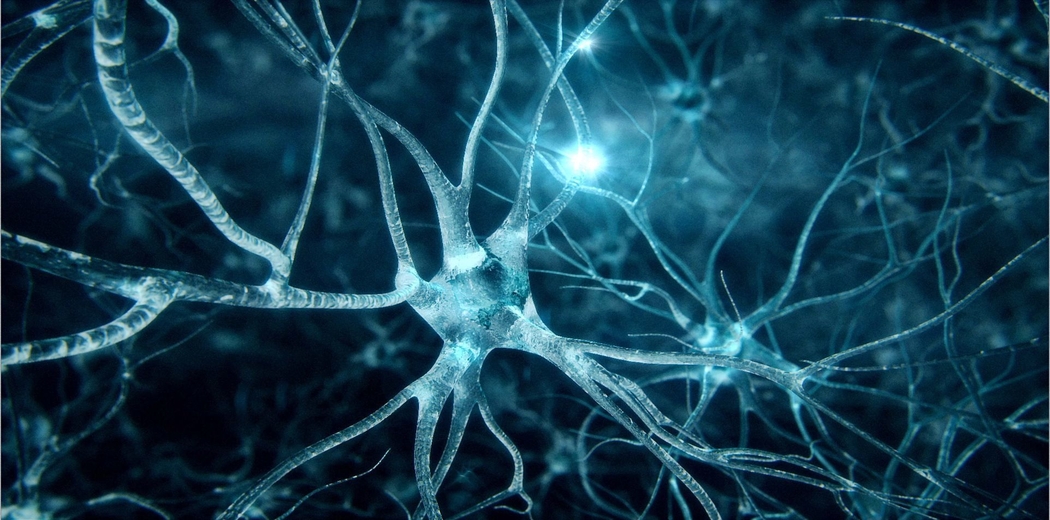
Imagine standing at the intersection of biology and technology, where human brain complexity meets computational innovation. This is the fascinating realm of Artificial Neural Networks (ANNs) – a domain where mathematics, computer science, and cognitive understanding converge to create intelligent systems that learn, adapt, and evolve.
Tracing the Intellectual Roots
The story of neural networks isn‘t just a technological narrative; it‘s a human saga of curiosity, persistence, and groundbreaking imagination. In 1943, Warren McCulloch and Walter Pitts crafted the first mathematical model of an artificial neuron, laying the foundational stone for what would become a revolutionary computational paradigm.
Frank Rosenblatt‘s Perceptron in 1958 wasn‘t merely an algorithm; it was a bold declaration that machines could potentially mimic cognitive processes. This wasn‘t just engineering – it was an audacious attempt to understand intelligence itself.
Understanding Neural Network Architecture: Beyond Simple Computation
Neural networks represent more than computational models – they‘re intricate ecosystems of interconnected processing units designed to mirror the brain‘s remarkable information processing capabilities. Each neuron acts like a sophisticated decision-maker, receiving multiple inputs, weighing their significance, and generating nuanced outputs.
The Mathematical Symphony of Neurons
Consider a neuron as a complex mathematical function. Its operation can be elegantly described through the equation:
[output = activation_function(weights \cdot inputs + bias)]This seemingly simple formula encapsulates immense computational potential. By adjusting weights and biases, neural networks can approximate virtually any mathematical function, making them extraordinarily versatile problem-solving tools.
Implementing Neural Networks in Python: A Practical Expedition
Crafting Intelligent Systems with Code
Python has emerged as the preferred language for neural network implementation, offering libraries like TensorFlow and PyTorch that transform complex mathematical concepts into executable code.
import tensorflow as tf
from tensorflow import keras

class AdvancedNeuralNetwork:
    def __init__(self, architecture_config):
        self.model = self._construct_dynamic_architecture(architecture_config)

    def _construct_dynamic_architecture(self, config):
        model = keras.Sequential()

        for layer_config in config[‘layers‘]:
            model.add(keras.layers.Dense(
                units=layer_config[‘neurons‘],
                activation=layer_config.get(‘activation‘, ‘relu‘),
                input_shape=layer_config.get(‘input_shape‘, None)
            ))

        model.compile(
            optimizer=config.get(‘optimizer‘, ‘adam‘),
            loss=config.get(‘loss‘, ‘categorical_crossentropy‘),
            metrics=[‘accuracy‘]
        )

        return model
This approach demonstrates how neural networks can be dynamically constructed, offering unprecedented flexibility in architectural design.
Navigating Complex Learning Mechanisms
Backpropagation: The Learning Algorithm
Backpropagation represents the neural network‘s learning mechanism – a sophisticated process where the network continuously refines its internal representations by minimizing prediction errors.
The algorithm works by:
- Generating predictions
- Calculating error magnitude
- Propagating error signals backward
- Adjusting weights systematically
Mathematically, this involves computing gradient derivatives and applying optimization techniques like stochastic gradient descent.
Real-World Neural Network Applications
Neural networks have transcended theoretical boundaries, finding applications across diverse domains:
Healthcare Diagnostics
Imagine a neural network analyzing medical imaging data, detecting subtle anomalies invisible to human observers. These systems can identify potential cancer markers with remarkable precision, potentially saving countless lives.
Financial Forecasting
Neural networks transform financial analysis by processing complex, non-linear market data. They can predict stock price movements, assess investment risks, and generate sophisticated trading strategies.
Natural Language Processing
Modern language models like GPT demonstrate neural networks‘ capacity to understand, generate, and translate human language with unprecedented sophistication.
Emerging Frontiers and Ethical Considerations
As neural networks become increasingly powerful, critical ethical questions emerge. How do we ensure these intelligent systems remain transparent, unbiased, and aligned with human values?
Researchers are developing frameworks for:
- Algorithmic fairness
- Interpretable machine learning
- Robust privacy protection mechanisms
The Future Landscape of Neural Computation
The next decade promises extraordinary neural network innovations:
- Quantum neural networks
- Neuromorphic computing architectures
- Hybrid biological-computational systems
Conclusion: An Invitation to Explore
Neural networks represent more than technological tools – they‘re windows into understanding intelligence itself. By combining mathematical rigor, computational power, and human creativity, we‘re continuously expanding the boundaries of what‘s computationally possible.
Your journey into neural networks is just beginning. Embrace curiosity, experiment fearlessly, and remember: every complex system starts with understanding fundamental principles.
Recommended Learning Path
- Master mathematical foundations
- Practice consistent coding
- Engage with research communities
- Maintain an interdisciplinary perspective
Happy exploring!