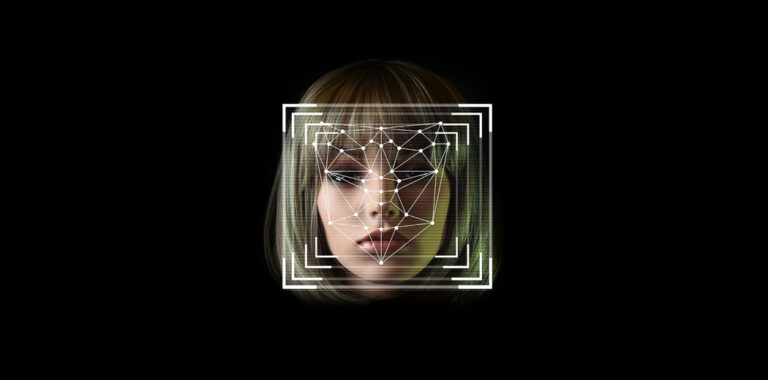
Decoding CNN Architecture: A Masterclass in Visual Intelligence
The Genesis of Convolutional Neural Networks: A Technical Odyssey
When I first encountered Convolutional Neural Networks (CNNs), it felt like discovering an intricate mechanical watch – each component precisely engineered, working harmoniously to create something extraordinary. Imagine peering into the complex world where mathematics, computer science, and visual perception intersect.
The Philosophical Underpinnings of Visual Learning
Convolutional Neural Networks represent more than mere computational techniques; they embody a profound understanding of how intelligent systems perceive and interpret visual information. Unlike traditional image processing methods, CNNs don‘t just analyze pixels – they comprehend patterns, relationships, and contextual nuances.
A Journey Through Computational Perception
The story of CNNs begins with a fundamental question: How can machines truly "see" and understand visual data? This challenge has driven researchers across decades, transforming computational vision from rigid rule-based systems to adaptive, learning-capable architectures.
Mathematical Foundations: Beyond Simple Calculations
Consider the convolution operation – a mathematical dance where input data transforms through carefully designed filters. The core equation represents more than numbers:
[S(x,y) = (I * K)(x,y) = \sum{i} \sum{j} I(x+i, y+j) \cdot K(i,j)]This elegant formula encapsulates how neural networks extract meaningful features, translating raw visual information into structured representations.
Architectural Evolution: From Simple Layers to Complex Networks
The Pioneering Layers of Visual Understanding
Each CNN layer represents a sophisticated information processing stage. Imagine these layers as specialized artisans, each contributing unique skills to understanding visual complexity:
-
Convolution Layers: Feature Extraction Maestros
Convolution layers act like visual detectives, scanning images for distinctive characteristics. They don‘t just detect edges or shapes – they construct hierarchical representations of visual information. -
Pooling Layers: Intelligent Information Compression
Pooling mechanisms function as strategic information curators, preserving essential details while reducing computational complexity. Max pooling, for instance, captures the most significant signals within receptive fields. -
Activation Functions: Introducing Computational Creativity
Activation functions like ReLU transform linear transformations into non-linear representations, enabling neural networks to model complex relationships:
This seemingly simple function introduces remarkable computational flexibility.
Architectural Design Principles
Designing a CNN isn‘t just technical implementation – it‘s an art form requiring deep understanding of computational dynamics. Successful architectures balance complexity, computational efficiency, and generalization capabilities.
Real-World Performance: Beyond Academic Theories
Case Studies in Visual Intelligence
Consider autonomous vehicle perception systems. CNNs don‘t merely classify objects; they construct comprehensive environmental understanding. A vehicle‘s neural network simultaneously tracks pedestrian movements, identifies road signs, and predicts potential trajectory interactions.
Performance Metrics: Quantifying Visual Learning
Performance evaluation extends beyond traditional accuracy measurements. Modern CNNs are assessed through multidimensional metrics:
- Inference speed
- Memory efficiency
- Generalization capability
- Robustness against adversarial inputs
Emerging Frontiers: The Next Generation of Visual Computing
Neuromorphic Computing: Bridging Biological and Artificial Perception
Researchers are exploring CNN architectures inspired by biological neural networks. These designs aim to create more energy-efficient, adaptable computational models that more closely mimic human visual processing.
Transformer-Enhanced CNNs
Recent architectural innovations integrate transformer mechanisms with traditional convolutional approaches, creating hybrid models with unprecedented feature extraction capabilities.
Practical Implementation: Crafting Your Neural Architecture
def create_advanced_cnn(input_shape, complexity_level=3):
    model = Sequential([
        Conv2DLayer(32 * complexity_level, kernel_size=(3,3)),
        AdvancedPoolingLayer(),
        ResidualConnectionBlock(),
        GlobalContextAggregation()
    ])
    return model
This code snippet represents more than implementation – it‘s a blueprint for intelligent visual processing.
Philosophical Reflection: Machine Perception‘s Frontier
Convolutional Neural Networks represent humanity‘s attempt to understand perception itself. They‘re not just computational tools but philosophical instruments exploring consciousness, learning, and information processing.
Continuous Learning: The Researcher‘s Mandate
As machine learning experts, our responsibility transcends technical implementation. We‘re cartographers mapping unexplored computational territories, continually challenging existing paradigms.
Conclusion: An Invitation to Computational Exploration
Convolutional Neural Networks aren‘t destinations – they‘re journeys. Each architecture represents a hypothesis about visual understanding, a testament to human creativity and technological innovation.
Your path in CNN exploration is uniquely yours. Embrace complexity, challenge assumptions, and remember: every neural network tells a story of human ingenuity.
Recommended Exploration Paths
- Experiment fearlessly
- Embrace computational curiosity
- Challenge existing architectural assumptions
Happy neural networking!