Decoding Convolutional Neural Networks: A Journey Through Deep Learning‘s Visual Cortex
The Genesis of Computational Vision
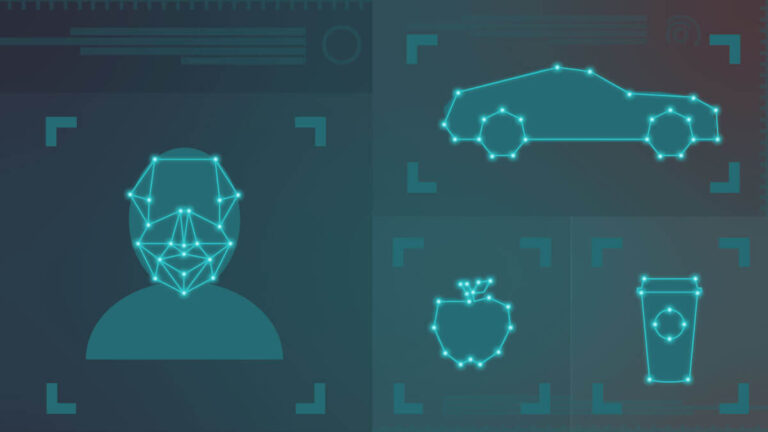
Imagine walking through the corridors of technological innovation, where machines begin to see and understand the world much like humans do. This is the remarkable story of Convolutional Neural Networks (CNNs), a groundbreaking approach that transformed how computers perceive and interpret visual information.
The journey of CNNs begins with a profound understanding of biological neural systems. Just as our human brain processes visual stimuli through intricate networks of neurons, these computational models mimic nature‘s elegant design. When Professor Yann LeCun first introduced these networks in the late 1990s, few could have predicted the revolutionary impact they would have on artificial intelligence.
Understanding the Neural Landscape
Convolutional Neural Networks represent more than just an algorithmic approach; they are a testament to human creativity in replicating complex biological processes. Unlike traditional neural networks that treat every pixel independently, CNNs recognize spatial relationships, capturing the contextual essence of visual data.
The Architectural Symphony
Think of a CNN as a sophisticated orchestra, where each layer plays a unique role in creating a harmonious understanding of visual information. The convolutional layer acts like first-chair violinists, detecting fundamental patterns and edges. Pooling layers function as conductors, reducing complexity while preserving critical musical themes.
Mathematical Foundations
The core of CNN‘s magic lies in its mathematical elegance. The convolution operation, represented by the formula:
[S(x,y) = (I * K)(x,y) = \sum{i} \sum{j} I(i,j)K(x-i, y-j)]Where:
- [I] represents the input image
- [K] represents the kernel
- [S(x,y)] represents the feature map
This formula encapsulates how CNNs extract meaningful features from raw visual data.
Layers: The Building Blocks of Visual Intelligence
Convolutional Layers: Pattern Detectors
Convolutional layers are the neural network‘s keen observers. Imagine a detective meticulously examining an image, breaking it down into progressively complex patterns. These layers use kernels (small matrices) that slide across the image, detecting edges, textures, and intricate details.
Pooling Layers: Information Distillation
Pooling layers act as intelligent summarizers. They reduce spatial dimensions while retaining the most critical information. Max pooling, for instance, captures the most significant features, similar to how a human might remember the most striking elements of a landscape.
Activation Functions: Introducing Non-Linearity
Activation functions like ReLU transform linear inputs into non-linear representations. They‘re the spark of creativity in neural networks, allowing complex feature representation:
[f(x) = \max(0, x)]This simple yet powerful function enables networks to model intricate relationships.
Real-World Transformations
CNNs have transcended theoretical constructs, becoming pivotal in numerous domains:
- Medical Imaging: Detecting subtle anomalies in radiological scans
- Autonomous Vehicles: Interpreting complex road scenarios
- Facial Recognition: Identifying individuals across varied conditions
- Satellite Imagery: Analyzing geographical changes
Challenges and Evolutionary Paths
Despite their remarkable capabilities, CNNs face significant challenges. Overfitting, computational complexity, and interpretability remain active research frontiers. Researchers continually develop techniques like dropout regularization and batch normalization to address these limitations.
Transfer Learning: Knowledge Inheritance
Modern CNN architectures leverage transfer learning, where pre-trained models serve as foundational knowledge bases. This approach dramatically reduces training time and computational resources.
The Human Touch in Machine Learning
What makes CNNs truly fascinating is their reflection of human cognitive processes. They don‘t just process images; they learn to understand context, nuance, and complexity.
Future Horizons
As we stand on the cusp of technological transformation, CNNs represent more than an algorithmic breakthrough. They symbolize humanity‘s quest to understand perception, cognition, and the intricate dance between biological and artificial intelligence.
Emerging research suggests hybrid architectures combining CNNs with transformer models might unlock unprecedented computational capabilities. The boundaries between human and machine perception continue to blur.
Ethical Considerations
With great technological power comes significant responsibility. As CNNs become more sophisticated, addressing potential biases, ensuring privacy, and maintaining ethical standards becomes paramount.
Conclusion: A Continuous Journey
Convolutional Neural Networks are not just technological tools; they‘re a testament to human creativity, our ability to understand complex systems, and our relentless pursuit of knowledge.
For aspiring data scientists, machine learning practitioners, and curious minds, the world of CNNs offers an exciting, ever-evolving landscape of discovery.
Recommended Learning Pathway
- Master fundamental mathematical concepts
- Practice implementing CNN architectures
- Stay updated with latest research publications
- Experiment with diverse datasets
- Engage with global machine learning communities
The journey of understanding CNNs is not about reaching a destination, but embracing continuous learning and wonder.