Decoding Image Similarity: A Machine Learning Expert‘s Comprehensive Guide
The Visual Recognition Revolution: My Journey into Image Similarity
Imagine standing in a vast digital gallery, surrounded by millions of images, each pixel telling a unique story. As a machine learning expert, I‘ve spent years unraveling the intricate mysteries of how computers perceive and compare visual information. My fascination with image similarity began not in a sterile laboratory, but through a profound realization: machines can learn to see the world much like humans do.
The Genesis of Visual Understanding
When I first encountered image similarity challenges, the landscape seemed overwhelmingly complex. Traditional computer vision techniques treated images as rigid, mathematical grids of pixel values. But something deeper was happening – images weren‘t just numbers; they were representations of complex visual narratives.
Mathematical Foundations: Beyond Simple Pixel Comparisons
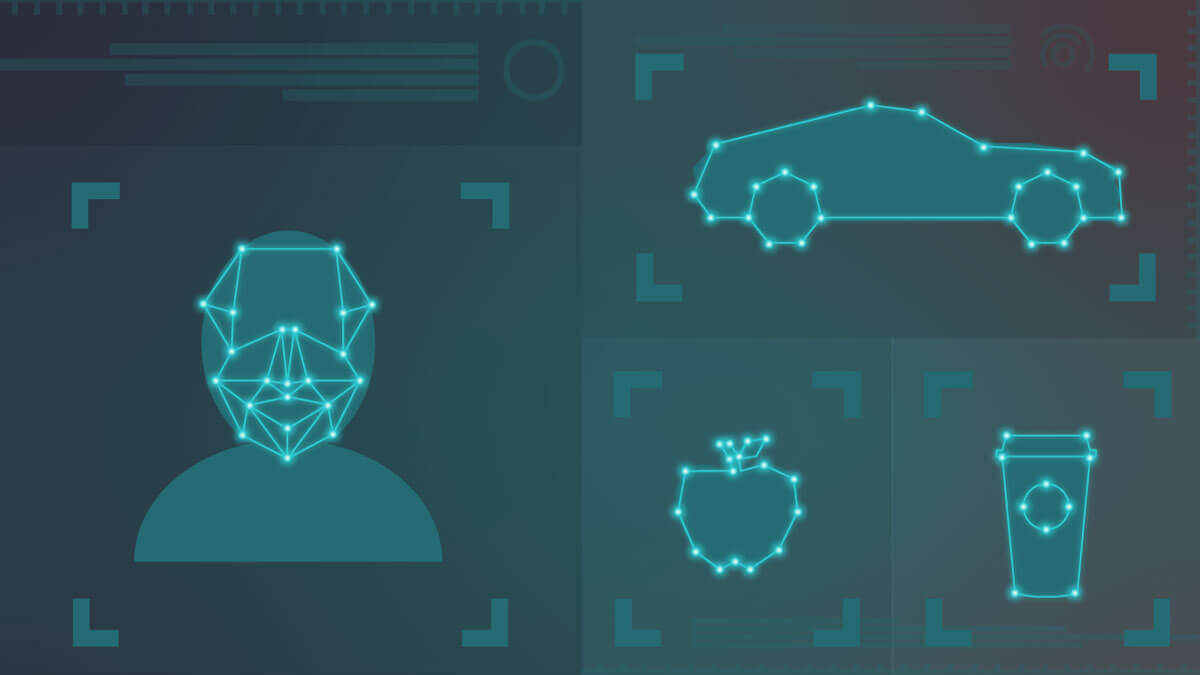
The journey into image similarity is fundamentally a mathematical exploration. At its core, we‘re teaching machines to understand visual relationships through sophisticated algorithms and neural network architectures. Each image becomes a high-dimensional vector, a mathematical representation capturing its essential visual characteristics.
Consider the mathematical elegance of image representation:
[Image = f(Pixels, Features, Semantic\ Context)]This equation encapsulates the profound complexity of visual recognition. We‘re not just comparing pixel values; we‘re extracting meaningful features that capture the essence of visual information.
Evolutionary Techniques in Image Similarity
Traditional Approaches: The First Generation
Early image similarity techniques relied on simplistic methods like histogram comparisons and pixel-wise differences. These approaches, while groundbreaking for their time, suffered from significant limitations. They couldn‘t capture semantic meaning or handle variations in lighting, perspective, or image quality.
def traditional_similarity(image1, image2):
    """
    Basic histogram-based similarity measurement
    """
    histogram1 = compute_color_histogram(image1)
    histogram2 = compute_color_histogram(image2)

    return euclidean_distance(histogram1, histogram2)
Feature Extraction: A Paradigm Shift
The real breakthrough came with advanced feature extraction techniques. Algorithms like SIFT (Scale-Invariant Feature Transform) and HOG (Histogram of Oriented Gradients) revolutionized how we understand images.
import cv2
import numpy as np

def extract_sift_features(image):
    """
    Extract robust image features using SIFT
    """
    sift = cv2.SIFT_create()
    keypoints, descriptors = sift.detectAndCompute(image, None)
    return keypoints, descriptors
Deep Learning: The Neural Network Revolution
Convolutional Neural Networks (CNNs) transformed image similarity from a mathematical problem to an intelligent learning challenge. By training on massive datasets, these networks learn to extract hierarchical features, understanding images at multiple levels of abstraction.
Embedding Spaces: Where Images Become Vectors
Modern image similarity relies on embedding spaces – high-dimensional representations where similar images cluster together. Imagine a complex, multi-dimensional landscape where images are positioned based on their visual similarities.
import torch
import torchvision.models as models

def generate_image_embedding(image):
    """
    Generate a rich, semantic image embedding
    """
    model = models.resnet50(pretrained=True)
    model.eval()

    # Complex preprocessing and feature extraction
    embedding = model(preprocess_image(image))
    return embedding
Practical Challenges and Real-World Applications
Image similarity isn‘t just an academic exercise. It powers numerous real-world applications:
- Reverse Image Search: Finding similar images across massive databases
- Medical Diagnostics: Comparing medical scans for anomaly detection
- Content Recommendation: Suggesting visually similar products
- Fraud Detection: Identifying duplicate or manipulated images
The Future of Visual Recognition
As machine learning continues evolving, image similarity techniques are becoming increasingly sophisticated. We‘re moving towards models that understand context, semantics, and even emotional nuances within images.
Emerging Trends
- Self-supervised learning embeddings
- Few-shot learning techniques
- Multimodal similarity assessment
- Quantum machine learning approaches
Implementing Your Own Image Similarity Solution
Here‘s a comprehensive implementation demonstrating modern image similarity techniques:
import torch
import torchvision.models as models
import torchvision.transforms as transforms
from scipy.spatial.distance import cosine

class ImageSimilarityEngine:
    def __init__(self, model_name=‘resnet50‘):
        self.model = self._load_pretrained_model(model_name)
        self.transform = self._get_image_transforms()

    def _load_pretrained_model(self, model_name):
        # Load pre-trained neural network
        model = getattr(models, model_name)(pretrained=True)
        model.eval()
        return model

    def compute_similarity(self, image1, image2):
        embedding1 = self.generate_embedding(image1)
        embedding2 = self.generate_embedding(image2)

        # Compute cosine similarity
        return 1 - cosine(embedding1, embedding2)
Conclusion: The Continuous Learning Journey
Image similarity is more than a technical challenge – it‘s a testament to human creativity and technological innovation. As machine learning experts, we‘re not just writing code; we‘re teaching machines to see and understand the world.
Our journey continues, pushing the boundaries of what‘s possible in visual recognition. Each algorithm, each line of code brings us closer to machines that can truly perceive and interpret visual information.
Recommended Resources
- Deep Learning textbooks
- Academic research papers
- Open-source computer vision libraries
- Online machine learning courses
Remember, in the world of image similarity, curiosity is your greatest asset. Keep exploring, keep learning, and never stop questioning how machines can better understand visual information.