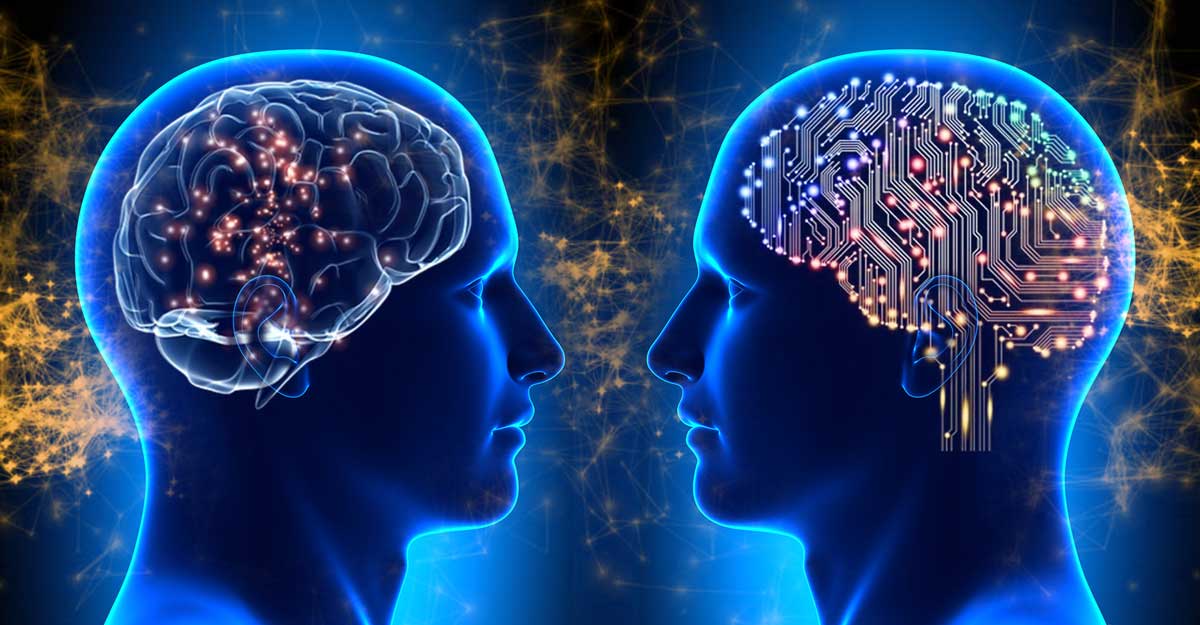
Decoding Language: A Comprehensive Journey into Natural Language Processing
The Fascinating World of Machine Understanding
Imagine a technology that can read, comprehend, and generate human language with remarkable precision. This isn‘t science fiction—it‘s the remarkable reality of Natural Language Processing (NLP). As someone who has spent years exploring the intricate landscapes of artificial intelligence, I‘m excited to share my insights into this transformative field.
The Origins of Machine Language Comprehension
The story of NLP begins long before modern computers. Linguists and computer scientists dreamed of creating machines that could understand human communication. In the 1950s, early researchers like Alan Turing proposed theoretical frameworks for machine intelligence, laying the groundwork for what would become a revolutionary field.
Fundamental Principles of Language Processing
Natural Language Processing represents a complex intersection of computational linguistics, machine learning, and cognitive science. At its core, NLP seeks to bridge the communication gap between human language and computational systems.
The Computational Linguistic Challenge
Understanding language isn‘t just about recognizing words—it‘s about comprehending context, nuance, and underlying meaning. Machines must navigate complex linguistic structures, including:
- Semantic relationships
- Grammatical variations
- Contextual interpretations
- Cultural language nuances
Mathematical Foundations of Language Representation
Modern NLP relies on sophisticated mathematical models. Consider the fundamental equation for word embedding representation:
[v(w) = \arg\min{v} \sum{c \in Context(w)} \log(P(c|v))]This formula represents how computational systems map linguistic representations into multidimensional vector spaces, enabling machines to understand semantic relationships between words.
Advanced Preprocessing Techniques
Tokenization: Breaking Language into Meaningful Units
Tokenization transforms raw text into processable computational units. Modern approaches go beyond simple word splitting, incorporating:
- Subword tokenization
- Context-aware segmentation
- Multilingual token handling
def advanced_tokenizer(text):
    # Sophisticated tokenization logic
    tokens = specialized_tokenization_model(text)
    return refined_linguistic_representation(tokens)
Normalization and Feature Engineering
Language preprocessing involves sophisticated techniques to standardize text data. This includes:
- Lemmatization
- Semantic normalization
- Contextual feature extraction
Machine Learning Architectures in NLP
Neural Network Transformations
The introduction of transformer architectures revolutionized NLP. Models like BERT and GPT demonstrated unprecedented language understanding capabilities by leveraging:
- Self-attention mechanisms
- Contextual embedding techniques
- Massive pre-training strategies
Transformer Architecture Insights
The transformer model fundamentally changed how machines process language. By utilizing parallel processing and attention mechanisms, these models can capture complex linguistic dependencies more effectively than previous recurrent neural network approaches.
Real-World NLP Applications
Healthcare Communication Analysis
In medical contexts, NLP enables:
- Automated medical record interpretation
- Clinical documentation enhancement
- Patient communication analysis
Financial Sentiment Extraction
Advanced NLP models can analyze financial documents, extracting nuanced sentiment and predictive insights with remarkable accuracy.
Emerging Research Frontiers
Multilingual and Cross-Cultural Processing
Contemporary NLP research focuses on developing models that can:
- Understand linguistic variations
- Translate between complex language structures
- Preserve cultural communication nuances
Ethical Considerations in Language Technology
As NLP becomes more sophisticated, ethical considerations become paramount. Researchers must address:
- Algorithmic bias
- Privacy concerns
- Cultural representation
- Responsible AI development
Bias Detection Strategies
Implementing robust bias detection requires:
- Diverse training datasets
- Continuous model evaluation
- Interdisciplinary collaboration
The Future of Language Technology
The next decade will witness unprecedented advancements in machine language understanding. Emerging technologies will likely:
- Develop more context-aware models
- Create more natural human-machine interactions
- Solve complex communication challenges
Conclusion: A Continuous Learning Journey
Natural Language Processing represents more than a technological achievement—it‘s a testament to human creativity and computational innovation. As researchers and practitioners, we stand at the frontier of understanding how machines can comprehend and generate human communication.
Recommended Learning Pathways
For those inspired to dive deeper:
- Explore academic research publications
- Engage with open-source NLP communities
- Experiment with cutting-edge language models
The journey of understanding language through computational lenses is just beginning. Each breakthrough brings us closer to truly intelligent communication systems.
About the Expert
With years of experience in artificial intelligence and computational linguistics, I continue to be fascinated by the intricate dance between human language and machine understanding.