Decoding Neural Networks: A Comprehensive Journey into Artificial Intelligence‘s Most Fascinating Technology
The Genesis of Computational Intelligence
Imagine standing at the intersection of biology, mathematics, and computer science – where human brain functionality meets technological innovation. Neural networks represent this extraordinary convergence, transforming how machines perceive, learn, and solve complex problems.
A Personal Expedition into Artificial Intelligence
My fascination with neural networks began decades ago, watching primitive computational models evolve from rudimentary mathematical constructs into sophisticated learning systems. Each breakthrough felt like witnessing technological magic unfold before my eyes.
Understanding Neural Networks: More Than Just Algorithms
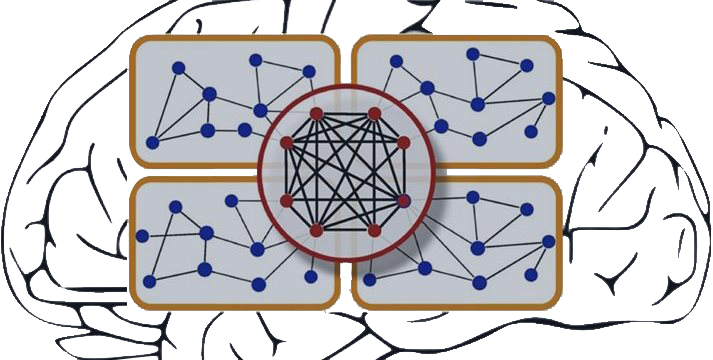
Neural networks aren‘t merely mathematical models; they‘re sophisticated representations of computational learning inspired by our biological neural systems. Picture a complex web of interconnected nodes, each performing intricate computations, mimicking how human neurons communicate and process information.
The Biological Inspiration
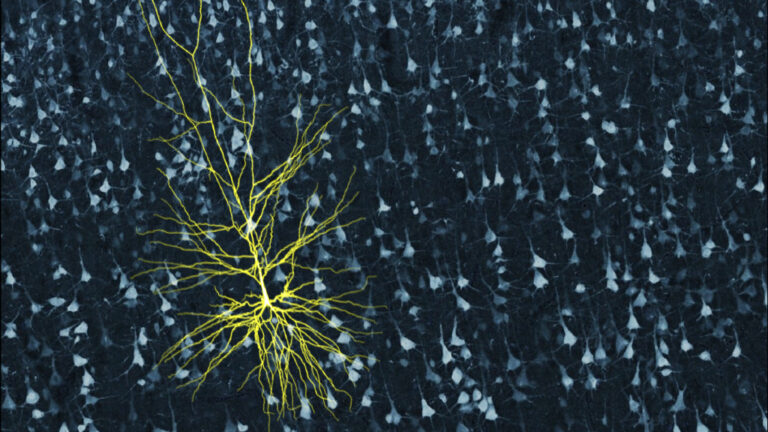
Our human brain contains approximately 86 billion neurons, each connected through intricate neural pathways. Artificial neural networks attempt to replicate this magnificent biological architecture, creating computational systems capable of learning, adapting, and making intelligent decisions.
Architectural Foundations of Neural Networks
Neuron: The Fundamental Building Block
At the heart of neural networks lies the artificial neuron – a computational unit designed to receive, process, and transmit information. Unlike traditional computational models, these neurons can adapt and modify their internal parameters based on incoming data.
The mathematical representation of a neuron‘s operation can be elegantly expressed as:
[Output = f(w_1x_1 + w_2x_2 + … + w_nx_n + b)]Where:
- [w_i] represents connection weights
- [x_i] represents input signals
- [b] represents the bias term
- [f()] represents the activation function
Layer Configurations: Complexity Emerges
Neural networks organize neurons into sophisticated layer configurations:
- Input Layer: Data entry point
- Hidden Layers: Intermediate computational stages
- Output Layer: Final result generation
As layers increase, networks gain remarkable capabilities to model increasingly complex relationships within data.
Learning Mechanisms: How Neural Networks Evolve
Backpropagation: The Learning Algorithm
Backpropagation represents the neural network‘s learning mechanism. Imagine a continuous feedback loop where the network compares its predictions against actual outcomes, systematically adjusting internal weights to minimize prediction errors.
The process involves:
- Forward propagation of input data
- Error calculation
- Backward propagation of error signals
- Weight adjustments
Activation Functions: Introducing Non-Linearity
Activation functions transform neural network computations from linear to non-linear domains, enabling complex pattern recognition. Each function offers unique characteristics:
Sigmoid Function
Transforms inputs into probability-like outputs, ideal for binary classification scenarios. Its mathematical representation:
[f(x) = \frac{1}{1 + e^{-x}}]ReLU (Rectified Linear Unit)
Introduces non-linear transformations while mitigating computational challenges:
[f(x) = max(0, x)]Hyperbolic Tangent
Provides symmetric output range, facilitating balanced neural representations:
[f(x) = \frac{e^x – e^{-x}}{e^x + e^{-x}}]Real-World Neural Network Applications
Neural networks have transcended theoretical boundaries, revolutionizing multiple domains:
Healthcare Diagnostics
Advanced neural networks analyze medical imaging, detecting diseases with unprecedented accuracy. Radiologists now collaborate with AI systems, improving diagnostic precision.
Autonomous Transportation
Self-driving vehicles leverage neural networks to interpret complex environmental data, making split-second navigation decisions.
Financial Modeling
Sophisticated neural network models predict market trends, analyze risk, and optimize investment strategies with remarkable efficiency.
Challenges and Limitations
Despite remarkable capabilities, neural networks face significant challenges:
- Computational Complexity
- Data Dependency
- Interpretability Constraints
- Potential Bias Propagation
The Future Landscape of Neural Networks
Emerging research suggests exciting technological horizons:
Quantum Neural Networks
Integrating quantum computing principles with neural network architectures promises unprecedented computational capabilities.
Neuromorphic Computing
Developing hardware architectures directly mimicking biological neural systems could revolutionize computational efficiency.
Philosophical Implications
Neural networks represent more than technological innovation – they challenge our understanding of intelligence, learning, and computational consciousness.
Conclusion: A Continuous Journey of Discovery
Neural networks exemplify humanity‘s extraordinary capacity to create intelligent systems that learn, adapt, and evolve. As researchers and technologists, we stand at the threshold of unprecedented computational possibilities.
Expert Insights and Reflections
Throughout my decades-long journey in artificial intelligence, neural networks consistently demonstrate an extraordinary capacity to transform theoretical concepts into tangible technological solutions.
The magic lies not just in mathematical precision but in our ability to create systems that can learn, grow, and potentially understand the world in ways we‘re only beginning to comprehend.