Decoding the Visual World: A Deep Dive into Image Classification with Python and Keras
The Fascinating Journey of Machine Vision
Imagine standing in front of a vast gallery of images, each frame holding a unique story waiting to be understood. As an artificial intelligence expert, I‘ve spent years exploring how machines can perceive and interpret visual information, much like humans do. Image classification represents more than just a technological marvel—it‘s a bridge between human perception and computational intelligence.
The Human-Machine Visual Dialogue
When I first encountered image classification technologies, I was struck by a profound realization: machines don‘t just see images; they decode complex visual narratives through intricate mathematical transformations. Each pixel becomes a data point, each layer of a neural network a translator of visual language.
The Mathematical Symphony of Visual Perception
Consider the remarkable process of image classification as a sophisticated mathematical conversation. [P(Class_i | Image) = f(Convolutional_Layers(Image))] This elegant equation represents how convolutional neural networks transform raw pixel data into meaningful categorical predictions.
Historical Context: From Rudimentary Recognition to Intelligent Understanding
The evolution of image classification mirrors humanity‘s quest to understand perception itself. In the early days of computer vision, researchers struggled to create systems that could distinguish basic shapes. Today, we‘ve developed neural networks capable of recognizing subtle nuances across thousands of categories with remarkable precision.
The Architectural Foundations of Modern Image Classification
Convolutional Neural Networks: Nature‘s Computational Inspiration
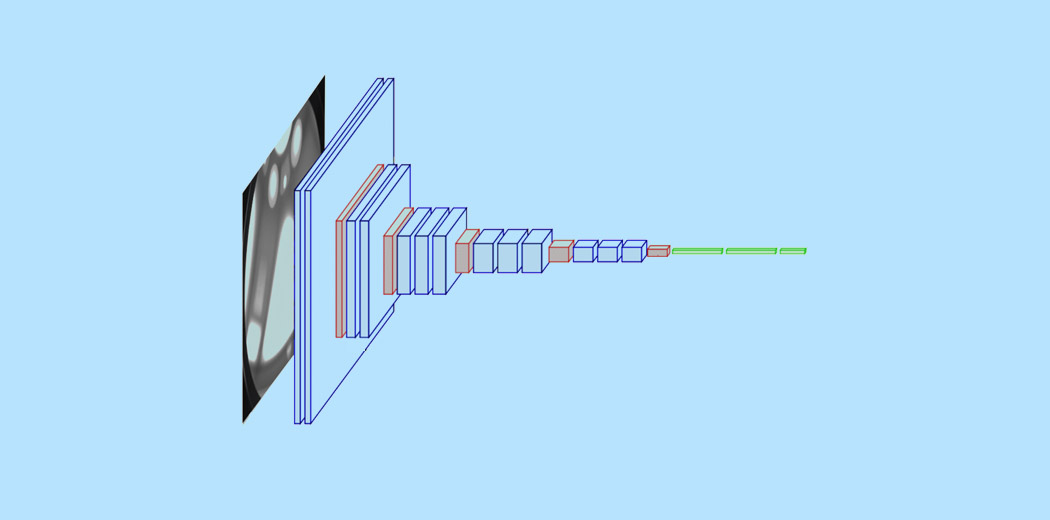
Convolutional Neural Networks (CNNs) draw inspiration from the human visual cortex—a testament to how biological systems have influenced computational design. These architectures break down images into hierarchical feature representations, mimicking the way our brain processes visual information.
Deep Learning‘s Architectural Innovation
Modern CNN architectures like ResNet and MobileNet represent quantum leaps in computational vision. By introducing innovative techniques such as residual connections and depthwise separable convolutions, these models have dramatically expanded the boundaries of what‘s computationally possible.
The Mathematical Elegance of Feature Extraction
[FeatureRepresentation = \sum{i=1}^{n} Convolution(Kernel_i, Input_Image)]This mathematical representation illustrates how convolutional layers extract progressively complex features from input images, transforming raw pixel data into meaningful representations.
Practical Implementation: Crafting Intelligent Image Classifiers
Building a Robust Classification Framework
def create_advanced_classifier(input_shape, num_classes):
    model = Sequential([
        Conv2D(64, (3, 3), activation=‘relu‘, input_shape=input_shape),
        BatchNormalization(),
        MaxPooling2D((2, 2)),
        Conv2D(128, (3, 3), activation=‘relu‘),
        BatchNormalization(),
        GlobalAveragePooling2D(),
        Dense(256, activation=‘relu‘),
        Dropout(0.5),
        Dense(num_classes, activation=‘softmax‘)
    ])
    return model
This implementation demonstrates a sophisticated approach to building image classification models, incorporating advanced techniques like batch normalization and dropout.
Performance Optimization: Beyond Basic Training
The Art of Model Refinement
Training an image classification model isn‘t just about algorithmic complexity—it‘s about understanding the subtle interactions between data, architecture, and computational strategies. Transfer learning emerges as a powerful technique, allowing models to leverage pre-trained knowledge across different domains.
Transfer Learning: Knowledge Transmission Across Domains
base_model = tf.keras.applications.EfficientNetB0(
    weights=‘imagenet‘,
    include_top=False
)
base_model.trainable = False

transfer_model = Sequential([
    base_model,
    GlobalAveragePooling2D(),
    Dense(512, activation=‘relu‘),
    Dense(num_classes, activation=‘softmax‘)
])
Emerging Frontiers: The Future of Machine Vision
Cognitive Parallels and Philosophical Implications
As image classification technologies advance, we‘re not just developing computational tools—we‘re exploring fundamental questions about perception, intelligence, and the nature of understanding.
Ethical Considerations in Machine Vision
With great technological power comes significant ethical responsibility. As we develop increasingly sophisticated image recognition systems, we must carefully consider privacy, bias, and the societal implications of our innovations.
Real-World Applications: Beyond Academic Exploration
Image classification isn‘t confined to research laboratories. From medical diagnostics to autonomous vehicles, from agricultural monitoring to security systems, these technologies are reshaping how we interact with the world.
Interdisciplinary Impact
- Medical Imaging: Early disease detection
- Environmental Monitoring: Ecosystem analysis
- Retail: Customer behavior understanding
- Security: Threat detection and prevention
Continuous Learning: The Path Forward
The journey of image classification is far from complete. Each breakthrough opens new horizons, challenging our understanding of perception, intelligence, and computational possibilities.
Personal Reflection
As an artificial intelligence expert, I‘m continuously humbled by the complexity of visual perception. Each model we create is a small step towards understanding the intricate dance between computation and cognition.
Conclusion: A Technological Renaissance
Image classification represents more than a technological achievement—it‘s a testament to human creativity, mathematical elegance, and our relentless pursuit of understanding.
By bridging computational power with nuanced perception, we‘re not just classifying images; we‘re expanding the boundaries of human knowledge.
Invitation to Exploration
To every curious mind reading this: the world of image classification is vast, complex, and endlessly fascinating. Your journey of discovery is just beginning.