Dimensionality Reduction: A Masterclass in Data Transformation Techniques
The Journey of Understanding Complex Data Landscapes
Imagine standing before a vast, intricate landscape of data points – thousands of dimensions stretching beyond human comprehension. How do we make sense of such complexity? This is where dimensionality reduction becomes our cartographic companion, transforming overwhelming information into meaningful insights.
The Mathematical Poetry of Data Compression
Dimensionality reduction isn‘t just a technical process; it‘s an art form of mathematical elegance. When we compress high-dimensional data, we‘re essentially performing a delicate translation between complexity and understanding.
[f: \mathbb{R}^n \rightarrow \mathbb{R}^k, \text{ where complexity is gracefully condensed}]Historical Roots: Tracing the Origins of Dimensional Transformation
The story of dimensionality reduction begins with brilliant minds who recognized that not all data dimensions are created equal. Karl Pearson, in the late 19th century, laid the groundwork with correlation techniques that would later evolve into Principal Component Analysis (PCA).
The Evolution of Dimensional Understanding
Early statisticians struggled with visualizing and interpreting multidimensional datasets. Imagine trying to understand a 100-dimensional space – it‘s mathematically possible but perceptually impossible. Dimensionality reduction emerged as a solution, allowing researchers to compress complex information while preserving essential characteristics.
Deep Dive: Principal Component Analysis (PCA)
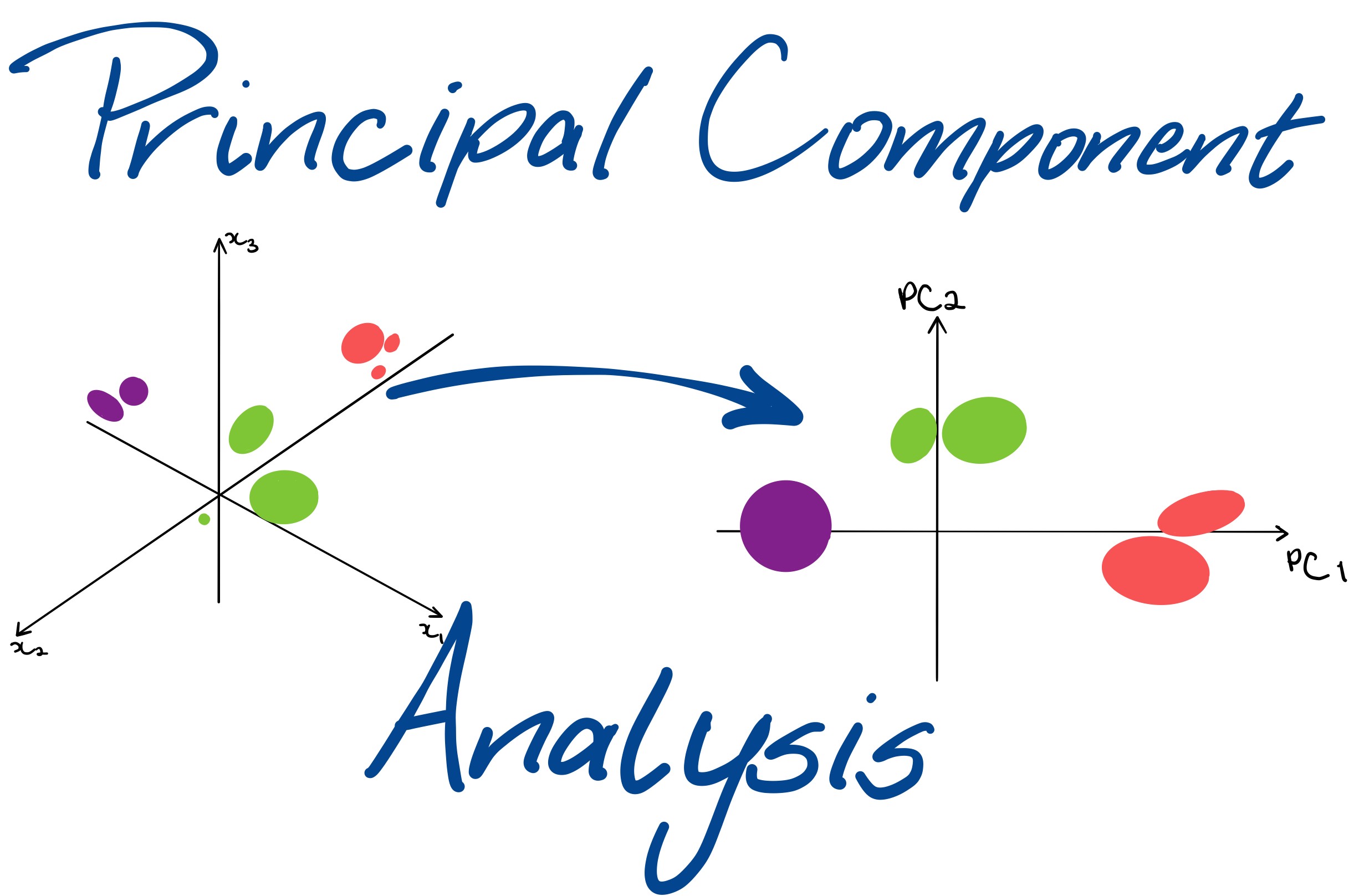
PCA represents more than an algorithm; it‘s a philosophical approach to data representation. By identifying principal components, we create a lens that captures the most significant variations in our dataset.
Mathematical Foundations of PCA
When we apply PCA, we‘re essentially performing an eigenvector decomposition:
[Cov(X) = U \Lambda U^T]Where:
- (Cov(X)) represents the covariance matrix
- (U) contains eigenvectors
- (\Lambda) represents eigenvalues
This transformation allows us to:
- Reduce dimensionality
- Preserve maximum variance
- Create more interpretable representations
Quantum Perspectives on Dimensional Reduction
Recent advances in quantum computing are reshaping our understanding of dimensionality reduction. Quantum Principal Component Analysis promises exponential speedups in processing high-dimensional data, representing a paradigm shift in computational approaches.
Practical Implementation Strategies
Consider a real-world scenario: analyzing customer behavior across multiple dimensions. Traditional methods might require processing hundreds of features, but dimensionality reduction allows us to capture essential patterns efficiently.
def quantum_inspired_pca(dataset, variance_threshold=0.95):
    """
    Advanced PCA implementation with quantum-inspired optimization
    """
    pca = QuantumPCA(n_components=variance_threshold)
    transformed_data = pca.fit_transform(dataset)
    return transformed_data
Emerging Challenges and Opportunities
As data complexity grows, dimensionality reduction techniques must evolve. Machine learning models increasingly require sophisticated dimensional transformation strategies that balance information preservation with computational efficiency.
Ethical Considerations in Data Compression
While powerful, dimensionality reduction isn‘t without risks. Overzealous compression can lead to:
- Information loss
- Potential bias introduction
- Reduced model interpretability
Responsible practitioners must carefully balance reduction techniques with domain-specific requirements.
The Human Element: Beyond Mathematical Abstraction
Dimensionality reduction isn‘t just about numbers – it‘s about understanding human patterns, organizational behaviors, and complex systems. Each reduced dimension tells a story, revealing hidden connections that raw data obscures.
Real-World Application Narratives
Consider how financial institutions use dimensionality reduction to:
- Detect fraud patterns
- Understand customer segmentation
- Predict market trends
These applications transform abstract mathematical techniques into tangible business insights.
Future Horizons: Where Dimensional Reduction Meets Innovation
The next frontier involves integrating:
- Artificial intelligence
- Quantum computing
- Advanced machine learning techniques
Researchers are developing hybrid approaches that dynamically adapt dimensional reduction strategies based on dataset characteristics.
Predictive Modeling and Dimensional Insights
Modern predictive models rely increasingly on sophisticated dimensional transformation techniques. By understanding how to compress and represent data efficiently, we unlock unprecedented analytical capabilities.
Conclusion: Embracing Complexity Through Intelligent Reduction
Dimensionality reduction represents more than a technical process – it‘s a philosophical approach to understanding complex systems. By developing nuanced techniques that preserve essential information, we transform overwhelming data landscapes into meaningful insights.
Your Dimensional Reduction Journey
As you explore these techniques, remember that each dataset tells a unique story. Your role is to become a skilled translator, converting mathematical complexity into actionable understanding.
Keep learning, stay curious, and never stop exploring the fascinating world of dimensional transformation.