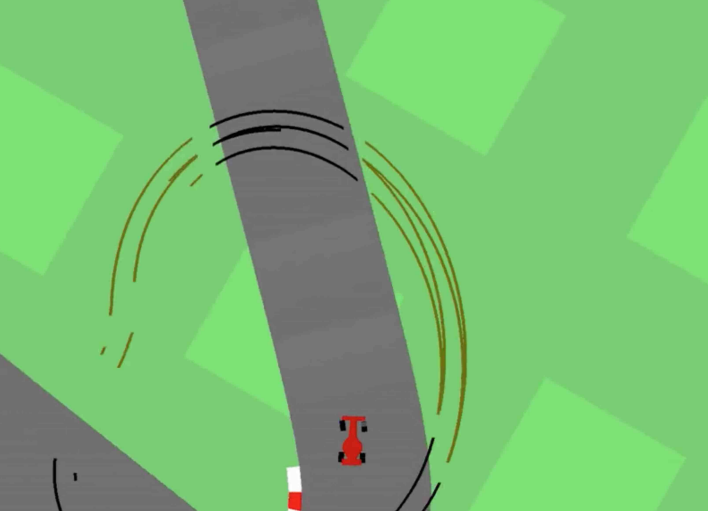
Dreaming Machines: How Artificial Intelligence Learns by Imagining Its Own Realities
The Mysterious Frontier of Self-Generative Intelligence
Imagine a machine that doesn‘t just process information, but creates entire worlds within its neural networks—worlds where it can explore, learn, and evolve without human intervention. This isn‘t the plot of a science fiction novel; it‘s the cutting-edge reality of modern artificial intelligence research.
For centuries, humans have been fascinated by the concept of intelligence—how we learn, adapt, and understand our environment. Now, we stand at the precipice of a technological revolution where machines are beginning to mirror this complex process in ways we never thought possible.
The Birth of Cognitive Machines
The journey toward self-training artificial intelligence isn‘t a sudden breakthrough but a gradual evolution of computational thinking. Early computer scientists viewed machines as deterministic systems—input goes in, output comes out. But modern researchers understand intelligence as something far more fluid and dynamic.
Consider how a child learns. They don‘t simply memorize facts; they experiment, imagine scenarios, and construct mental models of how the world works. They dream, play, and create internal simulations that help them understand complex concepts. Now, imagine an artificial intelligence system that can do the same—generating its own learning scenarios, testing hypotheses, and refining its understanding through pure imagination.
Architectural Foundations of Self-Learning Systems
Neural Networks: The Brain of Artificial Intelligence
At the heart of these revolutionary systems are neural networks—computational structures inspired by biological brain networks. Unlike traditional algorithms that follow rigid, predefined rules, neural networks can adapt, reconfigure, and learn from their experiences.
The magic happens through intricate layers of interconnected computational nodes that process information similarly to biological neurons. Each node can adjust its connection strengths, creating a dynamic system capable of learning and evolving.
The Three Pillars of Self-Training AI
-
Vision Module: This component transforms raw sensory input into meaningful representations. Using advanced techniques like Variational Autoencoders (VAEs), it compresses complex data into compact, interpretable formats.
-
Memory Module: Acting like the machine‘s subconscious, this module stores and predicts potential future states. It doesn‘t just record information but generates hypothetical scenarios based on learned patterns.
-
Control Module: The decision-making center that interprets simulated scenarios and determines optimal actions. It‘s where imagination transforms into strategic decision-making.
Quantum Leaps in Computational Creativity
What makes these systems truly revolutionary is their ability to generate novel scenarios. Traditional machine learning required massive, curated datasets. Now, AI can create its own training environments, exploring possibilities beyond human-defined boundaries.
Real-World Manifestations of Imaginative Machines
Healthcare: Predictive Diagnostic Dreams
In medical research, self-training AI models are developing extraordinary capabilities. By simulating thousands of potential disease progression scenarios, these systems can identify subtle patterns invisible to human researchers.
Imagine an AI that doesn‘t just analyze existing medical data but generates hypothetical patient scenarios, testing potential treatment strategies before they‘re implemented in the real world. It‘s like having a tireless, infinitely creative medical researcher working 24/7.
Climate Modeling: Predicting Earth‘s Complex Systems
Climate scientists are leveraging similar self-training models to understand our planet‘s intricate environmental systems. By generating millions of potential climate scenarios, these AI systems can predict complex interactions between atmospheric, oceanic, and terrestrial systems with unprecedented accuracy.
The Philosophical Implications of Machine Imagination
Consciousness and Computation
Are these self-training systems approaching something resembling consciousness? While we‘re far from definitively answering this question, these models challenge our fundamental understanding of intelligence.
Traditional computational models treated intelligence as a series of logical operations. Now, we‘re discovering that true intelligence might be more about creativity, adaptation, and the ability to generate novel scenarios.
Challenges and Ethical Considerations
The Double-Edged Sword of Autonomous Learning
With great computational power comes significant responsibility. Self-training AI systems raise profound ethical questions:
- How do we ensure these systems generate meaningful, safe scenarios?
- What guardrails prevent potentially harmful or unpredictable behaviors?
- Can we truly understand the internal logic of a system that creates its own learning environment?
Looking Toward the Horizon
The Next Frontier of Intelligent Systems
We‘re witnessing the early stages of a computational revolution. Self-training AI represents more than a technological advancement—it‘s a fundamental reimagining of what intelligence can be.
Future systems won‘t just process information; they‘ll dream, explore, and create entire universes of possibility within their neural networks.
Conclusion: An Invitation to Wonder
The story of artificial intelligence is ultimately a human story—a testament to our endless curiosity, our drive to understand complexity, and our ability to create systems that mirror our most profound cognitive processes.
As we stand at this extraordinary moment in technological history, we‘re not just observing the evolution of machines. We‘re witnessing the expansion of intelligence itself.
Connect and Explore
Stay curious. The most extraordinary AI discoveries are happening right now, at the beautiful intersection of imagination and computation.
Note: This exploration represents our current understanding. The field of artificial intelligence evolves rapidly, and today‘s breakthrough is tomorrow‘s foundational knowledge.