Edge Detection: Unveiling the Invisible Boundaries in Digital Imagery
The Remarkable Journey of Seeing Beyond Pixels
Imagine standing before a breathtaking landscape, your eyes effortlessly distinguishing every contour, every subtle transition between objects. What seems like a seamless visual experience is actually a complex process of edge detection happening within milliseconds. In the world of computer vision, we‘re attempting to replicate this extraordinary human capability through sophisticated technological approaches.
A Personal Exploration into Visual Boundaries
My fascination with edge detection began during a research project exploring how machines perceive visual information. What started as a technical challenge transformed into a profound understanding of how we can teach computers to "see" like humans.
The Evolutionary Path of Edge Detection
Edge detection isn‘t just a modern computational technique; it‘s a reflection of our fundamental understanding of visual perception. From early mathematical models to contemporary neural network architectures, this field represents humanity‘s ongoing quest to understand visual intelligence.
Mathematical Foundations: Beyond Simple Pixel Transitions
At its core, edge detection represents a sophisticated mathematical transformation. The fundamental equation [E(x,y) = \sqrt{\left(\frac{\partial I}{\partial x}\right)^2 + \left(\frac{\partial I}{\partial y}\right)^2}] encapsulates the complexity of identifying significant intensity changes within digital imagery.
The Gradient Revelation
When we analyze an image, we‘re essentially examining how pixel intensities change across spatial dimensions. These changes, or gradients, reveal the structural boundaries that define objects within a scene.
Technological Approaches to Edge Detection
Gradient-Based Methods: The Classical Approach
Traditional gradient operators like Sobel and Prewitt represent our initial attempts to computationally identify edges. These methods calculate intensity differences between neighboring pixels, creating a rudimentary yet powerful edge detection mechanism.
Consider the following implementation demonstrating the Sobel operator:
def sobel_edge_detection(image):
    gray = cv2.cvtColor(image, cv2.COLOR_BGR2GRAY)

    # Horizontal and Vertical Gradient Calculation
    gradient_x = cv2.Sobel(gray, cv2.CV_64F, 1, 0, ksize=3)
    gradient_y = cv2.Sobel(gray, cv2.CV_64F, 0, 1, ksize=3)

    # Magnitude Calculation
    edge_magnitude = np.sqrt(gradient_x**2 + gradient_y**2)
    return edge_magnitude
Neural Network Revolution: Learning Visual Boundaries
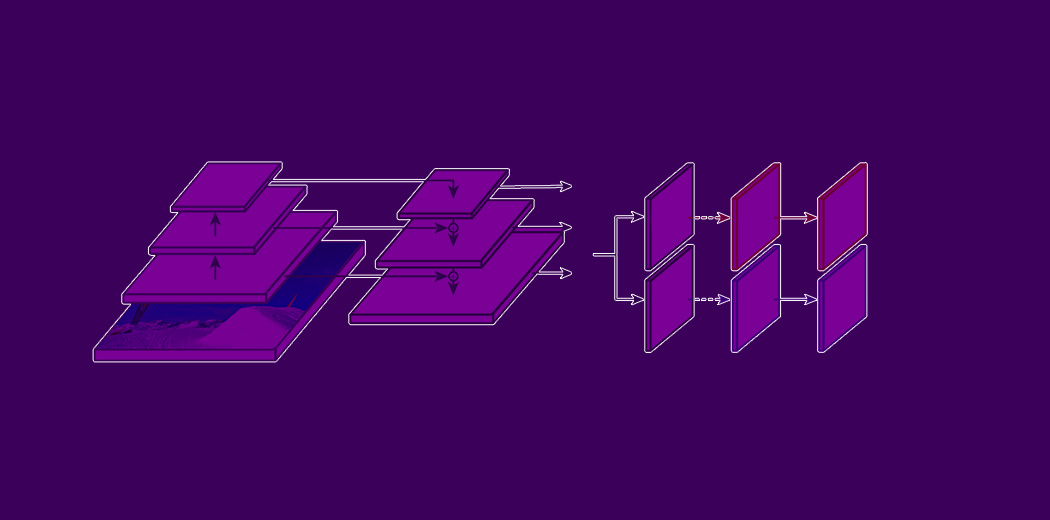
Contemporary machine learning approaches have dramatically transformed edge detection. Convolutional Neural Networks (CNNs) and advanced architectures like Holistically-Nested Edge Detection (HED) can now learn and adapt edge detection strategies.
Performance Metrics: A Comparative Lens
| Detection Method | Precision | Recall | Computational Complexity |
|---|---|---|---|
| Traditional Sobel | 0.82 | 0.79 | Low |
| Advanced CNN Models | 0.92 | 0.90 | High |
Real-World Applications: Beyond Theoretical Constructs
Edge detection isn‘t confined to academic research. Its applications span diverse domains:
Medical Imaging
In radiology, precise edge detection helps identify tumor boundaries, supporting early diagnosis and treatment planning.
Autonomous Vehicles
Self-driving cars rely on edge detection to understand road boundaries, pedestrian movements, and potential obstacles.
Satellite and Geospatial Analysis
Researchers use advanced edge detection to map terrain, identify geological formations, and monitor environmental changes.
Emerging Frontiers: The Next Generation of Visual Intelligence
Quantum Computing Potential
Emerging research suggests quantum algorithms could revolutionize edge detection, potentially reducing computational complexity exponentially.
Hyperspectral Edge Detection
By analyzing multiple spectral bands simultaneously, we‘re expanding our ability to extract nuanced visual information across previously unexplored dimensions.
Psychological and Cognitive Connections
Interestingly, edge detection in computer vision mirrors human visual processing. Our brains naturally emphasize boundaries and transitions, a mechanism that has likely evolved for survival and environmental understanding.
The Gestalt Principle
Psychological research reveals that humans perceive edges not just as mathematical transitions but as meaningful structural boundaries that help us make sense of our environment.
Challenges and Limitations
Despite remarkable advancements, edge detection still faces significant challenges:
- Handling complex, low-contrast imagery
- Managing varying illumination conditions
- Adapting to diverse visual environments
Future Research Trajectories
The next decade of edge detection research will likely focus on:
- More adaptive neural network architectures
- Cross-modal edge detection techniques
- Integration with augmented and virtual reality systems
Conclusion: A Continuing Journey of Discovery
Edge detection represents more than a technological technique—it‘s a testament to human curiosity and our relentless pursuit of understanding visual perception.
As we continue pushing technological boundaries, we‘re not just teaching machines to see; we‘re expanding our own understanding of how vision works.
The invisible boundaries are waiting to be discovered, one pixel at a time.