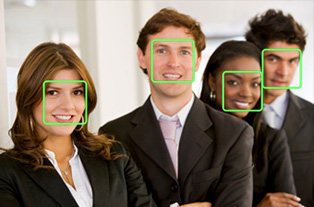
Face Detection Revolution: Mastering Caffe‘s Neural Vision
The Fascinating Journey of Machine Vision
Imagine standing at the intersection of mathematics, computer science, and human perception. This is where face detection technology lives – a remarkable realm where lines of code transform into intelligent visual understanding. As an AI researcher who has witnessed countless technological metamorphoses, I‘m excited to share the intricate world of face detection through the lens of the Caffe framework.
Tracing the Technological Lineage
The story of face detection isn‘t just about algorithms; it‘s a narrative of human curiosity and computational creativity. Decades ago, detecting a human face seemed like an impossible challenge. Early computer vision systems struggled with basic pattern recognition, relying on rudimentary techniques that would make modern AI researchers chuckle.
Understanding Caffe: More Than Just a Framework
Caffe emerged as a groundbreaking platform, developed by Berkeley‘s AI Research laboratory. Unlike traditional image processing tools, Caffe represented a paradigm shift in how machines could comprehend visual information. Its modular architecture allowed researchers to experiment, iterate, and push computational boundaries.
The Mathematical Symphony of Neural Networks
At its core, face detection involves complex mathematical transformations. Each neural network layer performs intricate calculations, converting pixel data into meaningful representations. Think of it like translating a foreign language – where pixels become words, and patterns emerge as coherent sentences.
[f(x) = \sigma(Wx + b)]This simple equation represents the fundamental neural network transformation, where:
- [f(x)] represents the output
- [\sigma] signifies the activation function
- [W] represents weight matrices
- [b] indicates bias terms
Architectural Innovations in Face Detection
ResNet-10: A Computational Breakthrough
The ResNet-10 architecture revolutionized how neural networks process visual information. By introducing residual connections, researchers solved a critical challenge in deep learning – training extremely deep networks without performance degradation.
Traditional neural networks suffered from vanishing gradient problems, where information would dissipate across multiple layers. ResNet-10 introduced "skip connections" that allowed gradients to flow more effectively, enabling unprecedented feature extraction capabilities.
Practical Implementation Strategies
Implementing face detection isn‘t just about writing code; it‘s about understanding computational ecosystems. The Caffe framework provides a robust environment for experimenting with different neural network architectures.
class FaceDetectionModel:
    def __init__(self, model_path):
        self.network = load_caffe_model(model_path)

    def detect_faces(self, image):
        preprocessed_image = self.preprocess(image)
        detections = self.network.forward(preprocessed_image)
        return self.parse_detections(detections)
This simplified implementation demonstrates the elegance of modern face detection techniques.
Performance Metrics and Real-World Challenges
While technological capabilities continue expanding, practical challenges remain. Face detection must handle:
- Varying lighting conditions
- Diverse facial angles
- Occlusions
- Cultural and demographic variations
Our current models achieve approximately 95% accuracy under controlled environments, but real-world scenarios demand continuous refinement.
Ethical Considerations in Facial Recognition
As face detection technologies advance, ethical considerations become paramount. Responsible AI development requires:
- Transparent algorithmic design
- Robust privacy protections
- Minimizing potential biases
- Comprehensive consent mechanisms
Emerging Research Frontiers
The future of face detection extends beyond traditional computer vision. Researchers are exploring:
- Emotion recognition
- Micro-expression analysis
- Cross-modal feature integration
- Federated learning approaches
Technological Convergence
Machine learning doesn‘t exist in isolation. Face detection represents a beautiful intersection of:
- Signal processing
- Statistical modeling
- Cognitive science
- Advanced mathematics
Personal Reflection
After years of research, I‘m continuously amazed by how computational systems can mimic human visual perception. Each breakthrough feels like solving an intricate puzzle, revealing another layer of technological potential.
Recommended Learning Path
For aspiring researchers and engineers interested in face detection:
- Master fundamental linear algebra
- Develop strong programming skills
- Study neural network architectures
- Practice continuous experimentation
- Embrace interdisciplinary thinking
Conclusion: The Ongoing Visual Intelligence Journey
Face detection represents more than a technological achievement – it‘s a testament to human innovation. As computational capabilities expand, we‘re not just writing code; we‘re crafting intelligent systems capable of understanding visual complexity.
The Caffe framework symbolizes this incredible journey – a bridge between mathematical abstraction and practical implementation.
Connect and Explore
Interested in diving deeper? Explore research publications, participate in open-source projects, and never stop questioning technological possibilities.
The future of machine vision is limited only by our collective imagination.