Cast Iron Dutch Ovens: A Comprehensive Guide for Home Cooks
Hey there, fellow home cook! If you‘re looking to elevate your kitchen game, you‘ve come to the right place. As a passionate foodie and self-proclaimed cast iron aficionado, I‘m here to introduce you to the wonders of cast iron Dutch ovens. These versatile, durable, and downright gorgeous pieces of cookware have been a staple in kitchens around the world for centuries, and for good reason.
In this comprehensive guide, we‘ll dive into the rich history of Dutch ovens, explore the key benefits of cooking with cast iron, and arm you with expert tips for selecting, using, and caring for your very own cast iron Dutch oven. Whether you‘re a seasoned pro or a cast iron newbie, you‘re sure to learn something new and exciting. So, let‘s get started!
A Brief History of Cast Iron Dutch Ovens
The term "Dutch oven" has been around since the early 18th century, when it was used to describe thick-walled, lidded cooking pots made from cast iron. These pots were originally produced in the Netherlands, hence the name "Dutch" oven. However, the concept of using heavy, lidded pots for cooking dates back much further.
In the American colonies, Dutch ovens were prized for their durability and versatility, making them essential tools for cooking over open fires. In fact, Lewis and Clark even carried Dutch ovens on their famous expedition across the American wilderness in the early 1800s. As cast iron stoves became popular in the mid-19th century, Dutch ovens transitioned from outdoor essentials to indoor kitchen workhorses.
Today, cast iron Dutch ovens are beloved by home cooks and professional chefs alike for their exceptional heat retention, even heat distribution, and ability to seamlessly transition from stovetop to oven.
The Benefits of Cooking with Cast Iron Dutch Ovens
So, why should you choose a cast iron Dutch oven over other types of cookware? Let me count the ways!
-
Versatility: Dutch ovens are true multitaskers. You can use them for simmering soups and stews, braising meats, baking bread, frying chicken, and so much more. Their ability to handle a wide range of cooking methods makes them an invaluable addition to any kitchen.
-
Superior Heat Retention and Distribution: Cast iron is known for its excellent heat retention and even heat distribution properties. This means that your Dutch oven will maintain a steady temperature, ensuring consistent cooking results. Plus, the heavy lid seals in moisture, keeping your dishes tender and flavorful.
-
From Stovetop to Oven with Ease: One of the biggest advantages of cast iron Dutch ovens is their ability to seamlessly transition from the stovetop to the oven. This allows you to sear meats on the stove to develop a flavorful crust, then transfer the pot to the oven for low-and-slow cooking. No need for multiple pans or extra dishes!
-
Built to Last: With proper care, a quality cast iron Dutch oven can last for generations. In fact, many cast iron enthusiasts proudly use Dutch ovens passed down from their grandparents or great-grandparents. While enameled Dutch ovens do require a bit more TLC to prevent chipping, they are still incredibly durable.
-
Naturally Non-Stick: Over time, a well-seasoned bare cast iron Dutch oven will develop a smooth, naturally non-stick surface. This makes cooking and cleanup a breeze, without the need for chemical coatings found in many modern non-stick pans.
-
A Nutritional Boost: Did you know that cooking in cast iron can actually increase the iron content of your food? This is especially beneficial for those who are prone to iron-deficiency anemia. The acidity of certain foods can cause trace amounts of iron to leach from the pan into your dish, giving you a small but helpful nutritional boost.
Now that you‘re well-versed in the benefits of cast iron Dutch ovens, let‘s explore some key factors to consider when choosing the perfect one for your kitchen.
Choosing the Best Cast Iron Dutch Oven for Your Needs
With so many options available, selecting the right cast iron Dutch oven can feel overwhelming. Fear not! I‘m here to guide you through the process and help you find the perfect match for your cooking style and needs.
Size Matters
Dutch ovens come in a wide range of sizes, from cute 1/4-quart mini cocottes to massive 13-quart or larger pots. For most home cooks, a 5-7 quart Dutch oven is the sweet spot. This size is versatile enough to handle everyday cooking tasks, like whipping up a batch of chili or baking a loaf of crusty bread, while still being manageable to lift and store.
If you frequently cook for large groups or love to batch-cook and freeze meals, you may want to size up to a 7.5-9 quart Dutch oven. Keep in mind, though, that larger ovens are heavier and more cumbersome to handle.
Shape: Round or Oval?
The vast majority of Dutch ovens are round, which is the most versatile shape for everyday cooking. However, oval Dutch ovens do have their place in the kitchen. They‘re particularly useful for cooking larger cuts of meat, like a whole chicken or a rack of ribs, that might not fit comfortably in a round pot.
If you‘re just starting your Dutch oven collection, I recommend opting for a classic round shape. You can always add an oval Dutch oven to your arsenal later if you find yourself needing one for specific recipes.
To Enamel or Not to Enamel?
When it comes to cast iron Dutch ovens, you have two main options: bare cast iron or enameled cast iron. Each has its pros and cons, so let‘s break them down.
Bare cast iron Dutch ovens develop a natural non-stick patina over time, which imparts a subtle flavor to your dishes. They require a bit more maintenance, as you‘ll need to season them regularly to prevent rusting and maintain their non-stick properties. However, they‘re incredibly durable and can last for generations with proper care.
Enameled cast iron Dutch ovens, on the other hand, feature a smooth, glass-like coating that eliminates the need for seasoning. They‘re non-reactive, making them suitable for cooking acidic foods like tomato sauce or wine-based stews for extended periods. Enameled Dutch ovens are also easier to clean and maintain, as you can use soap without worrying about stripping the seasoning. However, they do tend to be more expensive than their bare cast iron counterparts, and the enamel can chip if you‘re not careful.
Ultimately, the choice between bare and enameled cast iron comes down to personal preference and budget. Both types of Dutch ovens will provide excellent results in the kitchen.
The Importance of a Well-Fitting Lid
A tight-fitting lid is crucial for creating a seal that locks in moisture and flavor, ensuring tender, juicy results. Most cast iron Dutch ovens come with a matching lid made from the same material as the pot. Look for a lid that sits snugly on the pot, with no visible gaps.
Some Dutch oven lids feature a self-basting design, with raised dimples or spikes on the underside. These dimples collect condensation and allow it to drip back down onto the food, basting it as it cooks. While not essential, self-basting lids can be a nice bonus feature.
Handles and Helper Handles
When shopping for a cast iron Dutch oven, pay attention to the handles. Most Dutch ovens have two short loop handles on either side, which allow for easy lifting and maneuvering, even with oven mitts. Some larger models also feature a helper handle, a third loop handle in the center that provides extra support when lifting a full pot.
Make sure the handles are securely attached and large enough to grip comfortably with oven mitts. Poorly designed handles can make using your Dutch oven a frustrating experience, so don‘t overlook this important feature.
Best Cast Iron Dutch Oven Brands: My Top Picks
As a cast iron enthusiast, I‘ve had the pleasure of cooking with Dutch ovens from a variety of brands over the years. While there are countless options on the market, a few stand out for their exceptional quality, performance, and durability. Here are my top picks for the best cast iron Dutch oven brands:
-
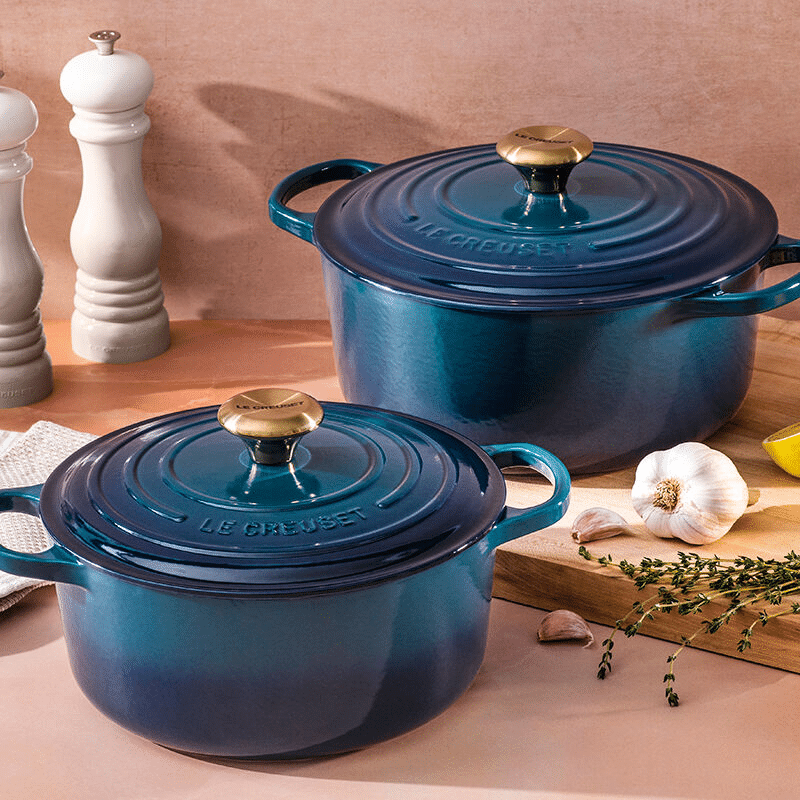
Le Creuset: Handcrafted in France since 1925, Le Creuset Dutch ovens are widely considered the gold standard in the world of enameled cast iron cookware. Their Signature Enameled Cast Iron Round Dutch Oven features a durable, chip-resistant enamel finish and superior heat distribution, making it a top performer in the kitchen. Plus, with a rainbow of gorgeous colors to choose from, these Dutch ovens are as pretty as they are practical.
-
Staub: Another renowned French brand, Staub produces high-quality enameled cast iron Dutch ovens that are beloved by home cooks and professional chefs alike. Their cocotte ovens feature a unique black matte enameled interior that improves with use, developing a natural non-stick patina over time. The lids are specially designed with self-basting spikes that continuously baste your food as it cooks, ensuring tender, flavorful results.
-
Lodge: For a more budget-friendly option, look no further than Lodge. This American company has been producing quality cast iron cookware since 1896. Their enameled cast iron Dutch ovens offer similar performance to high-end European brands at a fraction of the price. Lodge also offers a range of bare cast iron Dutch ovens, like their versatile 5-Quart Double Dutch Oven, which comes with a lid that doubles as a skillet.
-
Tramontina: Another wallet-friendly choice, Tramontina‘s enameled cast iron Dutch ovens deliver solid performance and come in a range of attractive colors. The porcelain enamel coating is durable and easy to clean, making these Dutch ovens a great choice for everyday cooking.
-
Victoria: If you‘re in the market for a bare cast iron Dutch oven, Victoria is a brand worth considering. Their Dutch ovens are made in Colombia using traditional sand-casting methods, resulting in a smooth, naturally non-stick surface. Victoria Dutch ovens are also pre-seasoned with 100% non-GMO flaxseed oil, giving you a head start on building that coveted patina.
No matter which brand you choose, investing in a quality cast iron Dutch oven is a decision you won‘t regret. With proper care and maintenance, your Dutch oven will be a trusty kitchen companion for years (or even generations) to come.
Caring for Your Cast Iron Dutch Oven: Tips and Tricks
To keep your cast iron Dutch oven in top shape, it‘s essential to follow proper care and maintenance guidelines. Here are some tips and tricks for caring for both bare and enameled cast iron Dutch ovens:
Caring for Bare Cast Iron Dutch Ovens
-
Clean Promptly: After cooking, let your Dutch oven cool slightly before cleaning. Wash it with hot water and a stiff brush or scrubber, avoiding soap, which can strip the seasoning. For stuck-on food, use a mixture of coarse salt and hot water to scrub the pan clean.
-
Dry Thoroughly: Once clean, dry your Dutch oven completely with a clean towel or over low heat on the stove. Moisture is the enemy of cast iron, as it can cause rusting.
-
Oil and Store: While the Dutch oven is still warm, apply a thin layer of vegetable oil or melted shortening to the interior surface using a paper towel. This helps maintain the seasoning and prevents rust. Store your Dutch oven in a dry place with the lid slightly ajar to allow air circulation.
-
Re-Season as Needed: If you notice any rusty spots or the seasoning starts to look patchy, it‘s time to re-season your Dutch oven. Clean the pot thoroughly, then apply a thin layer of vegetable oil all over the surface. Place the Dutch oven upside down in a 450°F (230°C) oven for one hour, then let it cool completely in the oven before storing.
Caring for Enameled Cast Iron Dutch Ovens
-
Let It Cool: Always allow your enameled Dutch oven to cool completely before washing. Drastic temperature changes can cause the enamel to crack or chip.
-
Wash by Hand: Clean your enameled Dutch oven with warm, soapy water and a soft sponge or dishcloth. Avoid using abrasive scrubbers or steel wool, as these can scratch the enamel. For tough, stuck-on food, soak the pot in hot water for 15-20 minutes before cleaning.
-
Dry Well: After washing, dry your enameled Dutch oven thoroughly with a clean towel. Moisture can cause rusting on any exposed cast iron, such as the rim of the pot.
-
Avoid Metal Utensils: To prevent chipping, use wooden, silicone, or nylon utensils when cooking in your enameled Dutch oven. Metal utensils can scratch or chip the enamel coating.
-
Store Carefully: When storing your enameled Dutch oven, place a paper towel or soft cloth between the pot and the lid to prevent scratches. Avoid stacking heavy items on top of your Dutch oven, as this can cause chips or cracks in the enamel.
By following these simple care and maintenance tips, you‘ll ensure that your cast iron Dutch oven remains a cherished and long-lasting addition to your kitchen.
Conclusion
Cast iron Dutch ovens are a true kitchen essential, offering unparalleled versatility, durability, and performance. Whether you opt for a bare cast iron or enameled Dutch oven, you‘ll be investing in a tool that will help you create delicious, comforting meals for years to come.
When shopping for a cast iron Dutch oven, consider factors like size, shape, material, and brand to find the perfect fit for your needs and budget. And remember, with proper care and maintenance, your Dutch oven will only get better with age, developing a rich patina and a lifetime of memories in the kitchen.
As a home cook and cast iron enthusiast, I can attest to the joys of cooking with a quality Dutch oven. From simmering hearty stews to baking crusty bread, my Dutch ovens are my go-to vessels for creating nourishing, satisfying meals for my loved ones. I hope this comprehensive guide has inspired you to embrace the world of cast iron cooking and discover the magic of Dutch ovens for yourself. Happy cooking!