Forecasting at Uber: The Technological Frontier of Machine Learning and Deep Learning
The Remarkable Journey of Machine Intelligence at Uber
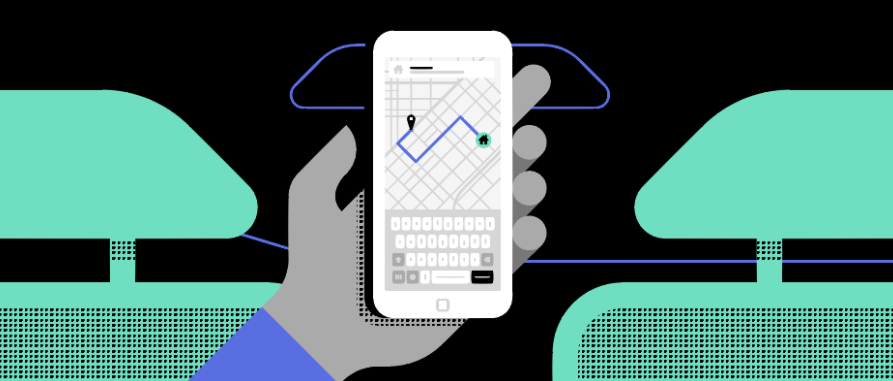
When you open the Uber app, what seems like a simple ride-hailing experience is actually a complex symphony of machine learning algorithms working in perfect harmony. Behind every seamless transportation request lies an intricate network of predictive models, deep learning architectures, and sophisticated forecasting techniques that transform raw data into intelligent decisions.
Imagine a technology that can predict transportation demand with remarkable precision, optimize driver allocation across complex urban landscapes, and create economic efficiencies that reshape how cities move. This is the world of machine learning at Uber – a technological marvel that goes far beyond traditional transportation services.
The Genesis of Intelligent Transportation
Uber‘s machine learning journey began not as a grand vision, but as a practical necessity. In the early days of ride-sharing, founders recognized that traditional transportation models were fundamentally broken. Static taxi dispatching systems couldn‘t adapt to real-time urban dynamics. The solution? Build an intelligent, self-learning system that could predict, adapt, and optimize in milliseconds.
Architectural Foundations of Uber‘s Machine Learning Ecosystem
Neural Networks: The Brain Behind the Prediction
At the heart of Uber‘s forecasting capabilities are advanced neural network architectures that represent the pinnacle of modern machine learning research. These aren‘t just algorithms; they‘re intricate computational systems designed to mimic and exceed human-like predictive capabilities.
Long Short-Term Memory (LSTM) networks form the cornerstone of Uber‘s time series prediction models. Unlike traditional forecasting methods, LSTMs can capture complex temporal dependencies, understanding not just what happened, but why it happened and how those patterns might evolve.
Consider a typical urban Saturday night. Traditional models might struggle to predict ride demand, but Uber‘s LSTM networks analyze hundreds of interconnected variables – local events, weather patterns, historical trends, and real-time user behaviors – to generate remarkably accurate predictions.
The Complexity of Probabilistic Forecasting
Uber‘s machine learning doesn‘t just provide point estimates; it generates probabilistic forecasts that capture the inherent uncertainty in transportation dynamics. By utilizing quantile regression techniques, researchers can now provide not just a single prediction, but a range of potential outcomes with associated confidence intervals.
This probabilistic approach transforms decision-making. Instead of a binary "this will happen" prediction, Uber‘s models offer nuanced insights into potential scenarios, allowing for more robust strategic planning.
Technological Innovations in Feature Engineering
Feature engineering at Uber represents a quantum leap in data preprocessing. Traditional approaches treated features as static inputs, but Uber‘s researchers developed dynamic, adaptive feature extraction techniques that continuously learn and evolve.
Geo-temporal feature fingerprinting allows the system to understand not just individual data points, but the complex relationships between different urban zones. A ride request in downtown San Francisco carries different predictive signals compared to a similar request in a suburban neighborhood.
Handling Extreme Computational Complexity
With approximately one billion time series to manage, Uber‘s machine learning infrastructure represents one of the most complex computational ecosystems in the technology industry. Each prediction involves processing massive datasets, navigating intricate computational graphs, and generating insights in fractions of a second.
The Human Element of Machine Learning
Behind these technological marvels are teams of brilliant researchers and engineers who view machine learning not just as a technical challenge, but as a means to solve real-world problems. Their work goes beyond algorithms – it‘s about understanding human mobility, economic dynamics, and urban ecosystems.
Ethical Considerations in Predictive Technologies
As machine learning becomes increasingly powerful, Uber has consistently emphasized responsible AI development. This means not just creating accurate models, but ensuring those models are transparent, fair, and aligned with broader societal values.
Looking Toward the Future
The future of transportation isn‘t just about moving people from point A to point B. It‘s about creating intelligent, adaptive systems that understand and anticipate human needs. Uber‘s machine learning research is laying the groundwork for this transformation.
Emerging technologies like federated learning, quantum-inspired algorithms, and advanced probabilistic frameworks promise to push the boundaries of what‘s possible in predictive transportation technologies.
Conclusion: A Technological Symphony
Uber‘s machine learning journey represents more than technological innovation – it‘s a testament to human creativity, computational thinking, and the relentless pursuit of solving complex challenges.
Every time you request a ride, you‘re experiencing the result of years of sophisticated research, computational brilliance, and a vision of transportation that adapts, learns, and evolves in real-time.
The road ahead is exciting, and the possibilities are limitless.