From Aspiring Analyst to Data Science Success: Unlocking Your Potential in the Era of Big Data
Introduction: Embrace the Data-Driven Revolution
In today‘s fast-paced, technology-driven world, data has emerged as the lifeblood of industries, fueling innovation, strategic decision-making, and unprecedented growth. As businesses and organizations strive to harness the power of this invaluable resource, the demand for skilled data scientists has skyrocketed. If you‘re an aspiring analyst looking to transition into the dynamic field of data science, this comprehensive guide is your roadmap to success.
Data science is a multifaceted discipline that combines statistical analysis, machine learning, and domain expertise to uncover insights, solve complex problems, and drive transformative change. It‘s a field that requires a unique blend of technical prowess, analytical thinking, and the ability to translate data-driven findings into actionable strategies.
Whether you‘re just starting your journey or seeking to elevate your existing data skills, this guide will equip you with the essential knowledge, real-world experiences, and practical advice to propel you towards data science mastery. Prepare to embark on an exhilarating adventure, where you‘ll not only develop in-demand technical competencies but also cultivate the mindset and strategies to thrive in this ever-evolving landscape.
Navigating the Data Science Landscape: Key Competencies for Success
To excel in the world of data science, aspiring professionals must possess a diverse set of skills and competencies. Let‘s dive into the key areas you‘ll need to focus on:
Technical Expertise: Mastering the Fundamentals
At the core of data science lies a strong foundation in programming, statistics, and machine learning. Proficiency in languages like Python and SQL is a must, as they form the backbone of data manipulation, analysis, and model building. Additionally, a deep understanding of statistical concepts, such as regression analysis, hypothesis testing, and probability theory, will be invaluable in your pursuit of data-driven insights.
Familiarize yourself with popular machine learning algorithms and their applications, from supervised learning techniques like linear regression and decision trees to unsupervised methods like clustering and dimensionality reduction. Mastering these fundamental tools will equip you with the ability to tackle complex business problems and extract meaningful insights from vast datasets.
Analytical Mindset: Embracing Problem-Solving
Data science is all about identifying and solving problems using data-driven insights. Cultivate a critical thinking mindset, hone your analytical skills, and develop the ability to break down complex challenges into manageable steps. Embrace a curious and inquisitive approach, constantly seeking new ways to extract value from data.
Approach each problem with a systematic and methodical process, starting with clearly defining the business objectives, understanding the available data, and formulating hypotheses. Leverage your technical expertise to clean, transform, and analyze the data, uncovering patterns, trends, and anomalies that can inform strategic decision-making.
Communication and Collaboration: Bridging the Gap
As a data scientist, you‘ll often work closely with cross-functional teams, including business stakeholders, domain experts, and fellow data professionals. Effective communication skills, both written and verbal, are essential for translating technical findings into actionable insights that drive decision-making. Develop the ability to present complex ideas in a clear and compelling manner, tailoring your messaging to suit the needs and understanding of your audience.
Collaboration is also key in the data science field. Learn to work seamlessly with team members, leveraging each other‘s strengths and expertise to tackle challenges holistically. Foster an environment of knowledge-sharing, where you can learn from your peers and contribute your own insights to the collective effort.
Continuous Learning: Staying Ahead of the Curve
The field of data science is rapidly evolving, with new technologies, techniques, and best practices emerging constantly. Embrace a mindset of lifelong learning and stay up-to-date with industry trends and advancements. Engage in online courses, attend conferences and meetups, and actively participate in the data science community to expand your knowledge and network.
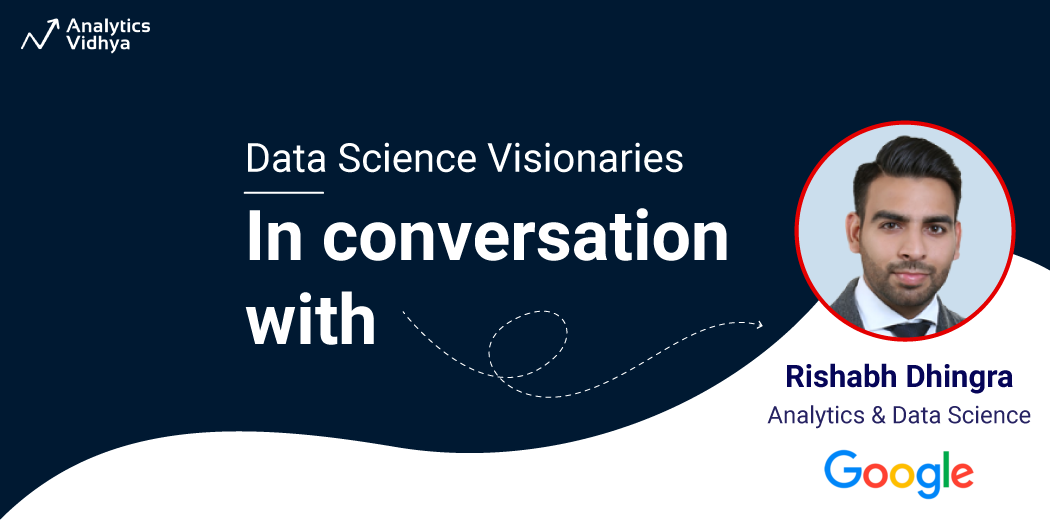
Rishabh Dhingra, an accomplished data science professional at Google, has navigated the challenges and triumphs of this dynamic field. Let‘s delve into his experiences and the valuable insights he has to offer.
Rishabh Dhingra‘s Journey: Lessons from a Data Science Trailblazer
Rishabh‘s path to success in the data science industry has been marked by a relentless pursuit of knowledge, a willingness to tackle complex challenges, and a deep commitment to sharing his expertise with others. As you embark on your own data science journey, let Rishabh‘s experiences serve as a guiding light, illuminating the strategies and mindsets that can propel you towards your goals.
Overcoming Obstacles and Embracing Opportunities
During his tenure at Home Depot Canada, Rishabh faced the unique challenge of defining business problems and aligning stakeholders on success metrics for data science projects. He emphasizes the importance of this crucial step, as it lays the foundation for the project‘s success and ensures that the team‘s efforts are focused on delivering tangible value to the organization.
"Defining the business problem and success metrics of data science projects, and getting alignment with all the stakeholders, is very critical for the project‘s success," Rishabh explains. "This would guide everyone before jumping into solutions to the problem and building things, analyzing the business problem, and defining the success."
Rishabh‘s experience at TD Insurance further highlights the need to balance short-term and long-term analytics initiatives. As a leader, he recognized the importance of communicating a clear long-term vision while also seizing opportunities for quick wins that align with the organization‘s strategic goals. This delicate balance allowed Rishabh to drive meaningful impact and build trust with stakeholders.
"As a leader, you need to have both a long-term vision and short-term wins that would help the business," Rishabh shares. "You need to be very clear and communicate the long-term vision of the analytics journey to the stakeholders and your team so everyone is clear on how the future will look and what steps we need to accomplish to reach it. But you need to also seize the moments in the short run where you can impact the business using analytics."
Continuous Learning and Upskilling
Rishabh‘s commitment to continuous learning and upskilling has been a driving force in his career. He actively seeks out new courses, listens to industry-leading podcasts, and engages in personal projects to stay ahead of the curve. Rishabh‘s dedication to expanding his knowledge and skills has not only benefited his own growth but has also enabled him to share his expertise with others through teaching and mentoring.
"The field of data science is constantly changing, with new technologies and techniques emerging all the time," Rishabh emphasizes. "Data scientists must constantly learn and upskill to stay ahead of the curve."
Some of the ways Rishabh keeps himself updated on the latest developments in the industry include:
- Listening to various podcasts, such as SuperDataScience and Data Skeptic
- Enrolling in online courses, like the "Applied Machine Learning – Beginner to Professional" program offered by Analytics Vidhya
- Undertaking personal projects to apply new skills and techniques
- Actively networking with other data science professionals to learn from their experiences
By embracing a mindset of continuous learning, Rishabh has not only expanded his own capabilities but has also positioned himself as a valuable resource and thought leader within the data science community.
Balancing Passion and Professionalism
Rishabh‘s diverse interests and hobbies, such as running a podcast, playing sports, and exploring home decor, demonstrate his ability to maintain a healthy work-life balance. By pursuing passions outside of work, Rishabh has found ways to recharge, foster creativity, and bring a fresh perspective to his professional endeavors.
"I engage myself in a lot of things outside work – listening to podcasts and running my podcast ‘Inspired‘, playing sports, especially cricket, being an instructor on data analytics and data science, mentoring new immigrants in Canada, reading books, running my side hustle business of home decor," Rishabh shares. "Balancing all this with professional life sometimes becomes difficult, but that makes life interesting and keeps me going."
Rishabh‘s ability to strike a harmonious balance between his professional and personal pursuits not only contributes to his overall well-being but also enhances his creativity and problem-solving skills, which are essential in the data science field.
The Future of Data Science: Embracing Emerging Trends
As we look towards the future, the data science landscape is poised for transformative changes. Rishabh foresees the growing prominence of artificial intelligence (AI) and machine learning (ML) in various industries, with these technologies becoming increasingly embedded in our daily lives.
"I think the future will be AI; you will see AI embedded in every aspect of our life," Rishabh predicts. "So, there will be a lot of demand for AI developers/engineers. New machine learning and AI techniques will be developed to solve real-world problems and make us more productive. Like we see how Generative AI is making us more productive these days."
Rishabh anticipates the development of innovative ML and AI techniques to solve real-world problems and enhance productivity. He cites the recent advancements in Generative AI, which have already begun to revolutionize various industries by automating tasks and boosting efficiency.
In addition to the rise of AI and ML, Rishabh also envisions the continuous growth of open-source data science tools and libraries. These freely available resources will empower aspiring data scientists and democratize access to cutting-edge technologies, enabling more individuals to contribute to the field‘s advancement.
As for his personal goals, Rishabh aspires to find practical applications for the latest advancements in ML and AI, and to share his learnings with the broader data science community. Additionally, he envisions transitioning into a product management role in the ML/AI domain, where he can leverage his technical expertise and business acumen to drive the development of innovative solutions.
"My goals in this field would be to find real-world problems where we can apply the new ML/AI techniques and educate others about my learnings, and I would ideally want to get into Product Management in ML/AI," Rishabh shares.
Advice for Companies Implementing BI and Analytics Solutions
Rishabh‘s experiences have also provided him with valuable insights for companies looking to implement business intelligence (BI) and analytics solutions, such as Tableau or Power BI. He offers the following advice:
-
Define your goals and objectives: Clearly articulate what you aim to achieve with the BI and analytics solution. Understand how it will benefit your business and establish measurable success criteria.
-
Assess your current landscape: Evaluate your existing data infrastructure, including data sources, storage, and structure. Ensure the BI and analytics solution aligns with your long-term technology vision.
-
Run proof-of-concepts (PoCs): Evaluate different solutions by running PoCs on critical business use cases. Consider factors like budget, goals, and technical expertise when selecting the right tool.
-
Secure stakeholder buy-in: BI and analytics solutions are not just for the IT department. Engage stakeholders across the organization to ensure widespread adoption and support.
-
Monitor and evaluate results: Continuously monitor and assess the performance of your BI and analytics solution. Adjust your approach as needed to ensure it continues to meet your evolving business needs.
By following these guidelines, companies can navigate the implementation process more effectively, maximizing the value of their BI and analytics investments.
Resources and Recommendations
To support your journey into the world of data science, we have curated a comprehensive list of resources to help you develop the necessary skills and stay up-to-date with the latest industry trends.
Books
- "Data Science from Scratch" by Joel Grus
- "Python for Data Analysis" by Wes McKinney
- "The Hundred-Page Machine Learning Book" by Andriy Burkov
- "Practical Statistics for Data Scientists" by Peter Bruce and Andrew Bruce
- "Storytelling with Data" by Cole Nussbaumer Knaflic
- "The Big Book of Dashboards" by Steve Wexler, Jeffrey Shaffer, and Andy Cotgreave
Courses
- "Applied Machine Learning – Beginner to Professional" by Analytics Vidhya
Podcasts
- SuperDataScience
- Inspired
- Data Skeptic
- Bloomberg Technology
- WIRED Business
Newsletters and Industry News
- TechCrunch
- TLDR
Websites and Online Resources
- Fleragetwins (Tableau resources)
- RealPython (Python resources)
Remember, the path to data science success is not a linear one. It requires a combination of technical proficiency, problem-solving skills, effective communication, and a genuine passion for learning and growth. By embracing the insights and recommendations provided in this guide, you‘ll be well on your way to unlocking your full potential and making a meaningful impact in the data-driven world of tomorrow.
Conclusion: Embark on Your Data Science Journey
In the ever-evolving landscape of technology and innovation, the demand for skilled data scientists has never been higher. As businesses and organizations strive to harness the power of data to drive strategic decision-making and fuel growth, the role of the data scientist has become increasingly crucial.
Through Rishabh Dhingra‘s inspiring journey and the insights shared in this guide, you‘ve gained a comprehensive understanding of the essential skills, mindsets, and strategies required to thrive in the data science field. From mastering the technical fundamentals to cultivating an analytical mindset and effective communication skills, you now have a roadmap to navigate the path to data science success.
As you embark on this exciting journey, remember to embrace a mindset of continuous learning, seek out opportunities to apply your skills, and actively engage with the data science community. By doing so, you‘ll not only develop in-demand competencies but also position yourself as a valuable asset in the ever-evolving world of data-driven innovation.
The future of data science is brimming with possibilities, and with the right mindset, skills, and determination, you have the power to shape it. So, take the first step, dive into the world of data, and let your passion for problem-solving and data-driven insights guide you towards a fulfilling and impactful career in data science.