Generative Adversarial Networks: A Journey into Synthetic Data Creation
The Genesis of Generative Magic
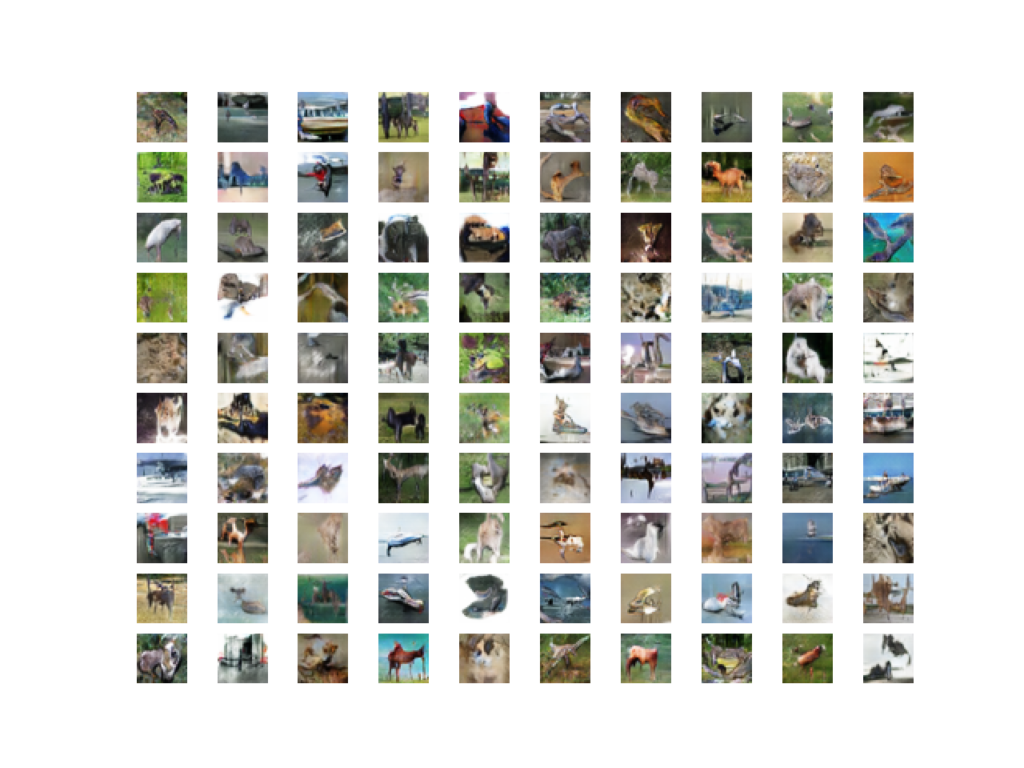
When I first encountered Generative Adversarial Networks (GANs) in 2015, I felt like an explorer stumbling upon an uncharted technological continent. The concept seemed almost magical – neural networks that could generate entirely new, realistic data from scratch.
Imagine walking into a digital art studio where machines spontaneously create images that look indistinguishable from human-made artwork. That‘s the promise of GANs – a technological marvel that blurs the lines between artificial and human creativity.
The Unexpected Birth of a Revolutionary Concept
Ian Goodfellow‘s groundbreaking paper in 2014 wasn‘t just another academic publication. It was a watershed moment in machine learning, introducing a framework where two neural networks engage in a sophisticated game of deception and detection.
The core idea was elegantly simple yet profoundly complex: create a generator network capable of producing synthetic data and a discriminator network tasked with identifying whether the data is real or fabricated. This adversarial dance would push both networks to continuously improve, much like a master forger and a seasoned art authenticator locked in an endless competition.
Architectural Symphony: Understanding GAN Mechanics
The Generator: Crafting Digital Realities
Think of the generator as a highly creative artist working with an abstract palette of mathematical representations. It takes random noise – essentially a jumble of numerical values – and transforms it into coherent, meaningful data.
[G(z): \text{Random Noise} \rightarrow \text{Synthetic Data}]The generator‘s objective isn‘t just to create data, but to create data so convincing that it could seamlessly blend with real-world datasets. It‘s like a master counterfeiter producing artwork so precise that even experts struggle to distinguish it from originals.
The Discriminator: The Vigilant Gatekeeper
Complementing the generator is the discriminator – a neural network detective constantly refining its ability to detect synthetic imposters. With each iteration, it becomes more sophisticated, developing an increasingly nuanced understanding of what constitutes "authentic" data.
[D(x): \text{Input Data} \rightarrow \text{Probability of Authenticity}]Evolutionary Pathways: GAN Architecture Variations
Deep Convolutional GANs (DCGANs)
DCGANs represented a significant leap forward, introducing architectural guidelines that stabilized training and improved image generation quality. By leveraging convolutional layers, these networks could capture intricate spatial hierarchies in visual data.
Wasserstein GANs: Measuring Distance Between Distributions
Traditional GANs often suffered from training instability. Wasserstein GANs introduced a more robust metric – the Earth Mover‘s distance – allowing for more meaningful comparisons between data distributions.
Practical Implementation: Breathing Life into Synthetic Data
class GANArchitecture:
    def __init__(self, noise_dim=100, img_shape=(28, 28, 1)):
        self.noise_dim = noise_dim
        self.img_shape = img_shape

    def build_generator(self):
        model = Sequential([
            Dense(256, input_dim=self.noise_dim, activation=‘relu‘),
            BatchNormalization(),
            Dense(np.prod(self.img_shape), activation=‘tanh‘),
            Reshape(self.img_shape)
        ])
        return model
Real-World Applications: Beyond Theoretical Boundaries
GANs have transcended academic curiosity, finding applications across diverse domains:
Medical Imaging
Researchers can generate synthetic medical scans, enabling training of diagnostic algorithms without compromising patient privacy.
Climate Modeling
Scientists use GANs to simulate complex environmental scenarios, generating synthetic climate data for predictive research.
Creative Industries
Artists and designers leverage GANs to explore new aesthetic frontiers, generating novel visual concepts and design prototypes.
Challenges and Ethical Considerations
While GANs represent a technological marvel, they‘re not without challenges. Mode collapse, where generators produce limited variations, and potential misuse in creating deepfakes remain significant concerns.
The Road Ahead: Future of Generative Networks
As computational power increases and algorithms become more sophisticated, GANs will likely evolve into even more powerful generative tools. We‘re witnessing the early stages of a technology that could fundamentally reshape how we understand data creation and representation.
Emerging Research Frontiers
- Self-supervised learning techniques
- Improved stability algorithms
- Ethical framework development for synthetic data generation
Personal Reflection
My journey with GANs has been more than a technological exploration – it‘s been a profound meditation on creativity, intelligence, and the blurring boundaries between human and machine-generated content.
Each synthetic image generated represents not just a technological achievement, but a glimpse into the extraordinary potential of artificial intelligence.
Conclusion: An Invitation to Explore
Generative Adversarial Networks aren‘t just algorithms – they‘re a testament to human ingenuity, a bridge between mathematical abstraction and creative expression.
As we stand on the cusp of this generative revolution, I invite you to explore, experiment, and imagine the countless possibilities that lie ahead.
The future of data is not just about collection – it‘s about creation.