Generative Adversarial Networks: The Art and Science of Synthetic Image Creation
Reimagining Visual Creativity Through Artificial Intelligence
Imagine standing in a world where machines can dream, create, and visualize images that blur the lines between reality and imagination. This isn‘t science fiction—it‘s the remarkable realm of Generative Adversarial Networks (GANs), a technological marvel that has transformed how we perceive digital creativity.
The Genesis of Synthetic Image Generation
When Ian Goodfellow and his colleagues introduced GANs in 2014, they didn‘t just create an algorithm; they sparked a revolution in artificial intelligence. Picture two neural networks locked in an intricate dance—one creating, the other critiquing—each push and pull refining synthetic images with breathtaking precision.
The Architectural Symphony of GANs
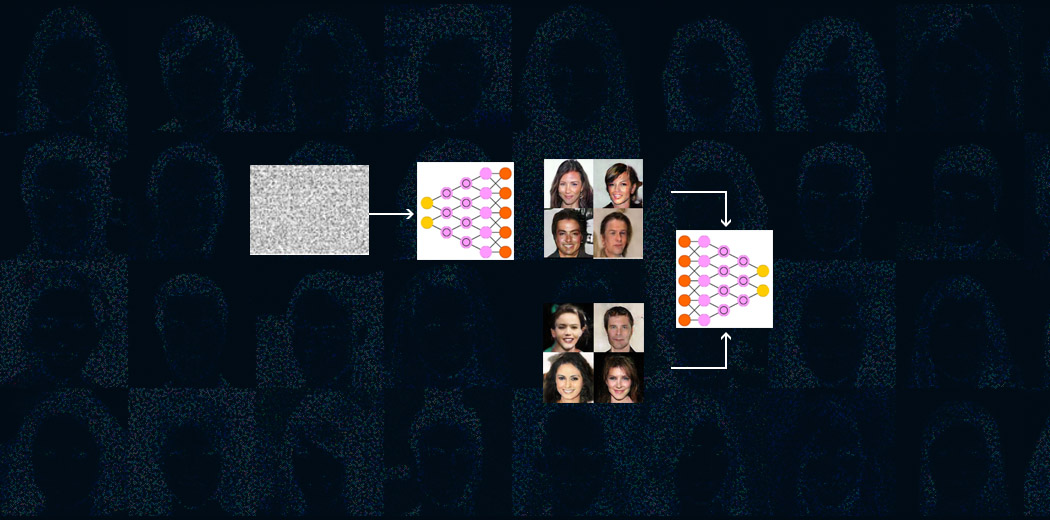
At its core, a GAN represents a complex dialogue between two neural networks: the Generator and the Discriminator. Think of them as an aspiring artist and a seasoned art critic, perpetually challenging and improving each other‘s craft.
The Generator begins with pure randomness—a digital blank canvas—and gradually learns to construct images that can fool even the most discerning eye. Meanwhile, the Discriminator acts as a vigilant guardian, constantly analyzing whether an image represents authentic reality or synthetic creation.
Mathematical Elegance Behind Image Synthesis
The mathematical framework driving GANs is nothing short of poetic. Represented through complex optimization functions, these networks engage in a minimax game where the generator attempts to minimize the probability of the discriminator correctly identifying synthetic images.
[V(G,D) = \mathbb{E}{x \sim p{data}}[\log D(x)] + \mathbb{E}_{z \sim p_z}[\log(1 – D(G(z)))]]This equation encapsulates an elegant battle of artificial intelligence, where each iteration brings us closer to machine-generated visual perfection.
Technological Evolution: From Pixelated Experiments to Photorealistic Masterpieces
The Architectural Milestones
Deep Convolutional GANs (DCGAN)
The first significant breakthrough came with Deep Convolutional GANs, which introduced stable training techniques and enabled more structured image generation. By leveraging convolutional neural network architectures, researchers could create more coherent and visually appealing synthetic images.
Progressive Growing GANs
As technology advanced, Progressive Growing GANs revolutionized high-resolution image generation. By incrementally increasing image complexity during training, these networks could produce astonishingly detailed visual content across various domains.
StyleGAN: Precision and Control
StyleGAN marked a quantum leap in image generation. Unlike previous models, StyleGAN offered unprecedented control over synthetic image attributes, allowing precise manipulation of visual characteristics while maintaining remarkable photorealistic quality.
Real-World Transformative Applications
GANs have transcended theoretical research, finding profound applications across multiple industries:
Medical Imaging: Synthetic medical scans help train diagnostic algorithms without compromising patient privacy. Researchers can generate diverse training datasets, enhancing machine learning models‘ diagnostic capabilities.
Creative Industries: Artists and designers now collaborate with AI, using GANs to generate concept art, explore design variations, and push creative boundaries previously unimaginable.
Forensic Technologies: Law enforcement and security agencies leverage GANs to reconstruct missing visual information, enhance low-quality images, and develop advanced facial recognition systems.
The Complex Challenges of Synthetic Image Generation
Despite remarkable achievements, GANs face significant challenges. Mode collapse—where generators produce limited variations—remains a persistent technical hurdle. Training instability and maintaining image diversity require continuous algorithmic refinement.
Ethical Considerations in Synthetic Image Creation
The power of GANs introduces complex ethical considerations. Deepfake technologies raise concerns about potential misuse, intellectual property rights, and the blurring of reality and fabrication.
As an AI expert, I‘ve observed how these technologies demand not just technological sophistication but also robust ethical frameworks to guide their development and application.
Future Horizons: Where Machine Creativity Meets Human Imagination
Looking ahead, GANs promise to revolutionize how we conceptualize and create visual content. Anticipated developments include:
- Seamless multimodal generation
- Enhanced computational efficiency
- More interpretable AI models
- Collaborative human-AI creative processes
The Philosophical Implications
Beyond technological advancement, GANs represent a profound philosophical exploration of creativity, intelligence, and the nature of perception itself. They challenge our understanding of artistic creation, asking fundamental questions about originality and machine-generated expression.
Conclusion: A New Renaissance of Digital Creativity
Generative Adversarial Networks are more than algorithms—they‘re a testament to human ingenuity, representing a bridge between computational complexity and artistic expression. As research continues, we stand at the threshold of a new creative renaissance, where machines don‘t just replicate but genuinely create.
The journey of GANs is far from complete. Each breakthrough brings us closer to understanding the intricate dance between artificial intelligence and human creativity—a dance that promises to reshape our visual world in ways we‘re only beginning to imagine.