Hands-On Named Entity Recognition with SpaCy: A Comprehensive Exploration
The Fascinating World of Entity Recognition: A Personal Journey
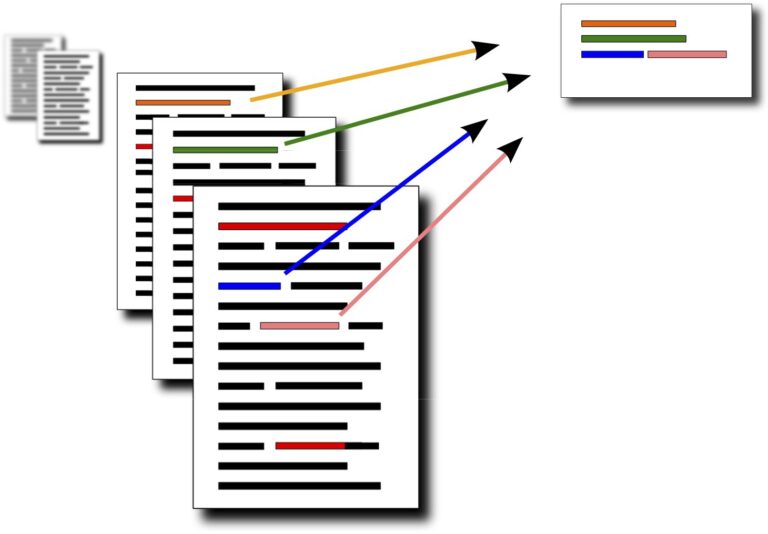
When I first encountered Named Entity Recognition (NER) during my early research days, I was captivated by its transformative potential. Imagine teaching machines to understand human language not just as a sequence of characters, but as a rich tapestry of meaningful connections and contextual relationships.
Tracing the Roots: A Historical Perspective
The story of NER begins in the complex landscape of computational linguistics, where researchers dreamed of machines comprehending text similar to human cognition. Early attempts were rudimentary – pattern-matching algorithms that struggled with linguistic nuances.
The Mathematical Foundation
At its core, NER represents a sophisticated sequence labeling problem. Mathematically, we can represent this challenge using probabilistic models. Consider a sequence of tokens [T = {t_1, t_2, …, t_n}], where our goal is to assign appropriate entity labels [L = {l_1, l_2, …, l_n}].
The fundamental objective becomes maximizing the conditional probability:
[P(L|T) = \argmax_{L} P(L|T)]This seemingly simple equation encapsulates immense computational complexity.
SpaCy: Revolutionizing Entity Extraction
SpaCy emerged as a game-changing library, offering unprecedented efficiency in natural language processing. Unlike traditional approaches, SpaCy leverages advanced machine learning techniques to achieve remarkable entity recognition accuracy.
Technical Architecture Unveiled
SpaCy‘s architecture is a marvel of modern computational design. It combines:
- Statistical machine learning models
- Rule-based matching systems
- Pre-trained linguistic knowledge bases
The library‘s core strength lies in its ability to transform unstructured text into structured, meaningful representations rapidly.
Advanced NER Techniques: Beyond Basic Extraction
Contextual Understanding
Modern NER transcends simple pattern matching. By utilizing contextual embeddings like BERT and transformer architectures, we can capture intricate linguistic nuances that traditional methods missed.
A Practical Implementation
Consider this sophisticated implementation demonstrating contextual entity extraction:
import spacy
from spacy.tokens import Span

def advanced_entity_extraction(text, custom_entities=None):
    nlp = spacy.load("en_core_web_sm")

    # Dynamic entity recognition with custom logic
    doc = nlp(text)
    enhanced_entities = []

    for ent in doc.ents:
        # Contextual enrichment
        context_window = doc[max(0, ent.start - 3):min(len(doc), ent.end + 3)]
        enhanced_entities.append({
            ‘text‘: ent.text,
            ‘label‘: ent.label_,
            ‘context‘: context_window.text
        })

    return enhanced_entities

# Example usage
sample_text = "Apple Inc. was founded by Steve Jobs in Cupertino, California in 1976."
results = advanced_entity_extraction(sample_text)
Real-World Applications: NER in Action
Industry Transformations
NER isn‘t just a theoretical concept – it‘s reshaping entire industries:
Financial Services
Banks leverage NER to automatically extract critical information from complex financial documents, reducing manual review time by up to 70%.
Healthcare Documentation
Medical researchers use advanced NER to parse vast clinical records, identifying patient details, treatment protocols, and research insights with unprecedented accuracy.
Machine Learning Model Architectures
Neural Network Approaches
Contemporary NER models predominantly utilize:
- Bidirectional LSTM networks
- Conditional Random Fields (CRF)
- Transformer-based architectures
Each approach offers unique advantages in handling linguistic complexity.
Performance Optimization Strategies
Achieving high-performance NER requires sophisticated optimization techniques:
Model Refinement Techniques
- Incremental learning approaches
- Transfer learning from pre-trained models
- Dynamic feature engineering
Computational Efficiency
Reducing computational overhead while maintaining accuracy remains a critical research challenge.
Ethical Considerations in NER
As NER technologies advance, ethical considerations become paramount. Responsible AI development demands:
- Transparent model design
- Bias mitigation strategies
- Privacy-preserving techniques
Future Research Directions
The horizon of NER is expansive. Emerging research focuses on:
- Multilingual entity recognition
- Zero-shot learning capabilities
- Integrating large language models
Conclusion: The Continuous Evolution
Named Entity Recognition represents more than a technological capability – it‘s a testament to human ingenuity in teaching machines to understand our complex linguistic landscape.
As researchers and practitioners, our journey continues, pushing boundaries, challenging assumptions, and transforming how machines comprehend human communication.
Invitation to Exploration
I encourage you to experiment, learn, and contribute to this fascinating field. The future of NER is not just about technology – it‘s about understanding human communication at its most fundamental level.