How Coursera Revolutionizes Learning: A Deep Dive into Data Visualization and Clustering Techniques
The Technological Renaissance of Online Education
Imagine stepping into a world where learning adapts to you, where educational content understands your unique journey, and where technology becomes your personal academic navigator. This isn‘t science fiction—it‘s the reality Coursera is creating through sophisticated data visualization and machine learning techniques.
The Genesis of Intelligent Learning Platforms
When Andrew Ng founded Coursera in 2012, the vision was audacious: democratize education by leveraging technology. But how do you transform thousands of courses into a personalized learning ecosystem? The answer lies in the intricate dance of data science and machine learning.
Understanding the Complexity of Course Relationships
Traditional educational categorization resembled rigid library shelves—courses neatly stacked in predefined categories. Coursera recognized this approach‘s fundamental limitation. Learning isn‘t linear; it‘s a complex, interconnected network of knowledge domains that continuously evolve.
The Mathematical Magic of t-SNE Clustering
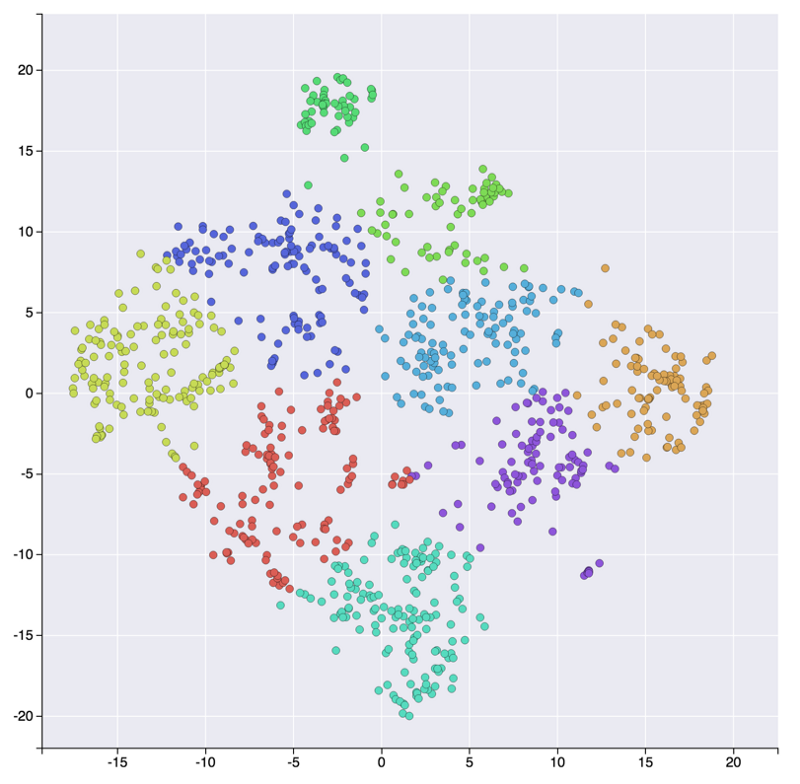
At the heart of Coursera‘s content categorization lies t-distributed Stochastic Neighbor Embedding (t-SNE), a mathematical marvel that transforms high-dimensional course data into meaningful, interpretable visualizations.
Consider t-SNE as an intelligent cartographer, mapping the intellectual landscape of online courses. Instead of geographical terrain, it charts the intricate relationships between learning experiences. Courses that share similar learner characteristics cluster together, while disparate subjects naturally drift apart.
Decoding the Algorithmic Approach
The t-SNE algorithm doesn‘t just group courses—it reveals hidden patterns of human learning. By analyzing enrollment behaviors, interaction metrics, and semantic course content, it creates a dynamic, living map of educational knowledge.
[Course_Similarity = f(Learner_Behavior, Content_Semantics, Skill_Progression)]This mathematical representation illustrates how multiple factors contribute to understanding course relationships.
The Machine Learning Ecosystem Behind Course Categorization
Coursera‘s technological infrastructure is a symphony of advanced algorithms working in harmony. Beyond t-SNE, multiple machine learning techniques collaborate to create an intelligent recommendation system.
Feature Engineering: Transforming Raw Data into Insights
Raw course data is like unrefined ore—valuable but incomprehensible. Feature engineering acts as the refinery, extracting meaningful attributes that reveal deeper learning patterns.
Key transformation techniques include:
- Semantic text analysis of course descriptions
- Temporal learning progression tracking
- User interaction pattern recognition
- Cross-disciplinary skill mapping
Psychological Dimensions of Intelligent Categorization
Machine learning isn‘t just about algorithms—it‘s about understanding human learning psychology. Coursera‘s approach recognizes that each learner‘s journey is unique, shaped by individual motivations, background, and aspirations.
The Personalization Imperative
Traditional educational models assumed a one-size-fits-all approach. Coursera‘s data-driven methodology shatters this paradigm, creating adaptive learning experiences that respond to individual needs.
Technological Challenges and Innovations
Implementing such a sophisticated recommendation system isn‘t without challenges. Processing millions of user interactions while maintaining real-time responsiveness requires extraordinary computational sophistication.
Scalability and Performance Optimization
Coursera‘s engineering teams continuously refine machine learning models to handle exponential growth in course content and user base. This involves:
- Distributed computing architectures
- Advanced caching mechanisms
- Incremental learning algorithms
- Efficient feature selection strategies
Ethical Considerations in Data-Driven Learning
With great technological power comes significant ethical responsibility. Coursera maintains rigorous standards in data privacy, ensuring user information remains protected while delivering personalized experiences.
Transparent Machine Learning Practices
- Anonymized data processing
- User consent mechanisms
- Algorithmic fairness assessments
- Continuous ethical auditing
Future Horizons: The Next Generation of Learning Platforms
As artificial intelligence continues evolving, we can anticipate even more sophisticated content categorization techniques. Potential future developments include:
- Predictive learning pathway generation
- Real-time skill trend detection
- Hyper-personalized curriculum recommendations
- Cross-cultural learning adaptations
The Human Impact of Technological Innovation
Beyond algorithms and mathematical models, Coursera‘s approach represents something profound: technology‘s potential to democratize and personalize education.
By understanding the intricate relationships between courses, learning behaviors, and individual aspirations, machine learning transforms education from a standardized process into a dynamic, adaptive experience.
Conclusion: A New Learning Paradigm
Coursera‘s data visualization and clustering techniques represent more than a technological achievement. They symbolize a fundamental reimagining of how we understand, access, and experience learning in the digital age.
As machine learning continues advancing, platforms like Coursera will play a crucial role in breaking down educational barriers, empowering individuals worldwide to pursue knowledge on their own terms.
The future of learning is not about technology replacing human experience—it‘s about technology understanding and enhancing that experience.