The Complete Guide to Feeding Your Dog Human Grade Food
Hi friend, can I tell you a secret? You‘re a great dog parent. I know this because you‘re here, researching the best food options for your beloved pup. You want to give them every opportunity to live the longest, healthiest, happiest life possible. So let me ask you this: have you considered switching to human grade dog food?
What Is Human Grade Dog Food?
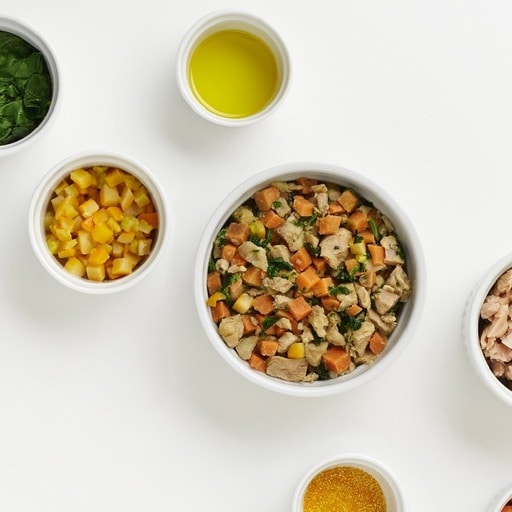
Human grade dog food is exactly what it sounds like – dog food made with ingredients, processes and facilities that meet the same rigorous safety standards required for human consumption. That means USDA-approved, whole food ingredients that come from the same sources as the food on your own plate. No mystery meats, byproducts or fillers. Just real, recognizable foods gently cooked to preserve nutrients.
Why does this matter? Think about the care and thought you put into nourishing your own body. You read labels, buy organic produce, avoid artificial additives. You know that the quality of what you eat directly impacts your health. Well, the same is true for your dog!
Commercial kibble and canned foods labeled "feed grade" contain ingredients that aren‘t legally allowed to be sold for human consumption. We‘re talking things like diseased livestock, spoiled supermarket meat, slaughter house waste. I know, gross right? Even if it meets the minimum nutritional requirements, this is not the kind of food you want to be feeding your furry family member.
The Benefits of Human Grade
Now I could write a novel about all the reasons to choose human grade dog food, but I‘ll spare you the prolonged soliloquy. Instead, let‘s take a look at some of the key benefits and the science behind them:
Better Digestion: Feed grade pet foods are highly processed and can contain hard-to-digest ingredients like corn, wheat, soy and animal by-products. A human grade diet is typically easier on the digestive tract because it contains higher quality protein sources and is minimally processed. In a study conducted by researchers at the University of Illinois, dogs fed a human grade diet showed an increase in digestibility and nutrient absorption compared to those fed a feed grade diet.
Reduced Allergies: Food allergies are one of the most common health issues in dogs, with symptoms ranging from itchy skin to chronic ear infections. Many commercial dog foods contain common allergens like beef, dairy, wheat, egg and chicken. Human grade foods are often made with novel protein sources (e.g. venison, duck) and limited ingredients to reduce the risk of allergic reactions. A 2018 study published in the Journal of Veterinary Dermatology found that a vegetarian human grade diet resolved symptoms in 78% of dogs with food-responsive dermatitis.
Healthier Weight: Over half of dogs in the U.S. are overweight or obese, putting them at risk for a range of serious health issues. Human grade dog foods tend to be lower in carbohydrates and higher in lean protein to promote a healthy weight. In a 2019 clinical trial published in the Journal of Obesity, obese dogs fed a high-protein, human grade diet for 12 weeks lost an average of 28% more body fat than those fed a standard diet.
So let‘s put this in perspective. By feeding your pup a human grade diet, you‘re not only giving them food that‘s easy to digest and packed with nutrients. You‘re also reducing the risk of painful, chronic conditions that can impact their quality of life. Talk about a win-win!
But What About the Cost?
Okay, I know what you‘re thinking. Human grade dog food sounds great, but it must be insanely expensive, right? I won‘t sugarcoat it. High quality ingredients do cost more than the animal feed and filler used in bargain brands. On average, fresh human grade dog food subscriptions range from $2 to $10 per day, while dehydrated and freeze-dried options are $1 to $5 per day.
But here‘s the thing. When you invest in your dog‘s nutrition, you‘re investing in their lifelong health and wellbeing. Think of all the money you could save on vet bills down the line by preventing obesity, allergies and digestive disorders now. Plus, many human grade brands offer customizable plans and bulk discounts to make the cost more manageable.
And let‘s be real. How much do you spend on your own meals and snacks each day? Chances are, it‘s pretty comparable to the daily cost of human grade dog food. I‘m not saying you have to break the bank, but try working it into your budget where you can. Trust me, your dog is worth it.
Okay, I‘m Convinced! How Do I Choose a Brand?
Welcome to the wonderful world of human grade dog food! Now that you‘re on board, let‘s talk about how to choose the best brand for your pup. Here are some key factors to consider:
Ingredients: Look for brands that use named protein sources (e.g. beef, chicken, lamb) rather than vague terms like "meat meal." The first few ingredients should be real, whole foods like meat, veggies, and grains. Avoid anything you can‘t pronounce or wouldn‘t eat yourself.
Variety: Dogs can get bored with the same food day in and day out, just like we do. Choose a brand that offers multiple recipes to keep things interesting. Bonus points if they have options for different life stages and dietary needs.
Convenience: Consider your lifestyle and storage space when selecting a food type. Fresh frozen is great if you have room in your freezer, while shelf-stable dehydrated or freeze-dried options are perfect for travel.
Transparency: The best human grade brands are proud of their ingredients and processes. Look for clear information on the sourcing of ingredients, nutritional analysis, and quality control measures. If a brand seems like it‘s hiding something, trust your gut.
To help jumpstart your search, here are some of my top picks for human grade dog food:
- The Farmer‘s Dog: Fresh, personalized meals gently cooked in USDA kitchens
- Sundays for Dogs: Air-dried food made with human-edible ingredients, no preservatives or fillers
- Nom Nom: Fresh, restaurant-quality meals formulated by veterinary nutritionists
- Spot and Tango: Fresh meals and shelf-stable UnKibble made with premium, natural ingredients
- Ollie: Fresh, human-grade meals tailored to your pup‘s nutritional needs
- Honest Kitchen: Dehydrated whole food clusters with ingredients you can actually see
- Open Farm: Ethically sourced dry food, freeze-dried raw, bone broth and more
I‘ve personally tried all of these brands with my own dogs and have been blown away by the quality (and their excitement at mealtime!). You really can‘t go wrong with any of them, but I always suggest starting with a small trial or sampler box to see what your pup likes best.
Ready, Set, Switch!
Now that you‘ve picked out the perfect human grade food for your dog, it‘s time to make the transition. I know you‘re excited, but trust me, you‘ll want to take this slow to avoid any tummy troubles. Start by mixing a small amount of the new food in with their current kibble, gradually increasing the ratio over 7-10 days. If at any point you notice vomiting, diarrhea or extreme pickiness, scale back and go even slower.
It‘s also a good idea to loop in your vet before making the switch, especially if your dog has any known health concerns. They can help you choose the right recipe, serving size and transition plan for your dog‘s individual needs.
The Bottom Line
At the end of the day, I know how much you love your dog. You want to do right by them, and that starts with the food you put in their bowl. By choosing human grade, you‘re not just leveling up their lunch. You‘re giving them the gift of a long, vibrant life by your side.
Sure, it may mean a few extra bucks and a bit more research on the front end. But the first time you see the sparkle in your dog‘s eyes, the shine in their coat, and the spring in their step after switching to human grade food, I promise you, it will all be worth it.
So go ahead, take the leap! Your dog will thank you, and you‘ll have the peace of mind knowing you‘re giving them the very best. And isn‘t that what being a great pet parent is all about?
References:
"The Association of American Feed Control Officials > Ingredient Definitions." The Association of American Feed Control Officials : Ingredient Definitions, www.aafco.org/Consumers/What-is-in-Pet-Food/Ingredient-Definitions.
LaBoda, Jennifer. "Human-Grade Pet Food Market to Reach $4.2 Billion by 2025." VetPrep, 24 Dec. 2020, www.vetprep.com/blog/human-grade-pet-food-market.
"Pet Food Purchasing Behavior: The Decision-Making Process from a Consumer‘s Perspective." Packaged Facts, 11 Apr. 2018, www.packagedfacts.com/Pet-Food-Purchasing-Behavior-Decision-Making-Process-from-Consumers-Perspective-11769624.
Pezzali, Julia G., et al. "Effects of Different Canine Diet Formats on Nutrients Digestibility and on Fecal Bacteria and Metabolites." Animals, vol. 10, no. 11, 2020, p. 2056., doi:10.3390/ani10112056.
"The Truth about Dog Food Allergies." Pet Dermatology Clinic – Veterinary Specialist, petdermclinic.com/blog/the-truth-about-dog-food-allergies.
Witzel, Alexia L. "Customized High-Protein Weight Management in Obese Dogs." Freshpet, 18 Mar. 2021, freshpet.com/custom-high-protein-weight-loss-obese-dogs/.