Hyperlite Mountain Gear Review: Is Their Ultralight Gear Worth the High Price?
Hyperlite Mountain Gear has earned a cult following among serious backpackers obsessed with cutting pack weight. Their stripped-down, high-performance gear is designed for thru-hiking, alpinism, ski touring, and other demanding backcountry pursuits.
I‘ve put their packs and tents to the test on numerous backpacking trips and they‘ve never let me down. But with prices reaching $400+ for a backpack and nearly $1000 for a tent, Hyperlite‘s gear requires a major investment.
In this in-depth review, I‘ll share my experiences with Hyperlite Mountain Gear and help you decide if their products are right for your needs and budget. I‘ll cover their:
- Background and design philosophy
- Backpack and tent lineup
- Key features, specs, and materials
- Performance in the field
- Pros, cons, and customer feedback
- How they compare to other cottage ultralight brands
- What you need to know about shipping, returns, and warranty
By the end of this post, you‘ll have all the info needed to decide if Hyperlite is worth the high price tag. Let‘s dive in!
About Hyperlite Mountain Gear
Hyperlite Mountain Gear (HMG) was founded in 2010 by brothers Mike and Dan St. Pierre, two avid hikers and adventurers from Maine. Frustrated with the heavy, overbuilt packs of the time, they started making their own gear optimized for maximum performance with minimal weight.
Today, HMG is one of the most respected brands in the ultralight backpacking scene. Their packs, shelters, and accessories are designed for ambitious trips in tough conditions, from New England winters to above-treeline routes in the Rockies.
All of their products share a streamlined, essentials-only design philosophy. You won‘t find unnecessary pockets, zippers, or features that add weight. Instead, the focus is on quality materials, bombproof construction, and dialed-in performance.
Hyperlite Backpack Lineup and Reviews
Hyperlite‘s backpack lineup ranges from 30L daypacks to 70L expedition haulers. All of them are made with ultra-high-molecular-weight polyethylene (UHMWPE), a high-tech fabric that‘s incredibly lightweight, waterproof, and abrasion resistant.
Here‘s an overview of their most popular packs:
2400 Southwest ($345)
The 2400 Southwest is Hyperlite‘s best-selling backpack and a favorite among ultralight thru-hikers. With a 40L capacity and 2.16 lb weight, it‘s designed for minimalist multi-day trips with a sub-20 lb base weight.
The 2400 has a simple roll-top closure, spacious main compartment, and three external mesh pockets for storing quick-access items. The frame is a removable aluminum stay paired with dense foam shoulder straps and hip belt that comfortably carry up to 40 lbs.
I used the 2400 Southwest on a rugged 5-day trip in the Wind River Range and loved how stable and nimble it felt compared to my old Osprey pack. The waterproof fabric and taped seams kept my gear bone dry through rain and stream crossings, with no need for a pack cover.
My only nitpick is I wish the side mesh pockets were deeper to securely fit water bottles. But overall, the 2400 is my favorite pack for minimalist trips and one I‘d highly recommend. Just make sure your gear is streamlined and compact enough to fit.
3400 Windrider ($365)
Need more space? The 3400 Windrider is essentially a higher-volume version of the Southwest. It maxes out at 55L and 2.54 lbs, enough capacity for 4-6 day trips or winter overnights.
The Windrider is designed for heavier loads up to 50 lbs. To handle that weight, it uses two aluminum stays, a more supportive hip belt, and an internal compression system to stabilize and transfer weight. It also has beefier side pockets reinforced with UHMWPE for better water bottle storage.
While I haven‘t owned the Windrider myself, my buddy used one on our John Muir Trail thru-hike and handled 45 lb loads without any discomfort. For longer trips, international travel, or if you just need more space, the Windrider is an excellent choice that still beats most packs in weight.
Daybreak ($235)
On the opposite end of the spectrum, the Daybreak is Hyperlite‘s 17L summit pack designed for fast and light peak bagging. Streamlined to the max, it has a simple drawstring closure and two deep, stretchy side pockets for storing water and layers. A 1/4" padded back panel and webbing hip belt keep loads up to 20 lbs stable and comfy.
At just 1.27 lbs, the Daybreak is so insanely light you barely feel it on. I‘ve used it for day hikes in the Tetons and it was the perfect size for essentials without any excess bulk. The waterproof fabric means I can ditch my rain cover and the side pockets are great for storing my Micro Spikes and Smartwater bottles.
For peak baggers, trail runners, or anyone wanting a just-the-essentials daypack, the Daybreak nails the fast and light niche. You can also remove the foam back panel to save even more weight. Just be mindful of the 20 lb max load rating.
Hyperlite Tent and Shelter Reviews
Hyperlite‘s tents and shelters push the boundaries of lightweight livability. Using DCF8 Dyneema Composite Fabric, their fully enclosed tents weigh a scant 1-2 lbs but perform like much heavier double-wall designs.
UltaMid 2 ($735)
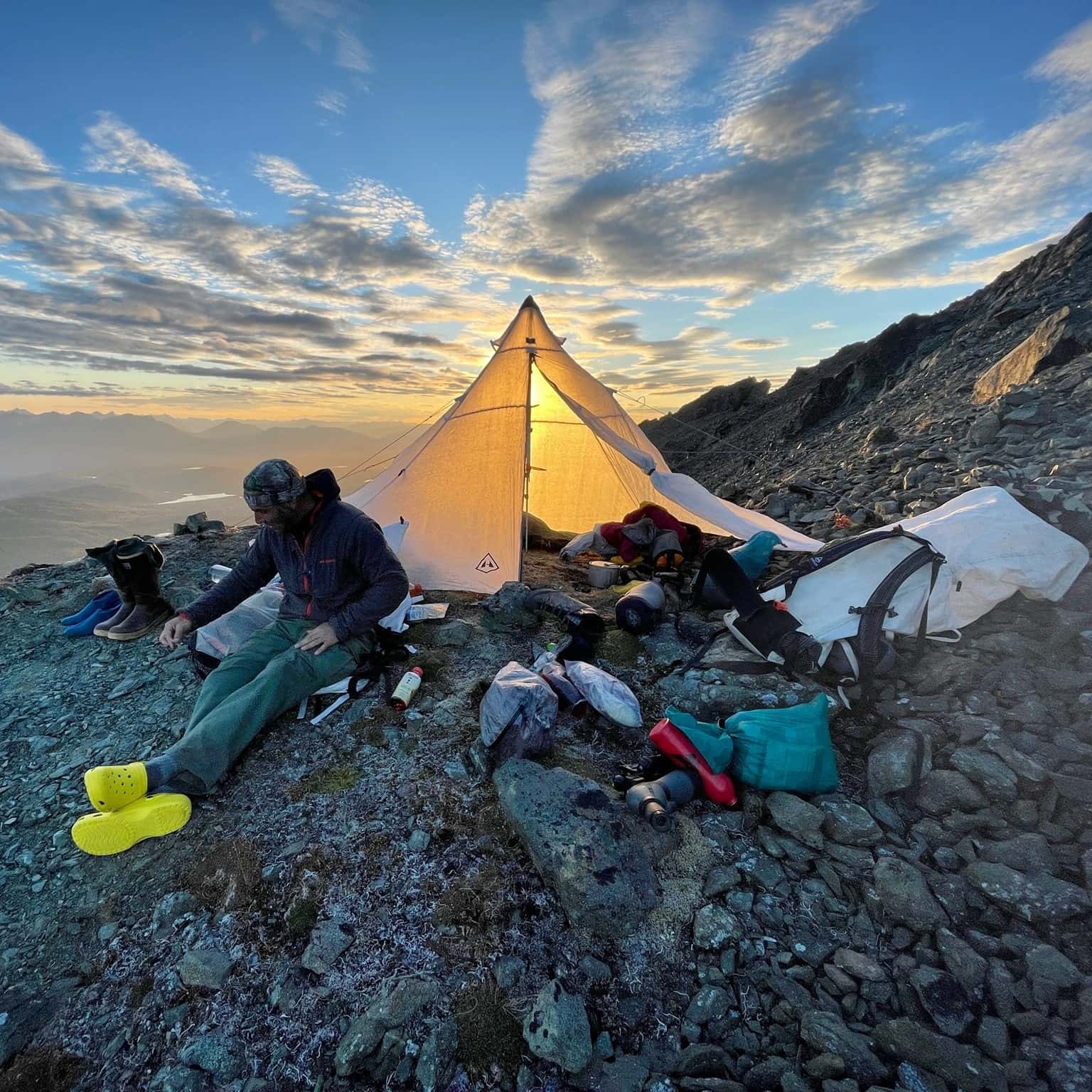
The UltaMid 2 is Hyperlite‘s most popular tent and a staple for ultralight backpackers. This 4-season, floorless pyramid shelter is tall enough to sit up in but packs down to the size of a bread loaf.
Pitched with a single trekking pole in the center, the UltaMid is quick to set up and rock solid in high winds. You can stake it out directly to the ground for maximum space or pitch it higher for more ventilation. I‘ve weathered 40+ mph gusts in mine and always felt secure.
The 1.69 lb weight is insanely light for a shelter this storm-worthy and spacious. It fits two sleepers plus gear with room to spare. You‘ll need to carry a bivy sack or ground cloth to sleep on, but I‘ve found trekking pole tents faster and easier to pitch than traditional tents.
My only gripe is the DCF fabric can be noisy in heavy rain and wind. But for couples or solo hikers wanting a palace for two, the weight savings and bombproof construction of the UltaMid are unrivaled. Lighter and less expensive pyramids exist, but none match the UltaMid‘s blend of weight, livability, and weather protection.
Echo 2 Ultralight Shelter System ($885)
The Echo 2 Shelter System pairs an UltaMid 2 pyramid tarp with a mesh insert with bathtub floor and bug netting. At 2.42 lbs all-in, it rivals the lightest double-wall tents while providing much more living space and multiple pitch configurations.
In storm mode, you can disconnect the mesh insert and pitch the outer tarp floorless, then deploy the insert for bug protection when needed. It‘s also modular, so you can carry just the tarp for a fastpacking trip or only the mesh insert if bugs are bad but precip unlikely.
I love this flexibility to adapt the shelter to the conditions at hand. No other tent offers that versatility at this weight. Quality is top notch too, with fully taped seams and rugged #5 YKK zippers. The only downside is the high price and multi-piece setup takes more time to pitch than a freestanding tent.
But for its impressive space-to-weight ratio, modularity, and weather chops, the Echo 2 Shelter System earns my highest recommendation for backpackers wanting an all-season palace without the weight penalty.
Customer Feedback and Ratings
Don‘t just take my word for it. Hyperlite gear consistently earns rave reviews from customers and industry pros alike. Here‘s a snapshot of their ratings:
- 4.9/5 stars from 500+ reviews on HyperliteMountainGear.com
- "Picks" from Backpacker, Outside, and SectionHiker for the 2400 Southwest and UltaMid 2
- "Best Ultralight Tent" from Adventure Alan for the Echo 2 Shelter System
- 4.8/5 stars from 130+ reviews on Amazon for the 2400 Windrider
Customers praise Hyperlite‘s superb craftsmanship, attention to detail, and outstanding performance in harsh conditions. The most common compliments I‘ve seen:
- "Unbelievably light for how durable and weather resistant"
- "Carries heavy loads with ease"
- "Kept me and my gear completely dry in downpours"
- "I barely noticed it on my back"
- "Worth every penny for the quality and weight savings"
The most frequent complaints relate to the premium price tag. There‘s no getting around it: Hyperlite gear is a serious investment, with backpacks starting around $300 and tents reaching $900+.
Some reviewers also found the stripped-down, minimalist designs took some getting used to. If you‘re transitioning from a feature-rich pack, you may need to adjust your packing style and carefully consider what you really need.
But the vast majority of reviews are overwhelmingly positive, cementing Hyperlite‘s reputation as a gold standard among ultralight backpackers and thru-hikers. If you can afford it and embrace the ruthless pursuit of cutting weight, Hyperlite gear is tough to beat.
How Does Hyperlite Compare to the Competition?
Hyperlite gear stands out for its high-performance Dyneema fabrics, premium quality, and alpinist-worthy designs. But they‘re not the only cottage brand making waves in the ultralight world. Here‘s how they stack up:
Hyperlite Mountain Gear vs. Zpacks
Pennsylvania-based Zpacks is another big name in ultralight backpacking, best known for their DCF tents and backpacks. Zpacks‘ gear is slightly lighter on average than Hyperlite‘s. For example, their Arc Blast 55L pack weighs 1.5 lbs compared to the 2.5 lb 3400 Windrider.
However, Hyperlite gets the edge for comfort, durability, and weather protection. Their packs use burlier fabrics and stiffer frames to handle heavier loads, while their tents have higher denier floors and bathtub walls for 4+ season performance.
Zpacks offers a wider range of customizations and optional add-ons to dial in your kit. But for the toughest conditions and terrain, I give Hyperlite the nod.
Hyperlite Mountain Gear vs. Mountain Laurel Designs
Virginia-based Mountain Laurel Designs (MLD) is a bespoke ultralight brand offering an array of Dyneema packs, shelters, and quilts. They‘re even more cottage than Hyperlite, with most gear made to order by a small team of skilled sewers.
MLD‘s backpacks are competitive with Hyperlite‘s on weight and I love their external pocket layouts for organization. Their Exodus DCF pack ($325) is a high-capacity 58L pack that weighs just 1.86 lbs and carries like a champ.
That said, Hyperlite still comes out ahead for materials and weatherproofing. MLD primarily uses silnylon for their tents whereas Hyperlite opts for more storm-worthy DCF. Hyperlite also gets the edge for load carrying comfort, with burlier suspension systems and frames on their big packs.
Bottom Line: Is Hyperlite Mountain Gear Worth It?
After field testing Hyperlite‘s backpacks and tents in all kinds of nasty conditions, my answer is a resounding yes: their gear is absolutely worth the high price for dedicated ultralighters.
No, you don‘t need to drop $500+ to go backpacking. There are plenty of quality lightweight packs and tents for half the price of Hyperlite‘s. And if you‘re just getting into ultralight or only do a couple short trips a year, you‘re better off starting with a more affordable setup.
But if you‘re a committed gram counter, aspiring thru-hiker, or year-round backpacker wanting the absolute pinnacle of lightweight performance, Hyperlite is the real deal. The attention to detail, craftsmanship, and materials are simply on another level from mainstream brands.
You‘re investing in gear built to perform at the highest level, by people who deeply understand the demands of the trail and mountains. And when you can shed pounds off your base weight without skimping on weather protection or durability, the high price becomes easier to swallow.
It‘s like the old saying: you can go ultralight, durable, or inexpensive – pick two. Hyperlite nails the first two better than any brand I‘ve tried.
Yes, you‘ll grimace a bit when clicking "complete purchase." But you‘ll grin ear-to-ear when cruising down the trail with an ultralight pack that feels like nothing‘s there. And you‘ll sleep like royalty in a DCF palace that laughs off 50 mph winds.
Most of all, you‘ll arrive at the freedom that comes with carrying less and doing more. Because that‘s what ultralight backpacking is all about. And Hyperlite‘s obsessive dedication to that pursuit puts them in a league of their own. For me, that makes them worth their high price.