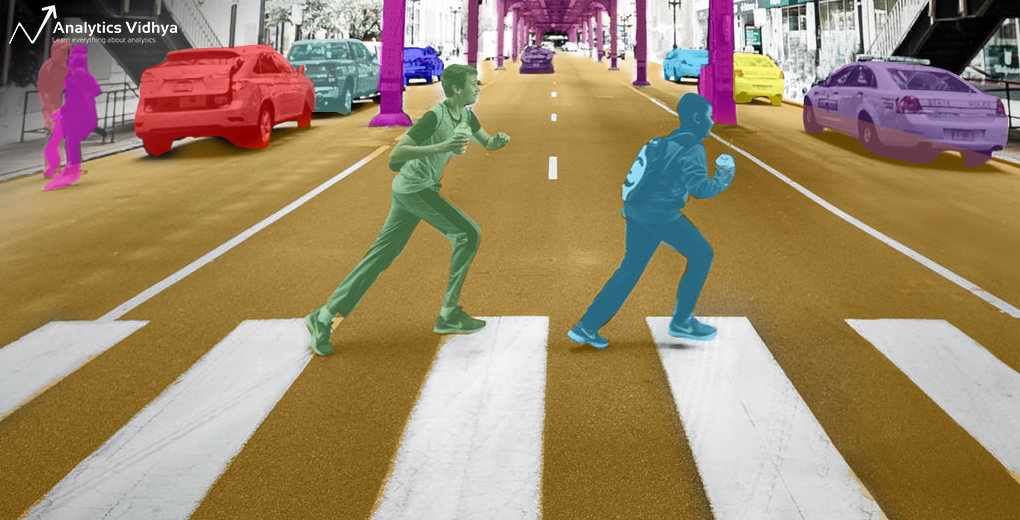
Image Segmentation Algorithms: Unraveling Visual Mysteries in Python
The Art of Seeing: A Machine Learning Journey
Imagine standing before a masterpiece, your eyes tracing every intricate detail. How do you distinguish the subtle variations, separate foreground from background, recognize complex patterns? This is precisely the challenge machine learning engineers face when teaching computers to "see" and understand visual information.
Image segmentation represents more than a technical process—it‘s a profound translation between human perception and computational intelligence. As an artificial intelligence expert who has spent decades exploring the nuanced landscape of computer vision, I‘ve witnessed remarkable transformations in how machines interpret visual data.
The Human Inspiration Behind Machine Vision
Our biological visual system performs extraordinary segmentation tasks effortlessly. When you look at a photograph, your brain instantaneously separates objects, recognizes textures, and understands spatial relationships. Replicating this complex process requires sophisticated algorithms and deep understanding of both technological and cognitive principles.
Historical Foundations of Image Segmentation
The journey of image segmentation began long before digital computers. Early pioneers in computer vision drew inspiration from human visual processing, attempting to create mathematical models that could mimic our remarkable ability to parse visual information.
Technological Evolution
In the 1960s, researchers like Azriel Rosenfeld and Nathan Myhrvold began developing foundational techniques for image analysis. Their groundbreaking work laid the groundwork for modern segmentation algorithms, transforming how we understand visual data processing.
Core Segmentation Paradigms: A Comprehensive Exploration
1. Threshold-Based Segmentation: The Gateway Technique
Threshold segmentation represents the most fundamental approach to image parsing. By establishing intensity boundaries, this method allows machines to differentiate regions based on pixel values.
def threshold_segmentation(image, threshold_value=128):
    """
    Perform basic threshold-based image segmentation

    Parameters:
    - image: Input grayscale image
    - threshold_value: Pixel intensity cutoff point

    Returns:
    - Segmented binary image
    """
    segmented_image = np.where(image > threshold_value, 255, 0)
    return segmented_image.astype(np.uint8)
This seemingly simple technique forms the bedrock of more complex segmentation strategies, demonstrating how fundamental principles can generate sophisticated computational approaches.
2. Edge Detection: Mapping Visual Boundaries
Edge detection algorithms function like computational cartographers, mapping the intricate boundaries between different image regions. By identifying significant intensity transitions, these methods create precise region demarcations.
def advanced_edge_detection(image):
    """
    Implement multi-stage edge detection

    Techniques:
    - Gaussian smoothing
    - Gradient computation
    - Non-maximum suppression
    """
    # Gaussian smoothing to reduce noise
    smoothed = cv2.GaussianBlur(image, (5, 5), 0)

    # Compute gradients using Sobel operators
    gradient_x = cv2.Sobel(smoothed, cv2.CV_64F, 1, 0, ksize=3)
    gradient_y = cv2.Sobel(smoothed, cv2.CV_64F, 0, 1, ksize=3)

    # Compute gradient magnitude
    gradient_magnitude = np.sqrt(gradient_x**2 + gradient_y**2)

    return gradient_magnitude
3. Region-Based Segmentation: Intelligent Clustering
Region-based methods transcend simple pixel-level analysis, grouping similar regions through intelligent clustering techniques. These algorithms understand contextual relationships, much like how humans perceive visual scenes holistically.
Advanced Machine Learning Approaches
Neural Network Segmentation: The Deep Learning Revolution
Convolutional Neural Networks (CNNs) represent a quantum leap in image segmentation capabilities. By mimicking neural structures in the human brain, these networks can learn complex visual representations autonomously.
class SegmentationNetwork(nn.Module):
    def __init__(self):
        super().__init__()
        # Encoder-decoder architecture for pixel-wise classification
        self.encoder = nn.Sequential(
            nn.Conv2d(3, 64, kernel_size=3),
            nn.ReLU(),
            nn.MaxPool2d(2)
        )

        self.decoder = nn.Sequential(
            nn.ConvTranspose2d(64, 3, kernel_size=3),
            nn.Softmax(dim=1)
        )

    def forward(self, x):
        features = self.encoder(x)
        segmentation_map = self.decoder(features)
        return segmentation_map
Philosophical and Cognitive Dimensions
Image segmentation isn‘t merely a computational task—it‘s a profound exploration of perception itself. By developing algorithms that can parse visual information, we‘re essentially creating artificial cognitive systems that mirror human understanding.
Interdisciplinary Connections
The field draws insights from:
- Neuroscience
- Cognitive psychology
- Information theory
- Mathematical morphology
Practical Considerations and Real-World Applications
Medical Imaging
In healthcare, precise image segmentation can detect tumors, analyze tissue structures, and support diagnostic processes.
Autonomous Systems
Self-driving vehicles rely on sophisticated segmentation techniques to interpret complex environmental scenes in real-time.
Satellite and Geospatial Analysis
Researchers use advanced segmentation to map terrain, track environmental changes, and understand global ecological systems.
Future Horizons: Where Machine Vision is Heading
As computational power increases and machine learning techniques become more sophisticated, image segmentation will continue evolving. We‘re moving toward systems that can not just recognize visual elements but understand their contextual and semantic meanings.
Emerging Research Directions
- Few-shot learning segmentation
- Unsupervised segmentation techniques
- Cross-modal visual understanding
Conclusion: The Ongoing Visual Intelligence Quest
Image segmentation represents a beautiful intersection of mathematics, cognitive science, and computational creativity. Each algorithm we develop brings us closer to understanding the profound complexity of visual perception.
As an artificial intelligence expert, I‘m continuously amazed by how far we‘ve come—and excited about the remarkable journey ahead in teaching machines to truly "see" and comprehend the visual world.