Kamikoto Knife Review: Why This Japanese Blade Is a Cut Above the Rest
Hey there, fellow knife enthusiast! If you‘re anything like me, you‘re always on the hunt for the perfect blade to add to your kitchen arsenal. And let me tell you, I think I‘ve found the holy grail with Kamikoto knives.
In this in-depth Kamikoto knife review, I‘m going to dive into what makes these Japanese blades so special, from the painstaking craftsmanship to the ultra-sharp edges that make prepping a breeze. Plus, I‘ll walk you through how to keep your Kamikoto knives in tip-top shape with proper sharpening and maintenance techniques. Trust me, your cooking game is about to level up big time.
What Is Kamikoto?
First, a little background on the brand. Kamikoto is a Japanese knife company that has taken the culinary world by storm since its founding in 2013. Their mission? To bring the legendary craftsmanship of Japanese bladesmithing to kitchens around the globe.
Kamikoto‘s knives are handcrafted in Niigata, a region of Japan renowned for its rich history of swordmaking. In fact, the company sources its high-carbon steel from the same mills that once supplied the samurai. How‘s that for pedigree?
But Kamikoto isn‘t just resting on tradition. They‘ve honed their manufacturing process to create knives that blend age-old techniques with modern performance. The result is a collection of blades that are insanely sharp, perfectly balanced, and built to last a lifetime.
Kamikoto‘s Manufacturing Process
So, what exactly goes into making a Kamikoto knife? Buckle up, because it‘s a meticulous 19-step journey from raw steel to finished blade:
- Sourcing premium Japanese steel from Honshu island
- Heating the steel to over 3000°F (1649°C)
- Hand-forging the red-hot steel into blade shape
- Hammering and folding the steel to remove impurities
- Quenching the blade in water to harden the steel
- Precise tempering to improve durability and flexibility
- Rough grinding to begin shaping the blade profile
- Fine grinding to refine the blade shape and geometry
- Initial sharpening to create the cutting edge
- Glazing the blade to protect against corrosion
- Engraving the Kamikoto logo onto the blade face
- Polishing the blade to a mirror-like finish by hand
- Assembling the wooden handle, bolster, and rivets
- Sanding and finishing the handle for a smooth grip
- Attaching the handle to the blade tang
- Refining the edge with a fine-grit whetstone
- Honing and polishing the edge to razor sharpness
- Inspecting each knife for flaws or imperfections
- Packaging the knife in a handmade ash wood box
Whew! It‘s clear that Kamikoto isn‘t cutting any corners (pun intended) when it comes to quality. Each knife takes days to complete and is touched by several master artisans along the way.
Kamikoto‘s Blade Design and Performance
Now, let‘s talk about what really matters—how these knives perform in the kitchen. As an avid home cook, I can confidently say that Kamikoto knives have been a game-changer for my meal prep.
The first thing you‘ll notice when you pick up a Kamikoto knife is the weight. These blades are substantially heftier than your average kitchen knife, which might take some getting used to. But trust me, that extra weight is a good thing. It gives the knife a sense of balance and control that makes chopping and slicing feel almost effortless.
The real magic, though, is in the blade itself. Kamikoto knives are known for their exceptional sharpness, thanks to the hard Japanese steel and acute 12-15 degree edge angles. For comparison, most Western-style knives are sharpened to around 20 degrees. That might not sound like a big difference, but believe me, you can feel it in the cutting performance.
I‘ve used my Kamikoto knives to tackle all sorts of kitchen tasks, from dicing onions to breaking down whole chickens, and they‘ve never let me down. The blades glide through food with unparalleled precision and require very little pressure to make clean cuts.
Another standout feature of Kamikoto knives is their single bevel edge. Unlike Western knives, which are sharpened on both sides of the blade, Kamikoto‘s knives are honed on just one side. This asymmetrical edge might feel strange at first, especially if you‘re used to a rocking chopping motion, but it allows for unmatched sharpness and precision when slicing.
Kamikoto‘s Knife Collections
Kamikoto offers several knife collections to suit different needs and budgets. Here are the highlights:
Kanpeki Knife Set
Price: $1,295
Includes:
- 8.5" Slicing Knife
- 7" Nakiri Knife
- 5" Utility Knife
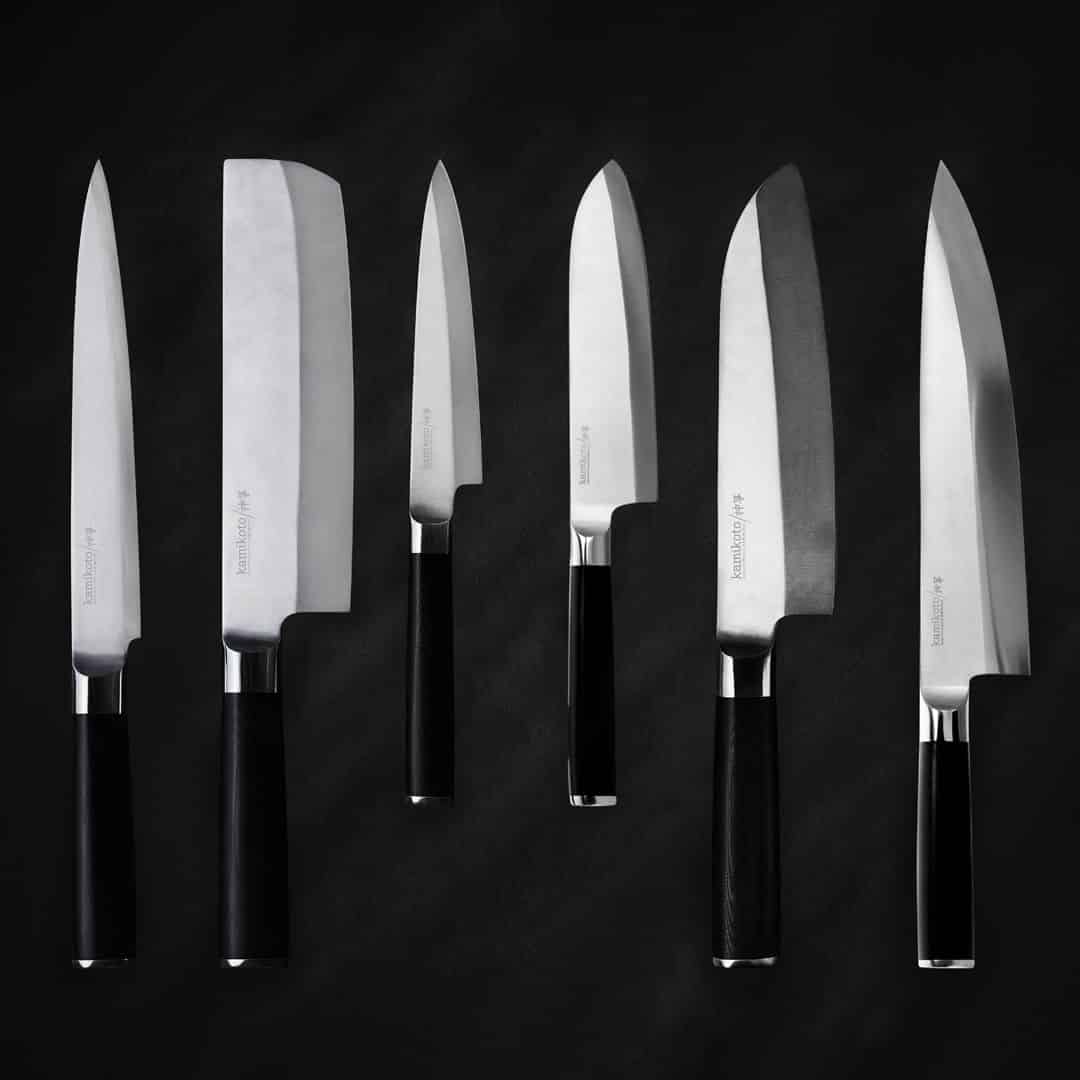
The Kanpeki set is Kamikoto‘s signature offering, featuring three versatile blades that cover most kitchen tasks. The star of the show is the nakiri knife, a rectangular vegetable cleaver that makes quick work of chopping and dicing. I love using mine for prepping big batches of stir fry or salad ingredients.
Kensei Knife Set
Price: $675
Includes:
- 9.5" Kiritsuke Knife
- 6.5" Boning Knife
For more specialized tasks, the Kensei set has you covered. The kiritsuke knife is a cross between a chef‘s knife and a vegetable cleaver, with a long, pointed blade that‘s great for slicing meat and fish. The boning knife, as the name suggests, is designed for precision deboning and filleting.
Senshi Knife Set
Price: $695
Includes:
- 10" Chef‘s Knife
- 5.5" Utility Knife
If you‘re looking for a solid all-purpose set, the Senshi is a great choice. The 10" chef‘s knife is a workhorse that can handle everything from chopping vegetables to carving roasts, while the nimble utility knife is perfect for smaller tasks like peeling and trimming.
These are just a few of Kamikoto‘s offerings—they also have several single knives, steak knife sets, and even a sashimi-specific collection for the sushi lovers out there.
Sharpening and Maintaining Your Kamikoto Knives
As amazing as Kamikoto knives are out of the box, they do require some TLC to keep them performing at their best. The hard Japanese steel is more brittle than softer Western blades, which means they can chip or break if misused.
The single bevel edge also needs to be sharpened differently than a typical double bevel knife. But don‘t worry, with a little know-how and the right tools, keeping your Kamikoto blades in tip-top shape is totally doable.
Sharpening Tools
To sharpen a Kamikoto knife, you‘ll need a whetstone—I recommend investing in a quality stone with at least 1000 grit. You‘ll also want to pick up a honing rod or strop to maintain the edge between sharpenings.
How to Sharpen a Single Bevel Knife
- Soak your whetstone in water for 10-15 minutes before use.
- Place the stone on a damp towel or non-slip mat, with the coarse side facing up.
- Hold the blade at a 12-15 degree angle against the stone, with the single bevel side facing up.
- Using light pressure, slide the blade forward across the stone, maintaining the angle.
- Repeat the motion 10-15 times, then flip the blade over and give the flat side a few light strokes to remove any burrs.
- Switch to the fine side of the stone and repeat the process until the edge is razor-sharp.
- Use your honing rod or strop to realign the edge between sharpenings.
Remember, the key to success is maintaining a consistent angle and using light, even pressure. It might take some practice to get the hang of it, but your knives (and your fingers) will thank you.
Proper Knife Care
In addition to regular sharpening, there are a few things you can do to keep your Kamikoto knives in pristine condition:
- Hand wash and dry your knives immediately after use—never put them in the dishwasher.
- Store your knives in a knife block, magnetic strip, or sheath to protect the edges.
- Only cut on wood or plastic cutting boards—hard surfaces like glass or metal will damage the blades.
- Avoid using your knives to pry, twist, or cut through bones (that‘s what your cleaver is for).
- If your knife does chip or break, send it back to Kamikoto for repair or replacement under their lifetime warranty.
Kamikoto Knives: The Verdict
So, are Kamikoto knives worth the hype (and the price tag)? In my opinion, absolutely. These blades are the real deal—insanely sharp, beautifully crafted, and built to last a lifetime.
Yes, they‘re an investment. A single Kamikoto knife can set you back a few hundred dollars, and their larger sets can easily climb into the four-figure range. But if you‘re serious about your cooking and want the best tools for the job, I think they‘re worth every penny.
Of course, Kamikoto isn‘t the only game in town when it comes to high-end Japanese knives. Brands like Shun, Miyabi, and MAC also offer excellent options at slightly lower price points. But there‘s something special about Kamikoto‘s commitment to traditional craftsmanship and attention to detail that sets them apart.
At the end of the day, the best knife is the one that feels good in your hand and inspires you to cook your best. For me, that‘s a Kamikoto. But don‘t just take my word for it—head to their website and browse their stunning collections for yourself. And if you do decide to take the plunge, be sure to use proper sharpening and maintenance techniques to keep your investment in prime condition.
Happy cooking, my friend! May your Kamikoto knives bring you many years of culinary joy.
FAQs About Kamikoto Knives
Where are Kamikoto knives made?
Kamikoto knives are handcrafted in Yanjiang, China using Japanese steel and traditional techniques. Some of their blades are also forged and assembled in Niigata, Japan.
What is the difference between single bevel and double bevel knives?
Single bevel knives, like Kamikoto‘s, are sharpened on only one side of the blade, while double bevel knives are sharpened on both sides. Single bevel knives offer superior sharpness and precision, but can be more difficult to master and maintain than double bevel blades.
What angle are Kamikoto knives sharpened to?
Kamikoto knives are typically sharpened to a 12-15 degree angle on the single bevel side, which is significantly sharper than most Western-style knives (around 20 degrees).
How often should I sharpen my Kamikoto knives?
It depends on how frequently you use them, but I recommend sharpening your Kamikoto knives every 2-3 months to keep them in top shape. You can use a honing rod or strop to maintain the edge between sharpenings.
Can I put my Kamikoto knives in the dishwasher?
No! The high heat and harsh detergents in the dishwasher can damage the blades and handles of your Kamikoto knives. Always hand wash and dry your knives immediately after use.
What is the warranty on Kamikoto knives?
Kamikoto offers a lifetime warranty on all of their knives, covering defects in materials and workmanship. If your knife ever chips, breaks, or rusts under normal use, Kamikoto will repair or replace it free of charge.