KNNImputer: Mastering the Art of Data Reconstruction in Machine Learning
The Silent Challenge of Missing Data
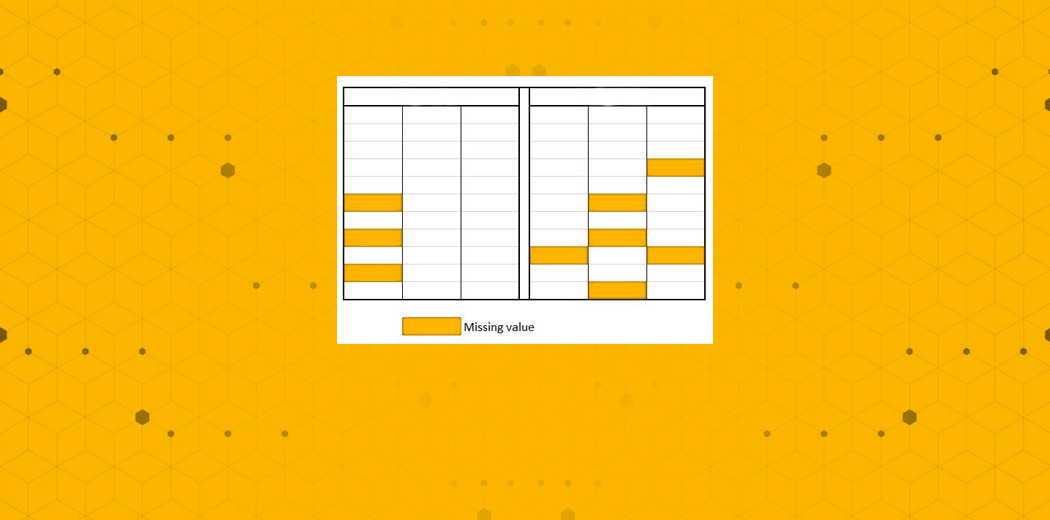
Imagine walking into an antique shop where pieces of history are scattered, some fragments missing, yet holding immense potential. This is precisely how data scientists view datasets with missing values – incomplete puzzles waiting to be solved.
In the intricate world of machine learning, missing data represents more than just empty cells. It‘s a complex narrative of information gaps, measurement challenges, and statistical mysteries. The KNNImputer emerges as a sophisticated technique, a digital detective reconstructing these fragmented data landscapes.
The Philosophical Dimension of Missing Information
Data isn‘t just numbers; it‘s a representation of human experience, technological interactions, and complex systemic behaviors. When information goes missing, we‘re not merely losing data points – we‘re losing potential insights, hidden patterns, and transformative understanding.
Understanding the Imputation Landscape
Historical Context of Data Reconstruction
The journey of handling missing data stretches back decades, evolving from rudimentary statistical techniques to sophisticated machine learning algorithms. Early approaches like mean/median replacement were simplistic – akin to filling historical gaps with generic placeholders.
KNNImputer represents a paradigm shift. Instead of generic substitution, it introduces a neighborhood-based philosophy of data reconstruction. Think of it as a genealogical research method for datasets, where missing information is inferred from the most contextually similar data points.
Mathematical Foundations: Beyond Simple Replacement
The core mathematical mechanism of KNNImputer transcends traditional imputation techniques. It operates on a profound principle: data points exist within multidimensional proximity networks.
Consider the distance calculation formula:
[D(x_i, xj) = \sqrt{\sum{k=1}^{n} (x{ik} – x{jk})^2}]This elegant equation isn‘t just a calculation – it‘s a philosophical statement about data relationships. Each variable contributes to understanding, each distance represents a narrative of similarity.
Computational Complexity and Performance Dynamics
KNNImputer isn‘t just an algorithm; it‘s a computational ecosystem balancing precision, computational cost, and contextual understanding. The number of neighbors ([k]) becomes a critical hyperparameter, influencing the reconstruction‘s granularity.
Performance Characteristics
-
Computational Complexity: [O(n^2 * d)]
- [n] represents data points
- [d] represents feature dimensions
-
Memory Requirements: Scales quadratically with dataset size
-
Accuracy Factors:
- Proximity metric selection
- Normalization techniques
- Feature engineering
Real-World Transformation Scenarios
Healthcare Data Reconstruction
In medical research, missing patient data isn‘t just a statistical challenge – it‘s a potential life-altering scenario. KNNImputer can reconstruct complex health records by understanding intricate patient similarity networks.
Imagine a scenario tracking chronic disease progression. Traditional methods might replace missing blood pressure readings with population averages. KNNImputer, however, identifies patients with remarkably similar health trajectories, providing nuanced, personalized reconstructions.
Financial Risk Modeling
Financial datasets represent intricate human economic behaviors. Missing investment history, transaction details, or risk indicators can significantly impact predictive models.
KNNImputer transforms this challenge by creating sophisticated similarity matrices. It doesn‘t just fill gaps; it understands the complex ecosystem of financial behaviors, reconstructing missing information through contextual intelligence.
Advanced Implementation Strategies
import numpy as np
from sklearn.impute import KNNImputer
from sklearn.preprocessing import StandardScaler

class AdvancedKNNImputer:
    def __init__(self, n_neighbors=5, weights=‘uniform‘):
        self.n_neighbors = n_neighbors
        self.weights = weights
        self.imputer = None
        self.scaler = StandardScaler()

    def fit_transform(self, X):
        # Normalize data
        X_scaled = self.scaler.fit_transform(X)

        # Initialize KNNImputer
        self.imputer = KNNImputer(
            n_neighbors=self.n_neighbors,
            weights=self.weights
        )

        # Impute and inverse transform
        return self.imputer.fit_transform(X_scaled)
Emerging Research Frontiers
Neural Network-Inspired Imputation
Researchers are exploring hybrid approaches combining KNNImputer with deep learning architectures. These models aim to create more adaptive, context-aware imputation mechanisms that learn complex data representations.
Quantum Computing Perspectives
Emerging quantum computing research suggests potential revolutionary approaches to distance calculation and similarity assessment, potentially transforming KNNImputer‘s computational paradigms.
Ethical Considerations
Data reconstruction isn‘t just a technical challenge – it‘s an ethical responsibility. Each imputed value carries potential biases, representational limitations, and contextual nuances.
Responsible implementation requires:
- Transparent methodology
- Rigorous validation
- Understanding inherent limitations
- Continuous model monitoring
Conclusion: Beyond Imputation
KNNImputer represents more than an algorithmic technique. It‘s a philosophical approach to understanding data‘s interconnected nature, recognizing that every missing point tells a story waiting to be understood.
As machine learning continues evolving, techniques like KNNImputer will become increasingly sophisticated, bridging technological precision with human-centric data interpretation.
The journey of data reconstruction is ongoing – each algorithm, each imputation strategy, brings us closer to truly understanding the complex narratives hidden within our datasets.