Linear Regression: A Profound Journey Through Mathematical Prediction
The Timeless Art of Understanding Relationships
Imagine standing in a room filled with scattered data points, each representing a story waiting to be understood. Linear regression isn‘t just a statistical technique—it‘s a powerful lens that transforms chaotic information into meaningful insights. As an artificial intelligence and machine learning expert, I‘ve witnessed countless algorithms come and go, but linear regression remains a foundational cornerstone of predictive modeling.
Origins of a Mathematical Marvel
The story of linear regression stretches back to the remarkable minds of the 19th century. Sir Francis Galton, a polymath and cousin of Charles Darwin, first recognized patterns in biological inheritance that could be mathematically described. His groundbreaking work on regression towards the mean laid the groundwork for what we now understand as linear regression.
Consider Galton‘s fascinating study of human height. He discovered that while tall parents tend to have tall children, their offspring‘s height would mysteriously "regress" closer to the population average. This observation wasn‘t a statistical anomaly but a fundamental principle of natural variation—a concept that would revolutionize how we understand relationships between variables.
Mathematical Foundations: Beyond Simple Calculations
Linear regression transcends mere number crunching. At its heart, it‘s a sophisticated method of understanding how different factors interact and influence each other. The fundamental equation [y = b_0 + b_1x] might seem deceptively simple, but it encapsulates profound mathematical elegance.
The Geometric Interpretation
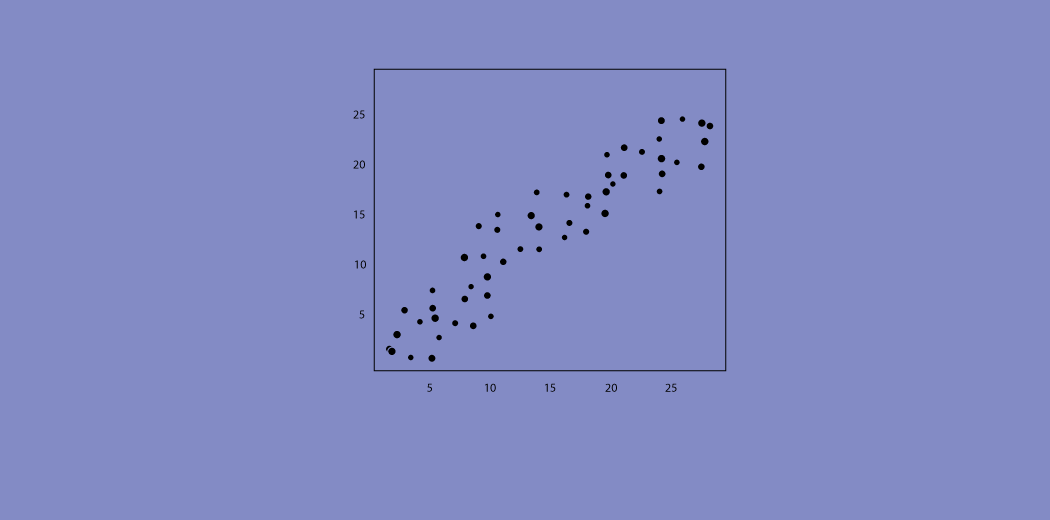
Imagine a coordinate system where each point represents a complex relationship. Linear regression is like drawing the most harmonious line through these points—a line that minimizes the collective distance from each data point. This isn‘t just mathematics; it‘s an artistic approach to understanding complexity.
Computational Perspectives
Modern linear regression leverages advanced computational techniques. Ordinary Least Squares (OLS) method, for instance, isn‘t just a calculation—it‘s an optimization process that finds the most statistically robust representation of your data.
The computational complexity involves:
- Minimizing the sum of squared residuals
- Calculating precise coefficient estimates
- Ensuring numerical stability across diverse datasets
Machine Learning‘s Foundational Algorithm
Linear regression serves as a critical bridge between classical statistics and modern machine learning. While deep neural networks capture headlines, linear regression remains a powerful tool for understanding fundamental relationships.
Predictive Power in Real-World Scenarios
Consider a scenario in economic forecasting. By analyzing historical economic indicators, linear regression can help predict future trends with remarkable accuracy. It‘s not about perfect prediction but understanding probabilistic relationships.
Advanced Implementation Strategies
Implementing linear regression requires more than mathematical knowledge—it demands a nuanced understanding of data characteristics.
Handling Complex Datasets
Real-world data rarely conforms perfectly to theoretical models. Techniques like regularization (Lasso and Ridge regression) help manage complex, noisy datasets by introducing penalty terms that prevent overfitting.
Probabilistic Interpretations
Linear regression isn‘t deterministic—it‘s fundamentally probabilistic. Each coefficient represents not just a relationship but a probability distribution of potential influences.
Statistical Inference
The [t]-statistic and [p]-values associated with regression coefficients provide deeper insights into the statistical significance of relationships. They answer critical questions: How confident are we about this relationship? Could this connection be purely coincidental?
Interdisciplinary Applications
Linear regression‘s versatility extends far beyond traditional statistical analysis:
Economic Modeling
Economists use linear regression to understand complex market dynamics, predicting everything from consumer behavior to stock market trends.
Biological Research
Researchers leverage linear regression to understand genetic inheritance patterns, disease progression, and ecological interactions.
Engineering Optimization
Engineers apply linear regression to design more efficient systems, from manufacturing processes to aerospace engineering.
Computational Considerations
Modern linear regression implementation requires sophisticated computational frameworks. Libraries like NumPy and scikit-learn in Python have transformed how we approach regression analysis, providing robust, efficient implementations.
Code Perspective: Beyond Simple Implementation
import numpy as np
from sklearn.linear_model import LinearRegression

# Advanced regression with multiple features
X = np.array([[1, 2], [3, 4], [5, 6]])
y = np.array([10, 20, 30])

model = LinearRegression()
model.fit(X, y)

# Sophisticated prediction
prediction = model.predict([[7, 8]])
Philosophical Reflections
Linear regression represents more than a mathematical technique—it‘s a philosophical approach to understanding complexity. It teaches us that seemingly random phenomena often harbor underlying, predictable patterns.
The Human Element
Behind every regression model is a human story—a quest to make sense of the world through data. We‘re not just analyzing numbers; we‘re uncovering hidden narratives.
Conclusion: A Continuous Journey
Linear regression continues to evolve, bridging classical statistical methods with modern machine learning approaches. As technology advances, so too will our understanding of this remarkable technique.
Remember, linear regression isn‘t about finding absolute truths but understanding probabilistic relationships. It‘s a journey of discovery, one data point at a time.